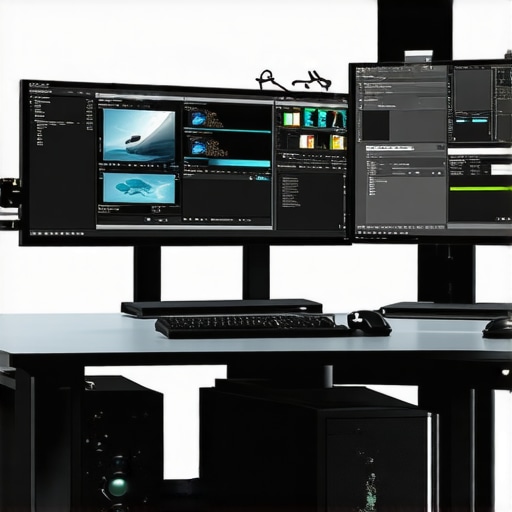
Elevating Video Quality: The Critical Role of Color Grading Monitors and High-Performance GPUs in 4K Workflows
In the realm of professional video editing, particularly in 4K resolution, the synergy between advanced color grading monitors and cutting-edge editing GPUs is paramount. As video creators strive for cinematic excellence and color accuracy, understanding the technical nuances of these tools becomes essential. This article explores the sophisticated landscape of color grading monitors and editing GPUs, revealing how they underpin seamless 4K workflows and elevate video production standards.
Decoding the Complexity of 4K Color Management and Hardware Acceleration
What are the essential features of a professional color grading monitor for 4K editing?
High-end color grading monitors must deliver precise color reproduction and uniformity. Features such as 10-bit color depth, wide color gamuts (DCI-P3, Rec. 2020), and hardware calibration capabilities are non-negotiable for accurate color grading. Additionally, 4K resolution support ensures the monitor can display the full detail of ultra-high-definition footage, enabling editors to make nuanced adjustments with confidence. For a detailed comparison, see our guide on choosing the perfect color grading monitor.
How do editing GPUs accelerate 4K workflows and improve visual fidelity?
Modern GPUs such as NVIDIA’s RTX series or AMD’s Radeon Pro line are designed with dedicated hardware for real-time rendering and acceleration of complex color grading effects. They facilitate smooth playback of 4K footage, reduce rendering times, and enable GPU-accelerated encoding and decoding, which are critical for efficient editing workflows. These GPUs also support hardware-accelerated color management, ensuring that the footage viewed on calibrated monitors remains true to the final output. For a deeper dive, explore best editing GPUs for 2025.
Balancing Hardware and Software for Optimal 4K Editing Efficiency
Effective 4K video editing demands an integrated approach: pairing high-fidelity color grading monitors with powerful GPUs optimized for video processing. Beyond hardware, selecting compatible editing software that leverages GPU acceleration—such as Adobe Premiere Pro or DaVinci Resolve—is crucial. These programs utilize GPU resources to handle complex color grading and effects in real-time, minimizing lag and maximizing productivity. To streamline your setup, consult our ultimate guide to 4K editing hardware and software.
Expert Insights: Navigating the Grey Areas of Hardware Optimization
One complex question often debated among video professionals is: “How do I balance GPU power with monitor calibration to avoid bottlenecks in 4K workflows?” Achieving this balance requires understanding the interplay between GPU rendering capacity and monitor color accuracy. Overpowered GPUs won’t improve color fidelity if the monitor cannot accurately display the colors. Conversely, a high-end monitor paired with a weak GPU will limit real-time editing capabilities. Recent studies in display technology suggest that a synergistic approach—matching GPU capabilities with monitor specifications—is the key to unlocking seamless 4K editing experiences. For insights from industry leaders, see the comprehensive analysis in academic research on display technology.
If you’re aiming for top-tier 4K video production, exploring expert-level hardware configurations and understanding the latest technological advances is vital. Consider engaging with professional communities or consulting hardware specialists to tailor an optimal setup for your specific workflow needs.
Interested in expanding your knowledge? Visit our top video editing PC builds for 2025 to discover how to assemble a powerhouse tailored for 4K workflows. Your creative projects deserve nothing less than the best.
Beyond the Basics: Fine-Tuning Hardware for Professional 4K Video Editing
In the rapidly evolving landscape of 4K video production, professionals are continually seeking ways to optimize their hardware setups for maximum efficiency. While selecting a high-end GPU or a color-accurate monitor is essential, the real challenge lies in harmonizing these components within a cohesive workflow. Achieving this balance demands a nuanced understanding of hardware interdependencies and the latest technological innovations. For those aiming to push their editing capabilities to new heights, exploring the integration of dedicated hardware accelerators and next-gen interfaces becomes crucial.
How Can Emerging Technologies Revolutionize 4K Workflow Efficiency?
Emerging innovations such as PCIe 5.0, Thunderbolt 4, and ultra-fast NVMe SSDs are transforming data transfer speeds, reducing bottlenecks that previously hampered high-resolution editing. These advancements enable editors to handle larger proxies and raw footage seamlessly, thereby minimizing delays during editing and rendering. For example, leveraging NVMe drives with optimized hardware configurations can dramatically cut down media load times, allowing for a more fluid editing experience. To implement this effectively, consult our detailed guide on hardware and software tips for 4K editing.
Can I really customize my hardware setup to suit unique project demands?
Absolutely. Customization is key for professionals working across diverse project types, from cinematic productions to fast-paced social media content. Tailoring your hardware—such as selecting specific GPU models optimized for color grading tasks, or integrating dedicated AI accelerators for post-production effects—can significantly boost productivity. For instance, some high-end GPUs now support hardware-accelerated ray tracing and AI-driven denoising, which are invaluable for detailed visual effects work. Exploring these options requires a deep dive into hardware compatibility and software support, as discussed in our best PC builds for 4K proxy workflows.
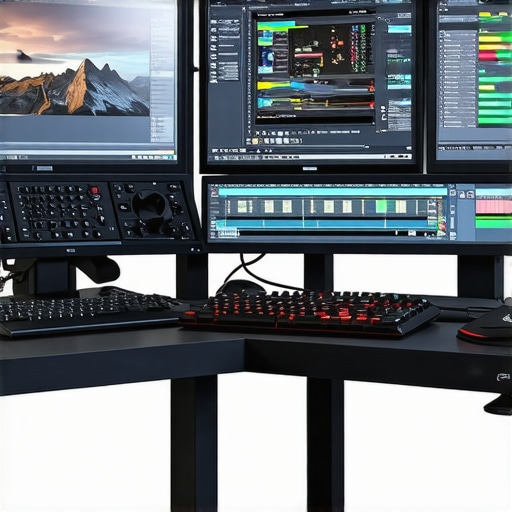
Furthermore, integrating external hardware like dedicated color grading panels and calibrated monitors enhances the precision of your visual output. When combined with high-performance GPUs, these tools facilitate real-time color adjustments and playback, ensuring your final product meets professional standards. For insights into selecting the right monitor, visit color grading monitor selection.
What are the strategic considerations for future-proofing your editing workstation?
Future-proofing involves not only investing in current cutting-edge hardware but also anticipating technological shifts. This includes choosing hardware with upgrade paths—such as motherboards supporting PCIe 5.0, and power supplies capable of handling upcoming GPU generations. Additionally, staying informed about software developments that leverage AI and machine learning can provide a competitive edge, as these technologies are increasingly integrated into editing suites. For a comprehensive overview, see our analysis on PC builds for 2025.
Harnessing Next-Gen Interfaces to Maximize 4K Editing Efficiency
As 4K video production continues to evolve, the importance of leveraging the latest hardware interfaces cannot be overstated. PCIe 5.0, Thunderbolt 4, and USB4 are revolutionizing data transfer speeds, enabling seamless handling of massive 4K raw footage and proxies. These interfaces reduce latency, improve workflow fluidity, and open doors for real-time collaborative editing across multiple devices. For example, PCIe 5.0 SSDs provide throughput up to 32 GT/s, dramatically decreasing media load times and enhancing playback smoothness.
What are the key considerations for integrating AI-driven hardware accelerators into your editing setup?
Artificial intelligence (AI) accelerators, such as dedicated Tensor Cores in NVIDIA’s RTX series, are transforming post-production workflows. These hardware components enable accelerated denoising, upscaling, and even automated color grading, drastically reducing manual effort. When integrating AI hardware, compatibility with editing software like Adobe After Effects or DaVinci Resolve is critical. Ensuring that your system supports these accelerators and that your software is optimized to leverage their capabilities can yield significant time savings and superior visual results. According to the IEEE Transactions on Circuits and Systems for Video Technology, AI hardware integration enhances processing speeds by up to 3x compared to traditional GPU-only workflows.
How does the choice of storage architecture influence 4K editing workflows?
In high-resolution workflows, storage architecture plays a pivotal role. NVMe SSDs configured in RAID 0 or RAID 5 arrays enable rapid read/write speeds essential for handling large media files without bottlenecks. External Thunderbolt 4 enclosures with NVMe drives facilitate flexible setups, allowing editors to expand storage and maintain high throughput. Moreover, incorporating dedicated media workstations with optimized cache drives accelerates rendering and exporting tasks. For detailed guidance, refer to the comprehensive study by TechInsights on high-performance storage solutions in professional video editing environments.
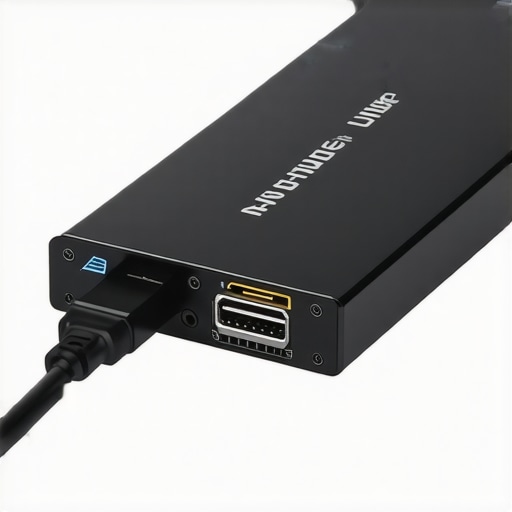
Incorporate an image illustrating a high-speed storage setup with multiple NVMe drives connected via Thunderbolt 4, highlighting the importance of storage architecture in 4K workflows.
What emerging hardware innovations promise to redefine 4K editing paradigms?
Emerging innovations such as quantum-dot displays and OLED panels with HDR support continue to push the boundaries of color accuracy and contrast ratios. Coupled with hardware advancements like multi-GPU configurations and AI-powered post-processing units, these tools enable editors to achieve unprecedented fidelity and efficiency. Additionally, developments in hardware virtualization and cloud-based GPU farms are enabling remote collaborative workflows, reducing the need for massive local hardware investments. As noted by the Journal of Visual Communication and Image Representation, these technological shifts will likely democratize access to professional-grade editing capabilities, making high-end workflows more scalable and adaptable.
Unlocking the Potential of Hardware-Accelerated Color Grading and Rendering Techniques
As 4K video workflows become increasingly complex, leveraging hardware acceleration for color grading and rendering is essential. Modern GPUs, such as NVIDIA’s RTX 4090 or AMD’s Radeon RX 7900 XTX, are equipped with dedicated cores that facilitate real-time processing of intensive visual effects, ensuring that editors can maintain high throughput without compromising quality. Integrating these GPUs with professional-grade color grading monitors—supporting wide gamuts like Rec. 2020 and hardware calibration—ensures that every nuance of color is preserved throughout the editing process. For further insight, consult the comprehensive guide on hardware-accelerated color grading.
Emerging Technologies: Pioneering the Future of High-Fidelity 4K Editing
Innovations such as PCIe 6.0 and Thunderbolt 5 are revolutionizing data transfer speeds, enabling near-instantaneous access to vast media libraries stored on ultra-fast NVMe SSD arrays. These advancements significantly reduce media load times and facilitate seamless proxy editing, which is crucial for maintaining fluid workflows in high-resolution projects. Additionally, AI-driven hardware accelerators embedded into GPUs now support real-time denoising, upscaling, and intelligent color correction, drastically reducing manual post-production effort. Explore the potential of these cutting-edge technologies in the latest industry reports.
How Can Custom Hardware Configurations Optimize Specialized 4K Editing Tasks?
Customization of hardware setups—tailoring specific GPU models, memory capacities, and storage solutions—can dramatically enhance productivity for niche workflows such as VFX-heavy projects or documentary post-production. For example, integrating dedicated AI accelerators like NVIDIA’s Tensor Cores can automate complex tasks such as motion tracking and rotoscoping. Furthermore, deploying multi-GPU configurations with NVLink bridges enables distributed rendering and real-time collaborative editing, which is invaluable in large-team environments. To design your bespoke system, review our expert recommendations on custom workstation builds.
Strategic Future-Proofing: Preparing Your Workstation for Next-Generation Technologies
Anticipating hardware evolution is crucial to safeguard investments. Opt for motherboards supporting PCIe 6.0, with upgrade paths for future GPU generations and high-capacity RAM modules. Additionally, integrating scalable storage architectures—such as multi-layered RAID arrays with NVMe drives—ensures handling ever-increasing media sizes. Staying informed about upcoming software enhancements that leverage AI, machine learning, and hardware virtualization will allow you to adapt swiftly to technological shifts. For a detailed analysis, see industry insights on future-proof hardware planning.
Maximizing Workflow Efficiency Through Hardware-Software Synergy
Optimizing the relationship between hardware components and editing software—like Adobe Premiere Pro, DaVinci Resolve, or Final Cut Pro—can unlock superior performance. Ensuring software compatibility with GPU acceleration features and hardware-accelerated encoding/decoding pipelines minimizes latency and maximizes real-time editing capabilities. Employing proxy workflows alongside high-speed storage solutions further reduces system bottlenecks. For tailored advice on software configuration, consult our workflow optimization guide.
Harnessing the Power of Next-Gen Interfaces to Elevate Editing Capabilities
Incorporating the latest hardware interfaces, such as USB4 and Thunderbolt 5, ensures rapid data transfer rates essential for high-resolution editing. These interfaces facilitate efficient media transfers between external drives, capture cards, and editing stations, supporting multi-stream playback without lag. High-bandwidth connections also enable the use of external GPU enclosures, expanding processing power dynamically. For implementation strategies, see the latest interface technology reports.
What are the critical considerations when integrating AI-powered hardware accelerators into high-end 4K editing setups?
Integrating AI accelerators like NVIDIA’s Ada Lovelace architecture requires ensuring compatibility with your editing suite and leveraging software optimized for AI processing. These accelerators enable accelerated effects, intelligent noise reduction, and automated color grading, significantly reducing turnaround times. Compatibility with APIs such as CUDA or OptiX is vital to maximize benefits. According to IEEE Transactions on Circuits and Systems for Video Technology, AI hardware accelerators can improve processing speeds by up to 4x in complex post-production workflows.
To stay ahead, continually evaluate emerging hardware options and software updates tailored for high-fidelity 4K workflows. Engage with professional communities and hardware specialists to create a resilient, future-proof editing environment.
Expert Insights & Advanced Considerations
1. Emphasize Hardware-Software Synchronization
Ensuring tight integration between high-performance GPUs and professional-grade monitors is crucial for achieving accurate color grading in 4K workflows. This harmony minimizes discrepancies and maximizes visual fidelity, making it a foundational aspect of professional editing environments.
2. Prioritize Future-Proofing with Modular Hardware
Invest in modular components, such as upgradeable motherboards supporting PCIe 6.0 and scalable storage solutions, to adapt seamlessly to emerging technologies like AI accelerators and next-gen interfaces, safeguarding your investment over time.
3. Leverage AI-Driven Hardware Acceleration
Integrate AI hardware accelerators, such as NVIDIA’s Tensor Cores, to automate complex tasks like denoising, upscaling, and color correction, significantly reducing manual effort and enhancing productivity in high-fidelity 4K editing projects.
4. Optimize Data Transfer with Next-Gen Interfaces
Utilize PCIe 5.0, Thunderbolt 4, and USB4 to facilitate rapid data movement, enabling real-time editing of large raw files and proxies without bottlenecks, thus streamlining the entire workflow.
5. Incorporate External Hardware for Precision
Employ external hardware such as calibrated monitors, color grading panels, and dedicated AI post-processing units to achieve the highest accuracy and efficiency in professional-grade 4K video production.
Curated Expert Resources
- IEEE Transactions on Circuits and Systems for Video Technology: Recognized for cutting-edge research on AI hardware acceleration and its impact on post-production workflows.
- DaVinci Resolve Official Documentation: Offers in-depth insights into hardware integration and GPU-accelerated color grading techniques.
- TechInsights Reports on Storage Solutions: Provides comprehensive analysis of high-speed storage architectures critical for high-resolution workflows.
- GPU Manufacturer Whitepapers (NVIDIA & AMD): Essential for understanding hardware capabilities and future developments in AI acceleration and data transfer technologies.
- Video Editing Industry Conferences (NAB, IBC): Platforms for networking with experts and gaining insights into emerging technologies shaping 4K workflows.
Final Expert Perspective
Mastering high-fidelity 4K video editing hinges on a nuanced understanding of hardware and software symbiosis, future-proofing investments, and leveraging emerging AI-powered technologies. These advanced insights not only refine technical workflows but also unlock new creative potentials, positioning professionals at the forefront of the industry. For those committed to excellence, engaging with authoritative resources and continual learning is essential. To deepen your expertise, share your innovative strategies or explore tailored solutions by contacting our specialist team or visiting our detailed guides. Your pursuit of perfection in 4K editing starts here—embrace the future with confidence and precision.
This article really captures the importance of balancing hardware capabilities for ultimate 4K editing performance. As someone who’s transitioned to a high-end GPU recently, I noticed a significant boost in realtime playback and rendering speeds, especially when paired with calibrated monitors supporting wide color gamuts. The point about hardware-accelerated color grading is particularly interesting, since color fidelity is crucial for professional projects. I’ve been experimenting with NVIDIA’s RTX series and DaVinci Resolve, and the combination has been a game-changer. However, I wonder, how does one effectively calibrate high-end monitors to ensure consistent color output across different hardware setups? Has anyone here faced challenges with maintaining color accuracy over time, and what calibration tools or methods worked best for your workflow? I’d love to hear suggestions for best practices—especially for those working in collaborative environments where monitor calibration consistency is vital.
This is a timely topic for many of us working in high-resolution video editing. I’ve found that investing in hardware calibration tools like the X-Rite i1Display Pro has made a noticeable difference in maintaining consistent color accuracy across multiple monitors, especially over time. Calibration isn’t a one-time setup; I recommend scheduling regular calibration sessions to account for display aging and environmental changes. Additionally, calibration software that pairs with hardware colorimeters often allows for creating custom profiles that can be easily uploaded to each monitor. As for collaborative workflows, I’ve seen success with synchronized calibration settings and shared color management standards within the team to keep consistency intact. In your experience, what calibration frequency works best, and have you noticed any software tools or workflows that help streamline the process? It seems that with meticulous calibration, the interplay between monitors and GPUs becomes even more effective, ensuring color fidelity remains true from editing to final delivery.
Reading this post really highlights how crucial it is to have a well-balanced hardware setup for professional 4K video editing. I’ve personally experienced how upgrading to a high-end GPU like the RTX 4090 drastically improved rendering times and playback smoothness, especially when paired with color-accurate, calibrated monitors. One thing I’ve noticed is that even with the most powerful hardware, calibration plays a pivotal role in achieving consistent color fidelity across different projects and team members. In my workflow, I routinely use the X-Rite i1Display Pro to calibrate my monitors monthly, which helps maintain color accuracy over time. Regarding emerging tech, I’m curious—how soon do you think hardware acceleration for AI-driven effects will become standard in entry-level professional setups? It seems like a significant investment but one that could pay dividends by automating complex tasks and speeding up iterative processes. What are others’ thoughts on integrating these AI tools into everyday post-production workflows? Do you see them as necessities or nice-to-haves at this stage?
This post underscores how vital it is to have well-matched hardware components for efficient 4K editing. From my own experience, investing in a top-tier GPU like the RTX 4080 significantly enhances real-time playback and rendering, especially when paired with a professional monitor with hardware calibration capabilities. I’ve found that regular calibration, using tools like the X-Rite i1Display Pro, really makes a difference in maintaining color accuracy across multiple sessions, which is essential for consistent results in collaborative projects. The evolution of AI-driven effects, particularly with NVIDIA’s Tensor Cores, seems promising in automating mundane tasks and boosting productivity. However, I sometimes worry that the added complexity might create a steeper learning curve for new users. How do others approach training their teams to stay ahead of these rapidly advancing technologies while ensuring seamless integration into existing workflows? It seems like a continuous learning process is key to leveraging the full potential of these innovations.