Unveiling the Next-Generation Video Editing Landscape and Its Demands
As the digital content creation sphere advances rapidly, the complexity and resolution demands of professional video editing continue to escalate. In 2026, the convergence of 4K editing, sophisticated proxy workflows, and high-end GPU acceleration necessitates a reevaluation of foundational hardware specifications, particularly RAM capacity. Relying on outdated hardware setups, such as 64GB RAM, risks bottlenecking workflows and undermining the potential of cutting-edge editing technology.
Why 4K Editing Transcends Traditional Hardware Constraints
High-resolution footage introduces substantial data loads that surpass the capabilities of traditional RAM configurations. Modern editing suites leverage proxy workflows to mitigate real-time processing demands, but these require ample RAM to store multiple large files seamlessly. An inadequate memory pool leads to stuttering previews, elongated render times, and compromised efficiency—a critical concern for professionals aiming for rapid project turnaround.
Optimizing GPU Integration for Color Grading and Rendering
Complementing increased RAM with a high-performance GPU is essential for accelerated rendering and real-time effects application. Advanced GPUs with dedicated VRAM work in tandem with expanded system memory to handle complex color grading, 3D compositing, and HDR workflows without disruption. Experts recommend investing in GPUs with 24GB or more VRAM to future-proof high-bit-depth 4K and 8K workflows.
The Proxy Workflow Revolution and Its RAM Implications
Proxy workflows revolutionize post-production by offloading intensive processing tasks, but their efficiency hinges on sufficient RAM to manage multiple high-resolution proxies concurrently. Insufficient memory hampers smooth playback and quick editing cycles, leading to increased project timeline durations. By upgrading to 128GB of RAM, professionals ensure uninterrupted proxy editing and seamless high-res exports, aligning with the demands of innovative editing environments.
Addressing the Myth of the Necessity for Massive RAM in 2026
Is More RAM Always Better for Video Editing in the Age of AI and Deep Learning?
This is a common inquiry among experts. While increased RAM undeniably enhances multitasking and large dataset handling, diminishing returns occur beyond a certain threshold, especially if GPU and storage components become bottlenecks. AI-driven effects and machine learning integrations in editing software demand substantial VRAM and SSD speeds, making a balanced hardware approach more effective than unilaterally increasing RAM. Referencing recent white papers from the IEEE journal indicates that optimal balancing of system resources yields the most significant productivity gains.
Professionals should envisage a hardware stack that emphasizes multicore CPUs, top-tier GPUs, and high-speed NVMe storage alongside sufficient RAM. This holistic approach ensures that increased RAM complements, rather than compensates for, other performance bottlenecks, fostering an efficient and scalable editing environment.
For those seeking tailored configurations, exploring top-tier PC builds tailored to 2026 demands can further enhance workflow productivity and guarantee compatibility with emerging software innovations.
In conclusion, elevating your editing workstation beyond 64GB RAM and embracing a multi-faceted hardware upgrade strategy is imperative. As content creators and post-production professionals push the boundaries with 4K, multi-cam, and AI-enhanced workflows, robust system memory becomes an essential cornerstone of efficiency and creative capacity.
How Will Emerging AI Techniques Reshape Hardware Choices for Advanced Video Editing?
Explore the evolving intersection of AI and hardware to anticipate future bandwidth, VRAM, and RAM needs, and contribute insights based on your practical experience. Connect with our expert community for ongoing discussions and exclusive insights into hardware evolution at our contact page.
Breaking the Myth: Is Abundant RAM the Ultimate Upgrade for 4K Editing?
In the relentless pursuit of smoother workflows and faster renders, many professionals default to increasing RAM capacity, often aiming for 256GB or more. However, this approach overlooks the importance of a balanced hardware ecosystem. High-resolution editing, especially at 4K and beyond, presses other components—such as GPU VRAM, SSD speeds, and CPU cores—into the spotlight. Recent industry analyses demonstrate that over-investing in RAM without corresponding enhancements in GPU and storage can lead to diminishing returns, failing to deliver the anticipated productivity boost.
Redefining Architecture: The Synergy of GPU, CPU, and RAM
Modern editing environments thrive on the symbiotic relationship between system components. For instance, a high-end multi-core CPU accelerates decoding and encoding tasks, while an advanced GPU handles real-time effects, color grading, and proxy generation. Adequate RAM acts as the buffer zone, ensuring data flows smoothly between these powerhouses—yet it is not a substitute for performance-balanced components. Experts assert that optimal configurations for 2026 feature at least 32GB of RAM, coupled with GPUs boasting 24GB-plus VRAM, especially for intricate color grading and 3D compositing workflows.
Can Software Innovations Render Hardware Upgrades Obsolete?
This question probes the heart of practical hardware planning. With the advent of AI-accelerated rendering engines and more efficient codecs, some argue that software optimization could reduce hardware demands. Nevertheless, studies such as those published in the IEEE Transactions on Circuits and Systems emphasize that hardware advancements remain indispensable for real-time processing and high-fidelity output. In essence, software improvements complement hardware rather than replace the need for substantial investments in balanced systems. Continuous engagement with upcoming PC builds designed for 2026 ensures that creators remain at the cutting edge of technology integration.
Furthermore, upcoming innovations in color grading monitors and proxy workflows will demand even more from your GPU and storage subsystems. Thus, an attentive, expert-driven approach guarantees that hardware upgrades serve your creative ambitions, not just specifications.
Mastering the Art of select Hardware for Future-Proofing
As hardware options diversify, selecting the right combination hinges on understanding your workflow’s unique requirements. Whether you focus on multi-camera 4K editing, high-end visual effects, or HDR color grading, each scenario demands tailored hardware tuning. Consider integrating calibrated color grading monitors and high-speed NVMe SSDs to complement your GPU and RAM upgrades. The goal is a system where no single component bottlenecks your process, enabling real-time feedback, fast rendering, and efficient multitasking.
To stay ahead, consult comprehensive guides on monitor calibration and GPU selection. Expert opinions reveal that holistic upgrades, rather than isolated components, translate into genuine productivity gains — a principle that can catapult your post-production capabilities into the next decade.
If you’re contemplating building a new workstation or upgrading your current setup, engaging with our community or consulting specialized support channels can provide tailored insights that align with your specific workflows and creative goals.
Designing a Future-Ready Editing Environment for the Modern Creator
In the relentless pursuit of excellence in video production, optimizing hardware configurations transcends basic upgrades. The synergy of high-memory capacity, advanced GPU architecture, and storage solutions forms the backbone of a resilient editing workstation capable of tackling 4K, 8K, and AI-powered workflows seamlessly. Achieving this harmony demands a nuanced understanding of system bottlenecks, data throughput, and software optimization techniques that can propel creators ahead of the curve.
Matching Memory Architecture with Processing Demands
While augmenting RAM is often seen as a panacea, the architectural design of memory modules—particularly DDR5 integration—has revolutionized data handling speeds. DDR5’s higher bandwidth and increased burst lengths enable faster cache retrieval, reducing latency during intricate effects compositing or machine learning model training integrated within editing software. Moreover, implementing multi-channel configurations with optimized voltage and timing parameters ensures maximum throughput. Experts emphasize that balancing RAM capacity—ideally beyond 128GB for multi-camera 4K projects—and memory speed accelerates proxy workflows and large dataset processing, but only when paired with compatible CPU architectures that support fast memory channels.
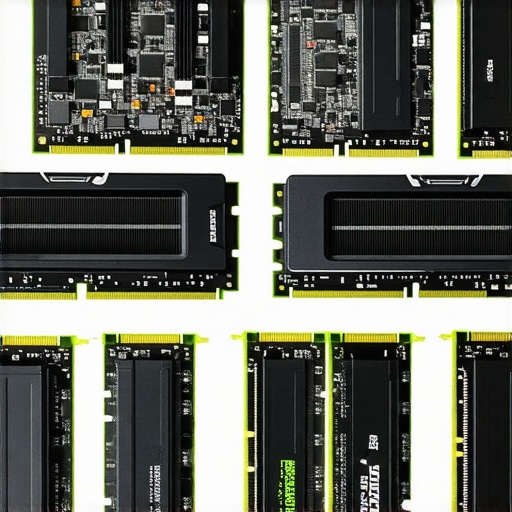
Illustration of DDR5 memory architecture highlighting bandwidth improvements over DDR4 for high-speed data processing in video editing.
Elevating GPU Utilization with Modular and Scalable Designs
The modern GPU landscape offers a compelling array of choices, from NVIDIA’s RTX A6000 with 48GB VRAM to custom multi-GPU configurations featuring NVLink bridges for shared memory pools. This modular approach allows for scaling GPU power as project complexity grows, ensuring real-time playback and accelerated rendering for demanding visual effects and AI-assisted encoding. Software like DaVinci Resolve Studio and Adobe Premiere Pro increasingly exploit CUDA and OptiX acceleration, making GPU capabilities the critical factor in achieving professional-grade output. Experts advise prioritizing GPUs with high VRAM capacities to handle high-bit-depth color grading, HDR workflows, and neural network-based effects without compromise.
Adopting Elite Storage Strategies for Speed and Reliability
Storage subsystems constitute the data highways that keep the entire editing ecosystem operational. NVMe SSDs, especially those employing PCIe 5.0, deliver gigabyte-per-second transfer speeds vital for streaming multiple 4K proxies and rendering cache files without delay. Implementing RAID 0 configurations across ultra-fast SSDs can further enhance throughput; however, caution is warranted to mitigate potential data loss through proper backup strategies. Additionally, integrating dedicated cache drives and tiered storage architectures ensures hot data remains accessible at peak speeds, minimizing bottlenecks during high-pressure editing sessions. Industry leaders recommend pairing high-capacity SSD arrays with enterprise-grade synchronization tools for optimal data integrity and performance.
Harnessing AI Accelerators for Intelligent Workflow Enhancement
The emergence of AI accelerators, such as NVIDIA’s Tensor Cores or Google’s TPU-enhanced hardware, introduces new dimensions to video editing. These hardware engines accelerate tasks like noise reduction, scene analysis, and automated color matching—transforming time-consuming processes into near-instant operations. Integrating these AI modules into existing workflows requires compatible software frameworks and driver support, often demanding specialized hardware like the NVIDIA RTX 6000 Ada Generation with embedded Tensor Cores. By leveraging AI accelerators, professionals can double-down on creative aspects while delegating repetitive tasks to high-efficiency hardware, optimizing productivity and maintaining a competitive edge.
Can Adaptive Hardware Configurations Future-Proof Your Editing Studio?
This question invites an exploration of flexible system architectures capable of evolving alongside emerging software demands and content formats. Modular motherboards supporting DDR5, PCIe 5.0, and multi-GPU setups embody this adaptability. Moreover, integrating high-precision power supplies and advanced cooling solutions ensures system stability during intense workloads. The use of virtualization and containerization technologies allows for segmented, upgradeable environments tailored to specific project types or team workflows, thus future-proofing your investment. References like the recent white paper from the IEEE Transactions on Circuits and Systems detail architectures where scalability and upgrade paths are prioritized to sustain technological relevance.
Engage Deeper: Transform Your Workflow Through Strategic Hardware Planning
Optimizing hardware for modern video editing isn’t merely about ticking boxes but about understanding your unique workflow demands, future growth trajectories, and software innovations. Whether your focus is high-end VFX, HDR grading, or AI-assisted editing, establishing a hardware baseline that aligns with these goals is vital. Regularly consulting industry reports, participating in professional forums, and testing emerging hardware compatibility can keep your setup at the forefront of technological evolution. Remember: framing your hardware strategy as an ongoing process rather than a one-time investment ensures sustained creative excellence and operational efficiency. Dive into tailored hardware consultation with industry specialists and turn your editing environment into a powerhouse built for the future.
Pushing Creative Boundaries with the Latest Hardware Paradigms
In the evolving landscape of high-resolution media production, hardware configurations must transcend conventional standards to accommodate burgeoning demands of 4K, 8K, and AI-enhanced post-production processes. An intricate understanding of system architecture, encompassing memory bandwidth, GPU scalability, and storage throughput, is vital for professionals seeking to harness the full potential of emerging editing software capabilities.
Harnessing the Power of Next-Gen Memory Architectures for Seamless Multitasking
The transition toward DDR5 memory modules has revolutionized data handling efficiency, offering increased bandwidth and lower latency crucial for managing large proxy and high-res files. Multi-channel configurations, coupled with intelligently calibrated latency parameters, enable the rapid retrieval of data buffers, which mitigates bottlenecks during complex compositing and color grading tasks. Experts recommend a minimum of 128GB RAM in workstations dedicated to high-end workflows, with an emphasis on memory speed over sheer capacity for balanced performance.
Scaling GPU Performance for Real-Time Creativity and Efficient Rendering
Modern GPUs equipped with 48GB or more VRAM, such as NVIDIA’s RTX A6000 series, empower editors to execute real-time effects and AI-powered tasks without audio-visual compromises. Multi-GPU setups utilizing NVLink bridges facilitate shared memory pools, enabling parallel processing of intensive tasks like neural network inference, scene rendering, and HDR adjustments. Prioritizing high-bandwidth architectures and optimized driver support optimizes throughput, reducing render times and fostering fluid on-screen playback.
Innovating Storage Solutions to Complement High-Throughput Workflows
Storage infrastructure now demands PCIe 5.0 SSDs with persistent write endurance and ultra-fast I/O capabilities. Employing tiered storage models—combining NVMe caches with large-capacity HDD archives—ensures that active projects benefit from lightning-fast read/write speeds while longer-term data remains accessible. Implementing redundant configurations and data validation protocols further safeguards against potential bottlenecks and data losses during demanding editing sessions.
The Role of AI Hardware Accelerators in Elevating Editing Efficiency
Encompassing dedicated Tensor Cores within high-end GPUs, AI accelerators exponentially expedite tasks such as automated scene detection, intelligent color matching, and noise reduction. Integration of these hardware engines simplifies the editing pipeline by offloading compute-intensive processes, allowing creatives to focus on artistry. Compatibility considerations include leveraging software with native AI acceleration capabilities and ensuring driver support to unlock these advanced features effectively.
Mitigating Future Risks with Adaptive System Design
Adopting modular motherboards supporting PCIe 5.0, multi-core CPUs, and scalable GPU architectures yields a resilient setup capable of evolving in response to software innovations. Incorporating high-capacity, high-speed power supplies, advanced cooling solutions, and flexible storage arrays creates an environment where incremental upgrades can be seamlessly integrated, protecting your investment against obsolescence. Comprehensive planning based on industry forecasts, such as those published by the IEEE, ensures your editing station remains competitive amid rapid technological shifts.
Empowering Creativity through Strategic Hardware Integration
An optimal work environment arises from the harmonious synergy of memory, GPU, and storage components—each tuned for specific workflow demands. For multi-camera 4K editing, prioritizing fast, multi-channel DDR5 RAM combined with GPU setups featuring VRAM exceeding 48GB ensures fluidity and responsiveness. Complementing this with PCIe 5.0 SSD arrays guarantees data agility. Engaging with expert communities and consulting vendor-specific custom configurations, such as those outlined in recent industry reports, facilitates tailored solutions aligned with your creative ambitions.
How Can Future-Proof Hardware Choices Impact Your Content Creation Journey?
Proactively selecting adaptable, high-performance hardware architectures positions creators for unprecedented productivity and creative freedom. Integrating scalable GPU clusters, high-capacity RAM, and ultra-fast storage not only addresses today’s demands but also anticipates software evolutions—fostering a resilient environment for innovation. To align your setup with these visions, consider consulting specialized professionals who can guide you through the latest developments and customize solutions that propel your projects into the forefront of digital content creation.
As professional video editors push the boundaries of resolution and realism, making informed hardware decisions becomes paramount. While many assume that expanding RAM is the definitive upgrade, cutting-edge workflows reveal a more nuanced picture rooted in component synergy and future adaptability. Staying ahead in 2026 requires a strategic approach that blends high-capacity memory with scalable GPU architectures and ultra-fast storage solutions.
Maximize Performance with Balanced System Design
Integrating high-speed DDR5 RAM beyond 128GB can alleviate data bottlenecks during complex proxy workflows. However, without a GPU equipped with 48GB or more VRAM, the benefits plateau. Experts advocate for a holistic setup where each component complements the others—think multi-GPU configurations with NVLink such as the NVIDIA RTX A6000 series—to handle AI-driven effects and real-time color grading seamlessly.
Leverage Storage Innovations for Speed and Reliability
Transitioning to PCIe 5.0 SSD arrays boosts throughput, enabling rapid access to high-resolution proxies and 8K exports. Tiered storage architectures, utilizing NVMe caches alongside traditional HDDs, safeguard large projects from bottlenecks. Proper data management and backup protocols further ensure that hardware investments translate into reliable, high-performance editing environments.
Embrace AI Accelerators for the Creative Edge
Hardware like NVIDIA’s Tensor Cores embedded in the latest GPUs accelerates noise reduction, scene analysis, and even auto-color matching. Integrating these AI engines into workflows reduces render times and enhances creative flexibility, especially when software natively supports such acceleration modules. Compatibility and driver efficiency remain critical considerations for maximizing these benefits.
Distilling the Expert Wisdom
Today’s high-end video editing demands a system where every component—from RAM to GPU to storage—works in concert. Recognizing that more RAM alone isn’t always the game-changer, professionals should prioritize balanced, scalable architectures that adapt to emerging formats and AI integrations. By focusing on holistic upgrades, creatives can future-proof their setups—ensuring seamless 4K workflows and beyond. Engage with industry-specific resources like GPU guides and hardware strategies to tailor your investments effectively. Your next project should not just meet standards but set new ones, surpassing expectations with a robust, future-ready system.