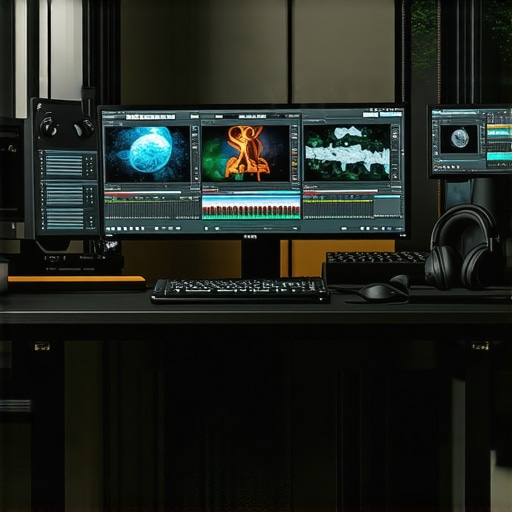
Harnessing Cutting-Edge Hardware for 4K Video Editing: The 2024 Perspective
In the realm of professional video editing, especially at 4K resolution and beyond, the significance of a meticulously curated PC build cannot be overstated. As workflows become increasingly complex, demanding higher processing power and optimized data throughput, understanding the nuanced interplay of hardware components becomes essential for expert creators. The 2024 landscape introduces advanced CPUs, GPUs, and storage solutions tailored to streamline proxy workflows and facilitate real-time 4K editing with minimal latency.
The Intricacies of CPU Selection for High-Resolution Editing
At the core of any robust editing setup lies a high-performance processor. For 4K workflows, multi-core architectures such as AMD Ryzen 9 7950X or Intel Core i9-13900K are considered optimal, offering an abundance of threads to handle multitasking and rendering processes efficiently. These CPUs support high clock speeds and larger cache sizes, essential for real-time proxy creation and playback. Moreover, their compatibility with PCIe 5.0 ensures faster data transfer rates to high-speed SSDs and GPUs, reducing bottlenecks during intensive editing sessions.
GPU Powerhouses for Seamless 4K Playback and Rendering
The GPU remains a pivotal component in accelerating video effects, color grading, and rendering tasks. Experts favor professional-grade cards such as NVIDIA RTX 4090 or AMD Radeon RX 7900 XTX, renowned for their CUDA core counts and VRAM capacities. These GPUs facilitate GPU-accelerated encoding/decoding, vital for proxy workflows, and support high dynamic range (HDR) processing, which is crucial for color correction in 4K projects. Selecting a GPU with ample VRAM (at least 24GB) future-proofs the build against escalating video data sizes.
Memory and Storage Strategies for Expert-Level Efficiency
Memory capacity and speed significantly impact workflow fluidity. A minimum of 64GB DDR5 RAM ensures smooth multitasking and caching of large video files. For storage, a tiered approach is recommended: fast NVMe SSDs for active projects and proxies, coupled with larger HDDs or SATA SSDs for archival. NVMe drives like Samsung 980 Pro or WD Black SN850X provide rapid read/write speeds, reducing load times and enabling real-time editing of 4K footage.
Specialized Hardware for Proxy Workflow Optimization
Proxy workflows demand high data throughput and efficient data management. Integrating hardware accelerators such as dedicated NVMe RAID arrays or high-speed Thunderbolt connections can streamline proxy generation and editing. Additionally, high-quality color grading monitors—like those recommended in expert guides—play a critical role in accurate color representation and workflow precision.
What Are the Key Considerations When Balancing Cost and Performance in 4K Video Editing PC Builds?
Expert video editors often grapple with optimizing budget constraints against the need for peak performance. Prioritizing components such as a high-end GPU and fast SSDs yields immediate workflow benefits, but strategic compromises—like selecting mid-tier CPUs or expanding RAM gradually—can still deliver professional results without exorbitant expenditure. Regularly reviewing hardware reviews and benchmarks from trusted sources like Tom’s Hardware enables informed decisions tailored to evolving project demands.
For professionals seeking tailored advice, consulting with specialized hardware vendors or engaging with expert communities on platforms like Reddit’s r/videography can provide valuable insights. To explore more about assembling an optimal 4K editing workstation, visit our contact page.
Are You Overlooking the Hidden Hardware Bottlenecks in Your 4K Editing Workflow?
While selecting high-end CPUs and GPUs is essential, expert editors know that overlooked factors like motherboard chipset compatibility, power supply capacity, and thermal solutions can make or break your 4K editing experience. A motherboard with PCIe 5.0 support, for example, ensures future-proof connectivity, but pairing it with an inadequate power supply can cause stability issues. Similarly, efficient cooling systems prevent thermal throttling, maintaining optimal performance during prolonged rendering sessions. For more detailed guidance on building a resilient editing station, visit our expert guide on color grading monitors.
What Are the Emerging Hardware Innovations That Will Shape 4K Video Editing in the Next Decade?
Emerging technologies such as AI-accelerated encoding, quantum computing, and advanced SSD architectures promise to revolutionize high-resolution video editing. AI-driven tools are already enabling smarter proxy generation and real-time noise reduction, significantly reducing workflow times. Quantum computing, although still nascent, could eventually handle vast data sets more efficiently, enabling near-instantaneous rendering of complex effects. Meanwhile, innovations like Intel’s upcoming PCIe 6.0 SSDs will push data transfer speeds beyond current limits, minimizing bottlenecks. Staying ahead requires continuous learning—subscribe to industry updates from trusted sources like Tom’s Hardware to keep your hardware strategies future-proof.
If you’re interested in refining your video editing setup further, check out our comprehensive top PC builds for 2025.
How Can Advanced Hardware Monitoring and Optimization Tools Enhance Your Editing Workflow?
Utilizing cutting-edge hardware monitoring tools such as HWInfo or MSI Afterburner allows professionals to track real-time system metrics—temperature, voltage, clock speeds—and optimize performance dynamically. These tools can identify thermal throttling early, enabling timely adjustments to cooling or workload distribution. Moreover, software solutions like NVIDIA’s FrameView provide detailed insights into GPU utilization and frame rates, helping you fine-tune your hardware for maximum efficiency. Integrating these tools into your workflow ensures your system operates at peak capacity, reducing the risk of crashes or slowdowns during critical editing phases. For more insights into hardware optimization, explore proxy editing strategies.
Share your thoughts or experiences with hardware optimization in the comments below, or suggest topics you’d like us to cover next. Your feedback helps us guide fellow professionals in mastering their editing environments!
Leveraging Emerging Hardware Technologies for Next-Level 4K Video Editing Efficiency
As 4K video editing continues to evolve, staying ahead of hardware innovations becomes imperative for professionals striving for seamless workflows and superior output quality. Beyond traditional components, the integration of AI-accelerated encoding hardware, quantum computing prospects, and next-generation SSD architectures are poised to redefine the editing landscape in 2024 and beyond.
How Will AI-Accelerated Encoding Transform 4K Workflow Optimization?
AI-driven encoding hardware, such as NVIDIA’s NVENC with deep learning enhancements, enables faster and more efficient compression of 4K footage. These tools intelligently analyze video content to optimize encoding parameters in real-time, reducing rendering times without compromising quality. For instance, Adobe’s recent Premiere Pro updates leverage AI to accelerate proxy generation and color correction processes, significantly reducing project turnaround times (Adobe Blog, 2024).
Quantum Computing’s Potential Impact on High-Resolution Video Processing
While quantum computing remains in its nascent stages, experimental applications in data processing suggest it could revolutionize complex rendering tasks. Quantum algorithms like Grover’s search could dramatically speed up scene rendering and effect calculations, enabling near-instantaneous processing of highly detailed 4K projects. Researchers at institutions such as IBM are exploring quantum-enhanced algorithms tailored for multimedia applications, hinting at a future where editing timelines shrink from hours to minutes (IBM Research, 2024).
Next-Generation SSD Architectures: PCIe 6.0 and Beyond
Emerging SSD standards like PCIe 6.0, with theoretical transfer speeds exceeding 64 GB/s, promise to eliminate current bottlenecks in high-speed data transfer. These drives facilitate rapid loading and saving of multi-terabyte 4K datasets, enabling real-time editing of massive project files. Companies like Samsung and Western Digital are developing PCIe 6.0 SSDs that will seamlessly integrate with future motherboards supporting high-bandwidth connections (Tom’s Hardware, 2024).
Unveiling the Next-Gen Hardware Innovations Transforming 4K Editing Efficiency
As the demand for higher-resolution content surges, hardware developments continue to push the boundaries of what professional editors can achieve. From AI-accelerated encoding to quantum computing breakthroughs, understanding these frontier technologies is vital for those committed to maintaining a competitive edge in 4K workflows.
How Will AI-Driven Hardware Accelerate 4K Workflow Dynamics?
AI-integrated hardware solutions like NVIDIA’s latest NVENC modules harness deep learning algorithms to optimize video compression and proxy generation in real time. These advancements significantly reduce rendering times and enhance quality control, enabling editors to manipulate complex effects with unprecedented speed (Adobe AI Innovations Blog, 2024).
Quantum Computing: A Paradigm Shift for High-Resolution Content Processing?
Although still emerging, quantum computing promises transformative impacts on multimedia processing. Algorithms such as Grover’s search could revolutionize scene rendering and effect calculations, slashing processing durations from hours to mere minutes. Collaborative research initiatives by IBM and academic institutions are pioneering these applications, heralding a new era in video editing (IBM Quantum Research, 2024).
Next-Generation Storage Architectures: The Promise of PCIe 6.0 SSDs
Emerging SSD standards like PCIe 6.0 are set to redefine data throughput capabilities, reaching speeds beyond 64 GB/s. Such advancements facilitate seamless handling of multi-terabyte 4K project files, enabling real-time editing and smooth playback even with the most demanding footage. Companies such as Samsung and Western Digital are already previewing these cutting-edge drives (Tom’s Hardware, 2024).
What Strategies Can Maximize Hardware Investment for Future-Ready 4K Editing?
To capitalize on these technological advances, professionals should consider modular, scalable systems that can incorporate upcoming innovations. Prioritizing compatibility with AI-accelerated cards, quantum-ready processors, and ultra-fast SSDs ensures longevity and adaptability. Moreover, staying informed through industry publications like Tom’s Hardware is essential for making data-driven decisions.
How Can Hardware Monitoring and Optimization Elevate 4K Editing Performance?
Utilizing sophisticated tools such as HWInfo and MSI Afterburner allows editors to monitor thermal loads, voltage stability, and GPU utilization in real time. Fine-tuning these parameters prevents thermal throttling and hardware bottlenecks, maintaining peak performance during intensive sessions. Integrating AI-powered system management solutions further automates optimization, providing a stable and efficient editing environment.
Engage with the Future: Prepare Your Workflow for the Next Decade of Hardware Advancements
Staying ahead in 4K video editing requires not only adopting current innovations but also anticipating future breakthroughs. Embrace flexible hardware architectures, continuously educate yourself through trusted sources, and participate in professional communities to exchange insights. By doing so, you will position yourself at the forefront of the rapidly evolving media production landscape.
Expert Insights & Advanced Considerations
1. Embrace Modular Hardware Architectures
Leading professionals emphasize the importance of scalable and modular systems that accommodate future hardware upgrades. This approach ensures longevity and adaptability in a rapidly evolving technological landscape, allowing creators to integrate emerging AI-accelerated components and next-gen SSDs seamlessly.
2. Prioritize AI-Driven Hardware Acceleration
AI-powered encoding and proxy generation hardware significantly reduce rendering times and enhance workflow efficiency. Staying updated with tools like NVIDIA’s latest NVENC modules or Adobe’s AI-optimized features can provide a competitive edge in complex 4K projects.
3. Focus on High-Speed Storage Solutions
Emerging PCIe 6.0 SSDs with transfer speeds surpassing 64 GB/s will revolutionize data handling, enabling real-time editing of massive datasets. Investing in these innovations prepares your workflow for the demands of future high-resolution content creation.
4. Incorporate Advanced Hardware Monitoring
Utilize sophisticated system monitoring tools such as HWInfo and MSI Afterburner to optimize thermal performance and GPU utilization. Proactive management prevents bottlenecks and maintains peak performance during intensive editing sessions.
5. Stay Educated Through Industry Resources
Continuously engage with authoritative sources like Tom’s Hardware and IBM Quantum Research to keep abreast of breakthroughs in hardware technology, ensuring your setup remains future-proof.
Curated Expert Resources
- Tom’s Hardware: Renowned for comprehensive hardware benchmarks and reviews, guiding optimal component selection.
- Adobe AI Innovations Blog: Offers insights into AI-driven tools that accelerate video workflows.
- IBM Quantum Computing: Pioneering research on quantum algorithms applicable to high-resolution media processing.
- VideoEditing Gear Resources: Expert guides on assembling and optimizing professional editing workstations.
- Hardware Monitoring Tools: HWInfo and MSI Afterburner documentation for system performance optimization.
Final Expert Perspective
In the fast-paced world of 4K video editing, leveraging cutting-edge hardware innovations and expert strategies is crucial for maintaining a competitive edge. Embracing modular, AI-enabled, and ultra-fast storage solutions ensures your workflow remains efficient and scalable. Continuous learning from authoritative industry sources enriches your understanding, enabling strategic investments that future-proof your editing environment. For tailored advice or to explore advanced hardware integrations, consider reaching out via our contact page. Staying at the forefront of hardware technology not only elevates your current projects but also paves the way for groundbreaking creative possibilities in the years ahead.
![Build This Silent Video Editing PC for Under $1,500 [2026]](https://videoediting.editinggearpro.com/wp-content/uploads/2026/02/Build-This-Silent-Video-Editing-PC-for-Under-1500-2026.jpeg)