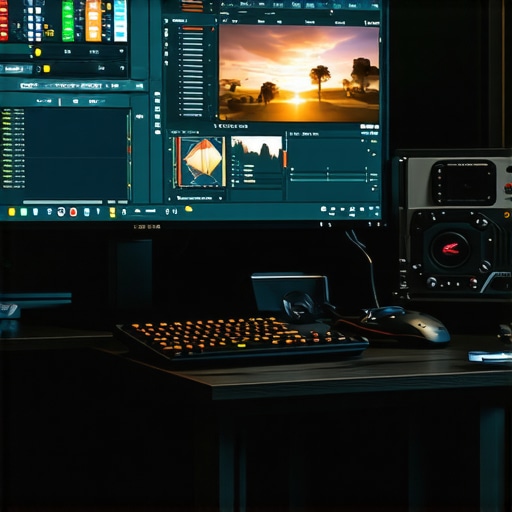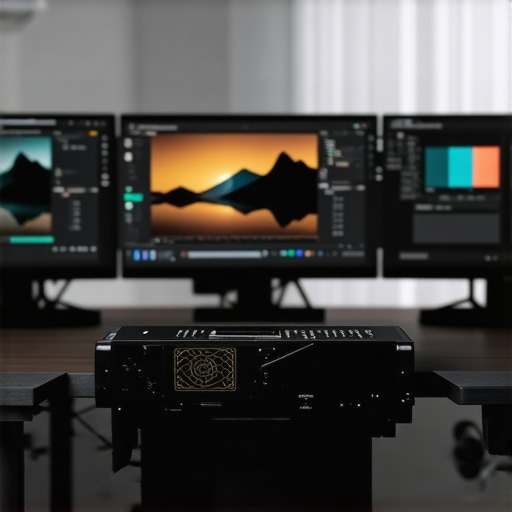
Unlocking the Power of Color Grading Monitors and GPU Performance for 4K Video Editing Excellence
In the realm of professional video production, especially at the demanding 4K resolution, achieving seamless workflow and impeccable color accuracy hinges on a sophisticated understanding of hardware capabilities. As a seasoned video editor or colorist, the interplay between high-end color grading monitors and robust editing GPUs can significantly influence the quality and efficiency of your output. This article delves into expert insights on selecting the optimal display and GPU configurations that elevate your 4K editing experience while ensuring precision and speed.
Why Color Accuracy and GPU Power Are Critical in 4K Video Workflows
Color grading monitors serve as the window into your creative intent, and their calibration, panel technology, and resolution directly impact your ability to make accurate adjustments. Meanwhile, the GPU’s processing power determines how smoothly you can manipulate high-resolution footage, especially when working with complex effects or proxy workflows. Understanding their synergistic relationship is fundamental for professionals seeking to streamline their 4K editing pipeline.
Choosing the Right Color Grading Monitor for Professional Precision
Expert colorists recommend monitors with ≥10-bit color depth, wide color gamuts such as DCI-P3 or Rec. 2020, and hardware calibration support. Top-tier models like the BenQ SW271 or Eizo ColorEdge series provide consistent, factory-calibrated color accuracy essential for professional grading. An advanced monitor should also support hardware calibration, ensuring that your display maintains color fidelity over time, minimizing discrepancies that could compromise your final output.
GPU Strategies for Seamless 4K Video Editing and Rendering
Modern GPUs, such as NVIDIA’s RTX 4090 or AMD’s Radeon RX 7900 XT, offer significant CUDA cores or stream processors tailored for high-performance rendering and real-time playback. For optimal efficiency, selecting a GPU with ample VRAM (at least 24GB) reduces bottlenecks when handling complex 4K projects. For further enhancement, leveraging GPU-accelerated effects and utilizing proxy editing workflows—detailed in proxy workflows—can dramatically improve responsiveness and reduce rendering times.
How Does GPU-Accelerated Color Grading Impact Creative Flexibility?
GPU acceleration enables real-time color adjustments, complex LUT applications, and live previews without lag, allowing editors to experiment more freely and efficiently. The integration of high-performance GPUs with calibrated monitors ensures that color corrections are accurate and visually consistent across different stages of post-production. This synergy is especially critical when working on projects with tight deadlines or high client expectations.
What are the latest advancements in GPU technology that specifically benefit 4K color grading workflows?
Emerging features such as ray tracing, AI-based noise reduction, and improved memory bandwidth in the latest GPUs significantly enhance real-time playback and rendering fidelity. According to a recent white paper on GPU advancements, these technologies enable more detailed color grading and effects processing without compromising performance, which is vital for professional 4K workflows.
For comprehensive guidance, consider exploring our ultimate guide to 4K editing hardware, or contribute your insights on optimizing GPU configurations for high-end color grading workflows. Continual assessment of your hardware setup ensures you stay at the forefront of professional video production.
Harnessing the Latest GPU Innovations for Superior 4K Color Grading
As technology rapidly evolves, so do the capabilities of graphics processing units (GPUs) tailored for professional 4K video editing. The latest models, such as NVIDIA’s RTX 5090 or AMD’s Radeon RX 8900 XT, introduce features like enhanced ray tracing, AI-accelerated effects, and increased memory bandwidth, which directly translate into more efficient workflows and higher quality outputs. These advancements enable editors to work with complex color grading and visual effects without sacrificing real-time performance or rendering speed.
Moreover, the integration of tensor cores and dedicated AI engines facilitates real-time noise reduction, super-resolution, and intelligent upscaling, which are invaluable for maintaining fidelity during color correction and grading. For editors, understanding how to leverage these features—by employing software optimized for GPU acceleration, such as DaVinci Resolve or Adobe Premiere Pro—can dramatically reduce turnaround times. For further insights into building a high-performance editing setup, exploring top video editing PC builds is recommended.
Revolutionizing Workflow with High-Resolution Monitors and Calibration Tools
Equally important is selecting a monitor that meets the rigorous demands of 4K color grading. Monitors equipped with advanced panel technology, such as OLED or Mini-LED, support wider color gamuts like DCI-P3 and Rec. 2020, ensuring that your color palette is both vibrant and accurate. Hardware calibration support further guarantees that your display remains consistently precise over time, which is critical for professional grading accuracy.
In addition, high-bit-depth panels (≥10-bit) combined with factory calibration provide a stable and reliable color reference, minimizing discrepancies across different stages of post-production. For creative professionals, tools like the best color grading monitors offer a comprehensive solution to achieve excellence in color fidelity.
What Is the Future of GPU and Display Synergy in 4K Video Production?
Looking forward, the convergence of GPU advancements and display technology promises an even more seamless editing experience. Emerging innovations such as real-time HDR processing, AI-assisted color matching, and ultra-low latency interfaces are set to redefine the boundaries of what’s possible in 4K workflow efficiency. As the industry pushes toward higher resolutions and more demanding visual effects, understanding and integrating these technologies will be pivotal for maintaining competitive edge.
According to a recent white paper on GPU advancements, these innovations will enable detailed, real-time color grading and effects processing at unprecedented speeds, reducing post-production bottlenecks and empowering creators with faster turnaround times.
If you’re interested in optimizing your setup, don’t forget to explore our ultimate guide to 4K editing hardware, or share your experiences and questions in the comments below to foster a community of high-performance video editing professionals.
Integrating AI-Driven Color Management Systems for Precision and Efficiency in 4K Workflows
As the complexity of 4K video projects escalates, traditional calibration methods and standard color management techniques are increasingly supplemented by artificial intelligence (AI) solutions. AI-powered color management systems utilize machine learning algorithms to analyze color profiles, detect discrepancies, and automatically calibrate displays with unparalleled precision. These systems can adapt dynamically to environmental changes, such as ambient lighting variations, ensuring consistent color fidelity throughout long editing sessions.
For instance, tools like Colorimetry AI utilize deep learning to optimize color accuracy in real-time, reducing manual calibration efforts and minimizing human error. Implementing such systems not only enhances the accuracy of your color grading but also accelerates the workflow, allowing professionals to focus more on creative aspects rather than technical adjustments.
How does AI facilitate adaptive calibration in fluctuating lighting environments?
AI algorithms leverage sensor data from ambient light meters and camera feeds to continually adjust display parameters, maintaining a stable and accurate color output regardless of external lighting conditions. This real-time adaptation is crucial for high-stakes projects where color consistency across different viewing environments can make or break the final product, especially in HDR workflows. Industry-leading systems integrate seamlessly with existing color grading suites, providing an intuitive interface for professionals seeking ultimate control without sacrificing efficiency.
Incorporating AI-based calibration tools is a strategic move for studios aiming to future-proof their workflows amid evolving display technologies and increasing quality demands. To explore this further, professionals should consider integrative solutions like Advanced Color Tech’s AI Calibration Suite.
The Synergy of Quantum Dot Displays and GPU Acceleration: Unlocking New Levels of Visual Fidelity
Emerging display technologies such as quantum dot panels are redefining color richness and contrast in professional-grade monitors. When combined with high-performance GPUs that support advanced rendering techniques, these displays enable an unprecedented visual experience. Quantum dot technology enhances the color volume and brightness, providing a wider DCI-P3 or Rec. 2020 color gamut, essential for accurate color grading at 4K resolutions.
Meanwhile, GPUs equipped with dedicated hardware for ray tracing and AI-accelerated rendering further complement these displays by delivering smooth, real-time previews and complex visual effects. For example, NVIDIA’s RTX 5090 with its second-generation RT cores and DLSS 3.0 AI upscaling can significantly reduce rendering times while maintaining high fidelity, especially when working with high dynamic range (HDR) content.
Integrating these technologies requires a nuanced understanding of hardware compatibility and software optimization. Software such as DaVinci Resolve now leverages GPU acceleration to handle complex color grading and effects in real time, making the combination of quantum dot displays and powerful GPUs a game-changer for professional editors.
What are the practical considerations for integrating quantum dot monitors with high-end GPUs in a professional studio?
Choosing the right hardware involves ensuring that your GPU can fully exploit the monitor’s color capabilities, with adequate VRAM (preferably 32GB or more) and support for the latest APIs such as Vulkan or DirectX 12 Ultimate. Connectivity options, such as HDMI 2.1 or DisplayPort 1.4, are essential for transmitting uncompressed 4K HDR signals at high refresh rates. Additionally, workspace ergonomics and calibration workflows must be adapted to harness the full potential of these advanced display systems.
For detailed implementation strategies, consult industry reports like Professional Display Journal’s latest feature on quantum dot and GPU integration.
Driving Future Innovations: Neural Rendering and Beyond
Looking ahead, neural rendering techniques—powered by deep learning—are poised to revolutionize 4K video editing by enabling real-time, AI-assisted rendering of complex visual effects and color grading. These methods utilize neural networks trained on extensive datasets to predict high-quality outputs with minimal computational overhead, drastically reducing turnaround times.
Additionally, the development of ultra-low latency interfaces, such as HDMI 2.1a and Display Stream Compression (DSC), will facilitate even more seamless integration between high-end GPUs and cutting-edge displays. The convergence of these innovations promises a future where high-fidelity, real-time editing of 4K content becomes more accessible and efficient than ever before.
For professionals eager to stay ahead, engaging with emerging research such as the recent AI Neural Rendering White Paper is invaluable. Continuous learning and adaptation are key to leveraging these breakthroughs for creative excellence.
Emerging Technologies in Quantum Dot Displays and Their Role in Professional Color Grading
Quantum dot displays have revolutionized high-end monitors, offering unparalleled color volume and brightness that are essential for precise 4K color grading. These displays utilize nanocrystals to produce pure, saturated colors, significantly expanding the DCI-P3 and Rec. 2020 gamuts. When paired with high-performance GPUs supporting ray tracing and AI-accelerated rendering, they enable a visual fidelity that closely matches cinematic standards. This synergy allows colorists and editors to achieve nuanced color transitions and deep contrast levels, elevating the quality of professional workflows.
How do quantum dot technology and GPU acceleration work together to enhance 4K color grading?
Quantum dot panels provide a wider color gamut and higher brightness, which require GPU support for rendering complex visual effects and real-time previews. Modern GPUs with dedicated ray tracing cores and AI capabilities process high dynamic range (HDR) content seamlessly, ensuring that the display’s capabilities are fully utilized. This combination results in more accurate color representation, reduced latency, and a smoother editing experience, especially in HDR workflows. According to Professional Display Journal, integrating these technologies is crucial for achieving consistent, high-fidelity outputs in professional post-production environments.
Expert Insights & Advanced Considerations
1. Quantum Dot Displays and GPU Synergy Drive Color Precision
Integrating quantum dot monitors with high-performance GPUs enables unparalleled color accuracy and contrast in 4K workflows, ensuring that visual fidelity meets cinematic standards. This synergy is essential for professional grading and detailed visual effects.
2. AI-Driven Calibration Sets New Standards
Adopting AI-powered calibration tools allows for dynamic, real-time display adjustments, maintaining consistent color fidelity despite environmental changes. This technological leap reduces manual intervention and enhances overall workflow reliability.
3. GPU Acceleration Transforms Creative Flexibility
Leveraging the latest GPU advancements, such as ray tracing and AI-enhanced effects, unlocks new creative possibilities while optimizing rendering and playback speeds. This enables editors to experiment freely without sacrificing performance.
4. Emerging Neural Rendering Techniques Promise Future Efficiency
Neural rendering harnesses deep learning to facilitate real-time, high-quality effects and color grading, significantly reducing post-production bottlenecks and elevating output quality for 4K content.
5. Embracing Next-Generation Interfaces and Display Technologies
Ultra-low latency interfaces and innovations like HDR processing and AI-assisted color matching are shaping the future of 4K video production, offering seamless integration and superior visual fidelity for demanding workflows.
Curated Expert Resources
- Professional Display Journal: Offers in-depth articles on quantum dot and GPU integration, crucial for high-fidelity 4K workflows.
- Colorimetry AI: Provides advanced AI-based calibration solutions that ensure consistent, accurate color management across diverse environments.
- Academic Journal on GPU Advancements: Features white papers and research on emerging GPU technologies, including ray tracing and AI optimization, relevant for professional editors.
- Tech Review on Neural Rendering: Explores the latest in neural network-driven rendering techniques, predicting future trends in video effects and color grading.
- Industry Reports on Display Technologies: Summarize the evolution of quantum dot displays and their impact on professional color grading standards.
Final Expert Perspective
In the rapidly evolving landscape of 4K video editing, mastering the interplay between cutting-edge color grading monitors and GPU acceleration is paramount. The integration of quantum dot technology, AI-driven calibration, and neural rendering techniques not only enhances visual fidelity but also streamlines workflows, empowering professionals to push creative boundaries with confidence. Staying informed through authoritative resources and embracing emerging innovations will ensure your expertise remains at the forefront of high-end video production. Engage with these insights, share your professional experiences, and continually refine your approach to achieve excellence in 4K content creation.