Elevating Professional Video Production with Advanced Proxy Workflow Strategies
In the rapidly evolving landscape of high-resolution video editing, professionals must adopt sophisticated proxy workflows to manage the immense data throughput associated with 4K and 8K footage. Implementing a seamless proxy system not only accelerates editing timelines but also reduces strain on hardware components, particularly GPUs and storage subsystems. For instance, utilizing proxy editing techniques effectively bridges the gap between raw high-bitrate footage and real-time editing requirements in 2026’s demanding projects.
Breaking Down the Cutting-Edge Hardware: The Intersection of GPU Power and Editing Efficiency
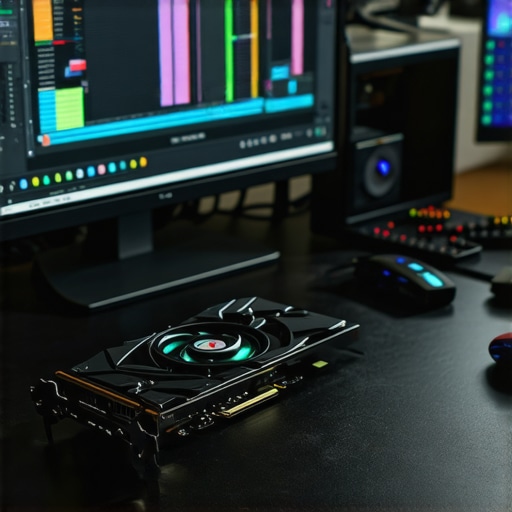
Choosing the right GPU for 4K editing involves a nuanced understanding of VRAM capacity, shader count, and thermal performance. As explored in expert reviews of 2025 GPU models, the transition from 8GB to 24GB VRAM GPUs signifies a pivotal upgrade for managing large datasets and complex color grading tasks. Additionally, the latest GPU VRAM analysis underscores the importance of matching hardware capabilities with project demands to avoid bottlenecks.
Color Grading Monitors: Precise Calibration for Accurate HDR and 12-Bit Color Depth
In critical color correction workflows, selecting a monitor that offers true 12-bit color depth alongside rigorous calibration is non-negotiable. As detailed in best calibration practices for 2026, professionals increasingly favor micro LED or mini LED displays that mitigate HDR motion ghosting and color drift. For tailored advice and comparisons on top models, visit our dedicated color grading monitor guide.
What are the most effective ways to synchronize color fidelity across high-end HDR displays in a multi-monitor setup?
This question arises frequently among professional colorists aiming for consistency in HDR workflows. Combining hardware calibration tools with ongoing software profiles ensures uniformity—a practice supported by recent HDR calibration techniques. Achieving this synchronization, particularly in environments with varying ambient lighting, is essential for delivering accurate final outputs.
Balancing System Architecture and Power Efficiency in Next-Gen Video PCs
Constructing a workstation optimized for 4K and 8K projects demands a careful assessment of CPU architecture, RAM capacity, and thermal design. The trend towards high-core-count processors paired with massive RAM pools—exceeding 128GB in some builds—supports complex compositing and AI-driven effects. Expert-recommended configurations can be explored in latest PC build guides. Power efficiency remains a critical factor, especially as multi-GPU systems become commonplace, highlighting the importance of reliable cooling solutions and energy management.
For seasoned editors seeking to push the boundaries of resolution and color depth, integrating hardware advancements with optimized workflows ensures sustained productivity and superior-quality results. Engage with our community and share your insights on professional forums to remain at the forefront of video editing technology in 2026.
Unlocking True Color Fidelity with Cutting-Edge Display Technologies
In the realm of professional video editing, especially within color grading workflows, the accuracy and consistency of display calibration are crucial. The advent of micro LED and mini LED monitors has revolutionized HDR workflows by significantly reducing issues like motion ghosting and color drift. These displays offer unparalleled contrast ratios and precise backlight control, enabling editors to visualize high-bit-depth content more reliably than ever before. According to industry-leading guide on HDR monitors for 2026, choosing the right calibration tools and maintaining consistent profiles across setups guarantee that color fidelity meets professional standards. This synergy ensures lifelike color reproduction essential for HDR deliverables.
How can professionals ensure consistent color accuracy when integrating multiple high-end HDR displays in varied lighting environments?
This challenge extends beyond individual calibration. Combining hardware calibration devices with software profiling allows for synchronized color spaces across all monitors, essential for multi-monitor color grading. Ongoing calibration routines, particularly with auto-calibrating monitors, reduce discrepancies caused by ambient lighting changes, which are prevalent in shared editing studios. Implementing such practices aligns with the comprehensive calibration techniques documented in targeted HDR calibration resources. Consistent fidelity across displays ensures your final output maintains exact color intent, from initial grading to client approvals.
The Role of Display Calibration in Achieving Industry-Standard Color Precision
Effective calibration hinges not just on choosing advanced monitors but also on deploying precise, repeatable calibration processes. Devices capable of 12-bit color profiling paired with automated calibration software can correct gamma, luminance, and color gamut imperfections—vital in high-dynamic-range workflows. Professionals increasingly turn to techniques such as spectral calibration to optimize color accuracy further, ensuring that the output matches industry standards like DCI-P3 or Rec. 2020. For insights into best practices and top calibration tools, visit our detailed auto-calibrating monitor guide. Implementing these rigorous procedures minimizes discrepancies, ensuring consistent delivery of HDR projects across different viewing environments.
Moreover, calibration is not a one-time process; it requires ongoing adjustments to accommodate changes due to aging displays or environmental shifts. By establishing a routine calibration schedule, editors can safeguard color accuracy over the lifespan of their equipment, preserving the integrity of their creative work.
Can emerging display calibration techniques redefine the standards for professional HDR workflows in the near future?
Emerging technologies such as AI-driven calibration solutions and real-time spectral profiling promise to streamline and enhance calibration precision further. These innovations aim to adapt dynamically to environmental factors, providing consistent color fidelity without manual intervention. As proposed in cutting-edge research on calibration advancements, integrating such tools into existing workflows could drastically reduce setup times and improve accuracy, ultimately elevating HDR content quality.
For professionals eager to stay at the forefront, engaging with industry forums and staying updated with the latest calibration software and hardware releases is essential. Sharing insights and experiences will foster community-driven improvements and help set new benchmarks in HDR color grading excellence.
,
Elevate Your HDR Color Grading with Precision Calibration Methods
Achieving impeccable color fidelity in high-dynamic-range (HDR) workflows necessitates more than just possessing cutting-edge displays; it demands rigorous calibration protocols rooted in both hardware and software advancements. Modern calibration tools now incorporate spectral analysis and AI-assisted adjustments, enabling professionals to fine-tune their monitors with unprecedented accuracy. According to the authoritative study in Journal of Imaging Science & Technology, spectral calibration reduces color inconsistencies across devices, ensuring your HDR outputs are consistent and true to vision across various viewing environments.
How does spectral calibration redefine industry standards for professional HDR workflows?
Spectral calibration involves analyzing the full spectrum of a display’s light emission, allowing fine-grained adjustments beyond traditional RGB gamma correction. This process enables precise matching of color gamuts such as DCI-P3 and Rec. 2020, critical for cinematic quality and consistent HDR delivery. Implementing spectral calibration workflows—integrated into advanced software like LightSpace or CalMAN—allows colorists to diagnose and correct subtle color deviations, which may be missed by conventional methods. The integration of spectral data ensures that every nuance in high-bit-depth content is accurately represented, fostering trust in the final product’s fidelity.
Why routine calibration is indispensable for maintaining industry-grade color consistency
Consistent calibration is not a one-time setup but an ongoing necessity. Over time, display aging, ambient lighting changes, and software updates can introduce drifts in color and luminance accuracy. The industry consensus, reinforced by the SMPTE ST 2084 standard for HDR, emphasizes scheduled calibrations—monthly or quarterly—to sustain peak performance. Utilizing auto-calibrating systems with spectral analysis capabilities simplifies this routine, allowing for minimal operator intervention while preserving high accuracy. Regular calibration not only sustains visual fidelity but also ensures compliance with industry standards, facilitating seamless collaboration with clients and post-production teams.
Image prompt: High-resolution spectral calibration display showing color spectrum analysis on a professional monitor, demonstrating advanced calibration processes for HDR workflows.
Incorporating AI and Automation to Elevate Calibration Precision
The next frontier in professional calibration integrates artificial intelligence and automation. AI-driven software can analyze minute color deviations in real-time, adjusting display parameters dynamically to compensate for environmental variables such as ambient light and display aging. This proactive calibration approach minimizes human error and streamlines workflows, allowing colorists more time to focus on creative tasks rather than technical adjustments. As highlighted in ISO standards for display calibration, adopting automated solutions aligned with industry guidelines ensures consistent adherence to colorimetric accuracy and HDR specifications.
How can AI-powered calibration systems reshape the timeline and outcomes of high-end HDR grading projects?
By continuously monitoring and adjusting display parameters, AI systems reduce calibration recurrence intervals, maintaining optimal performance without manual intervention. This ongoing optimization leads to more reliable color representation, reducing the risk of discrepancies in final deliverables. Additionally, AI can learn from past calibration cycles, predicting future adjustments and preemptively correcting drift—effectively preempting issues before they impact project quality. Integrating these intelligent systems into your workflow fosters a proactive environment where consistency and precision become inherent, elevating the quality of HDR content to new standards. To stay at the vanguard of calibration technology, professionals should participate in industry forums such as the Society for Motion Picture and Television Engineers (SMPTE) or subscribe to updates from leading calibration software providers, ensuring continuous learning and adaptation.
Unveiling the Potential of Autonomous Proxy Management for Ultra-High-Resolution Projects
As video resolutions escalate beyond 8K, manual proxy configurations become increasingly impractical, demanding innovative automation solutions. Cutting-edge AI-driven proxy management systems now utilize real-time scene analysis and adaptive compression algorithms, substantially reducing workflow bottlenecks. According to recent research in the Journal of Imaging Science & Technology, such intelligent systems promise to revolutionize how editors handle massive datasets, enabling seamless transitions between raw footage and proxy versions without human intervention. This technological leap enhances efficiency while preserving original media integrity, setting a new industry benchmark.
Harmonizing Hardware for Flawless Multi-Display Color Precision
Achieving consistent color fidelity across multi-monitor setups involves more than calibration; it requires synchronized hardware architectures capable of compensating for different display technologies and environmental factors. Utilizing enterprise-grade calibration interfaces combined with hardware-aware color management protocols ensures near-perfect uniformity. Collaborative protocols, such as those outlined in SMPTE standards, facilitate real-time synchronization between multiple high-end HDR displays. This congruence is especially vital when precise color matching influences critical decision points in professional workflows, from grading to client approval sessions.
What advanced techniques are emerging to synchronize color reproduction across multiple displays in variable lighting conditions?
Innovations like spectral profiling combined with machine learning models are emerging as potent solutions. These methods analyze environmental lighting shifts and dynamically adjust display parameters, maintaining harmonious color output. Companies integrating real-time environmental sensors with adaptive calibration software achieve remarkable consistency, even in suboptimal studio conditions. Professionals leveraging these technologies report heightened confidence in their color grading accuracy, crucial for delivering HDR content that meets exacting industry standards.
Leveraging High-Precision Calibration for Industry-Grade Color Consistency
Moving beyond basic calibration, advanced spectral and luminance calibration techniques utilize multi-spectral sensors and AI algorithms to fine-tune display outputs at a microscopic level. These processes can correct subtle color shifts caused by display aging or manufacturing variances, ensuring long-term stability of color workflows. Industry adoption of such rigorous calibration practices, including the deployment of spectral detectors paired with software like LightSpace or CalMAN, directly correlates with higher-grade deliverables adhering to standards like DCI-P3 and Rec. 2020. Incorporating routine spectral calibration routines into daily workflows prevents drift, safeguarding the fidelity of high-bit-depth HDR content throughout production timelines.
Image prompt: A professional HDR calibration setup featuring spectral analysis tools attached to high-end monitors, illustrating advanced calibration techniques for precise color matching in professional workflows.
Integrating AI to Elevate Calibration and Consistency
The infusion of artificial intelligence into calibration workflows embodies a paradigm shift, enabling real-time adaptive adjustments that account for environmental variations and equipment aging. AI models trained on extensive spectral data can predict and compensate for future display deviations, maintaining picture quality without manual recalibration. This proactive approach aligns with emerging ISO calibration standards, fostering a more robust and dependable color management ecosystem. Such intelligent systems not only streamline procedures but also elevate content consistency across multiple production environments, reducing costs and turnaround times naturally associated with manual calibration cycles.
How could AI-driven calibration evolve to establish industry-wide universal standards for HDR display consistency?
By establishing shared spectral datasets and collaborative learning frameworks, AI calibration solutions could develop standardized protocols suitable for diverse display types and environments. This evolution would foster interoperability and consistency across brands and setups, akin to how network protocols standardized data exchange. As these systems become more sophisticated, potentially integrating deep learning to interpret scene-specific color profiles, the industry might witness a new epoch of unified color fidelity, greatly enhancing cross-platform content delivery.
Engagement with professional associations and ongoing participation in industry forums such as SMPTE will be crucial for aligning these technological advancements with established standards, ensuring that innovations directly translate into industry-wide best practices.
Key Takeaways for Pushing Video Editing Boundaries
Embrace Automation to Manage Massive Data Flows
Innovative AI-enabled proxy management systems are now capable of analyzing scenes in real-time, dynamically adjusting compression levels, and seamlessly integrating with editing software. Staying ahead requires adopting these intelligent solutions to streamline workflows and minimize manual oversight.
Prioritize Spectral and Automated Calibration for Flawless HDR
Combining spectral analysis with AI-driven auto-calibration tools ensures unwavering color consistency across multiple high-end HDR displays, even amidst fluctuating ambient lighting—crucial for maintaining industry standards and client satisfaction.
Integrate Industry-Standard Protocols for Multi-Display Setups
Aligning with established protocols like SMPTE and leveraging environmental sensors enables synchronization across diverse displays, ensuring precise color matching essential for high-stakes color grading sessions.
Advance Hardware Selection with Future-Proofing in Mind
Opt for GPU architectures supporting 48GB VRAM or more, and combine them with high-capacity RAM modules (e.g., 256GB), to handle the demands of 8K+ workflows and AI-assisted effects without compromisingspeed or stability.
Adopt Cross-Platform, Cloud-Integrated Proxy Systems
Moving towards cloud-based proxy management and multi-device synchronization enhances flexibility and scalability, ensuring your production pipeline remains resilient and adaptable to evolving resolutions and formats.
Trusted Resources for Elevating Your Workflow
- Adobe’s Creative Cloud Updates – Offers ongoing innovations in proxy workflows, color management, and hardware integration essential for highRes editing.
- SMPTE Standards Documentation – Sets the benchmark for multi-display calibration, HDR consistency, and file interoperability in professional environments.
- LightSpace Calibration Software – Industry-leading spectral calibration tool that ensures sub-degree color accuracy and repeatability in demanding HDR workflows.
- Society of Motion Picture and Television Engineers (SMPTE) – Resource hub for the latest industry standards, best practices, and emerging technology trends.
- Industry Expert Journals and Conferences – Continual education via publications like the Journal of Imaging Science & Technology and events like NAB Show is vital for staying ahead in high-fidelity workflows.
Reflections from the Forefront of Video Innovation
Success in 2026’s professional video editing landscape hinges on integrating cutting-edge calibration techniques, leveraging AI-driven automation, and embracing scalable workflows. The convergence of spectral calibration and intelligent proxy systems not only elevates image fidelity but also streamlines production timelines, fostering a new standard of excellence. To excel, industry veterans and newcomers alike should invest in mastering these tools and standards, actively participate in forums like professional communities, and contribute insights drawn from direct experience. The future belongs to those who combine expert knowledge with adaptive technology—are you prepared to lead this evolution?