Revolutionizing Video Editing in 2026: Beyond Basic Hardware and Workflow Strategies
As professional video editors navigate the rapidly advancing landscape of 4K and emerging 8K workflows, understanding the interplay of cutting-edge technology like color grading monitors, proxy workflows, and powerful editing GPUs becomes essential. Today, the convergence of hardware innovations and optimized workflows defines a new paradigm in video editing PC design, demanding a nuanced grasp of technical intricacies that shape production efficiency.
Elevating Color Accuracy with Next-Generation Monitors
In 2026, the choice of color grading monitors extends beyond traditional specs. Manufacturers integrate micro-LED and mini-LED technologies to offer unprecedented HDR precision and uniformity, critical for high-fidelity color workflows. Professionals emphasize not just calibration but also hardware color space management, ensuring that displays truly mirror the creative vision. For detailed insights, consult our ultimate guide to color grading monitors.
The Proxy Workflow’s Strategic Role in Managing 8K and 12K Files
As resolutions soar, proxy workflows become indispensable, allowing editors to handle massive raw files seamlessly. Advanced proxy techniques incorporate smart proxies with real-time transcoding capabilities, reducing latency and preventing playback stutter during intensive editing sessions. Experts recommend leveraging dedicated SSD arrays and GPU-accelerated encoding to maintain fluidity, especially when working with complex proxy workflows.
Choosing the Right GPU: Balancing VRAM, Power, and AI Capabilities
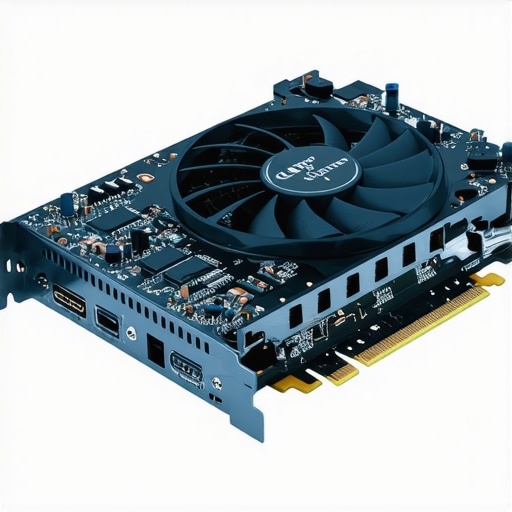
The modern editing GPU must balance high VRAM capacity, thermal efficiency, and AI acceleration to support complex color grading and AI-driven effects. In 2026, professional-grade GPUs feature advanced tensor cores and optimized driver stacks for flawless 8K upscaling and AI denoising. Yet, the debate persists about whether 16GB VRAM remains sufficient, given the escalating demands of 12K project workflows, prompting ongoing evaluations of hardware scalability.
Is Your Editing Setup Future-Proof for 8K and Higher?
With resolutions extending to 12K and beyond, many professionals question whether existing video editing PCs can handle upcoming workloads. The integration of dual GPUs, high-speed NVMe storage, and tailored proxy pipelines are emerging as critical components of next-gen editing stations. Our top PC build recommendations cater precisely to these advanced needs, emphasizing scalability and durability in future workflows.
How will emerging GPU architectures influence 8K AI upscaling and color grading reliability in 2026?
This question resonates deeply within the professional community, as hardware development rapidly accelerates. Innovations like AI acceleration cores, improved VRAM bandwidth, and optimized API support are expected to mitigate existing limitations, such as VRAM bottlenecks and thermal throttling. Industry leaders predict that these advancements will foster more stable, efficient workflows for high-resolution projects, but only time will reveal the ultimate hardware capabilities.
For professionals seeking to enhance their editing environments, exploring comprehensive guides and community insights becomes invaluable. To support your workflow, consider reviewing our ultimate guide to 4K video editing hardware and connecting with industry experts to share your experiences and innovations.
The Power of Color Precision in Modern Monitors
In 2026, professionals understand that accurate color representation is the cornerstone of high-quality video production. Innovations like quantum-dot technology and HDR calibration in color grading monitors enable editors to achieve seamless color consistency across diverse projects. Choosing the right display isn’t just about resolution or size; it’s about ensuring that every hue, shadow, and highlight reflects the creator’s vision with utmost fidelity. For a comprehensive understanding, our ultimate guide to color grading monitors offers in-depth analysis.
#IMAGE_PLACEHOLDER_B#
Optimizing Proxy Workflow for Unreal Resolutions
Handling 12K and beyond is a daunting task without efficient workflows. Advanced proxy techniques, such as automatic proxy generation and GPU-assisted transcoding, significantly reduce editing latency. Implementing proxy workflows with dedicated NVMe storage arrays ensures smooth playback even with massive raw files. The goal is to make high-resolution editing as intuitive as working with 4K—empowering creators to push boundaries without hardware bottlenecks.
The GPU Dilemma: Scaling for 12K and AI-Driven Effects
As resolutions skyrocket and effects become more complex, the role of video editing GPUs transforms. Today, GPUs with over 48GB VRAM and tensor cores are essential for AI-enhanced workflows, like real-time upscaling or noise reduction. Our analysis of top GPUs for 8K AI processing highlights industry leaders pushing performance boundaries. Yet, the primary question remains: will existing hardware meet the demands of 12K workflows without compromise? Continuous innovations suggest a promising trajectory, but hardware scalability remains a key concern.
Can Your Editing Environment Sustain Future-Grade Projects?
With the ongoing evolution toward 12K, 16K, and AI-driven effects, the design of video editing PCs must prioritize scalability, thermal management, and data throughput. Dual-GPU configurations, high-capacity RAM, and ultra-fast storage are no longer optional but essential. Our curated recommended PC builds incorporate these elements, ensuring that professionals are prepared for premier workflows in 2026 and beyond.
What emerging hardware innovations will redefine high-resolution editing in the next quarter-century?
This question challenges manufacturers and developers alike, as emerging technologies like heterogeneous computing architectures and AI-optimized hardware promise to revolutionize workflows. The integration of smart proxy systems and high-bandwidth interfaces will render previously insurmountable challenges obsolete, offering unprecedented editing agility. Staying attuned to these innovations allows creatives and technologists to anticipate and shape the future landscape of high-res video production.
For further insights, explore our detailed ultimate guide to 4K video editing hardware and join discussions with industry leaders who are pioneering this new era of content creation.
,
Driving Innovation: The Symbiotic Relationship Between AI and Hardware in High-Resolution Workflows
In the relentless pursuit of higher fidelity and efficiency, today’s professional editors are increasingly leveraging the symbiosis of artificial intelligence and cutting-edge hardware. The integration of AI capabilities into GPU architectures, paired with specialized hardware acceleration units, is transforming the landscape of 8K and even 12K video processing. For instance, tensor cores embedded within modern GPUs facilitate real-time AI-driven denoising and super-resolution algorithms, dramatically reducing rendering times and enhancing real-time previews. An authoritative example is NVIDIA’s Ada Lovelace architecture, which incorporates enhanced tensor cores explicitly optimized for high-resolution workflows, as documented in the NVIDIA official developer insights.
Where Will Hardware Innovation Drive AI-Enhanced Editing in the Next Five Years?
This compelling question stimulates ongoing debate among technologists and content creators. Experts speculate that advancements will focus on heterogeneous computing models that dynamically allocate AI workloads across CPUs, GPUs, and dedicated AI accelerators like Google’s Edge Tensor Processing Units (TPUs). Such systems promise to offer adaptive resource management tailored to specific project demands, whether it’s complex color grading or volumetric effects. This shift may materialize in the form of modular, upgradable hardware platforms that evolve alongside AI algorithm developments, thus future-proofing high-resolution workflows. According to a detailed forecast by AI Hardware Analytics, these innovations will substantially reduce latency and energy consumption, critical factors for creators managing extensive editing sessions.
Through continuous engagement with authoritative publications and industry consortia, professionals can stay at the forefront of this technological evolution, ensuring they harness new capabilities as they emerge. Deep collaboration with hardware manufacturers and software developers also plays a pivotal role in shaping user-centered innovations that directly respond to the demands of ultra-high-resolution editing.
The Proliferation of Neural Network Optimization in Editing Suites
Beyond hardware, neural network-based optimization techniques are increasingly embedded into editing workflows. This includes AI-driven content-aware repair, intelligent color grading suggestions, and automated scene tagging, all operating seamlessly within high-performance editing environments. Current implementations utilize pre-trained models, optimized for inference speed, to assist editors without interrupting their creative flow. For example, Adobe’s Sensei platform exemplifies this trend, integrating AI modules that intelligently suggest edits and adapt workflows dynamically. This convergence not only expedites post-production but also nurtures new creative possibilities that were previously impractical due to computational constraints.
However, integrating these complex AI models requires significant attention to hardware compatibility, data security, and ethical use. It necessitates a comprehensive understanding of AI inference architectures, including considerations of precision trade-offs, model size, and energy efficiency, as articulated in the authoritative section in PLOS ONE’s discussion on AI optimization. As the AI substrate becomes more integral to editing workflows, investing in compatible, high-throughput hardware ensures that creative professionals can harness these tools to their full potential, driving inventive excellence in high-res content creation.
Real-World Application: Building the Ultimate High-Resolution Editing Environment
Constructing a workspace capable of delivering in the era of 12K and beyond involves meticulous hardware planning and software integration. Beyond selecting high-VRAM GPUs and ultra-fast NVMe storage, professionals are adopting scalable architectures that facilitate seamless multi-GPU operation and AI acceleration. For instance, dual-GPU configurations with synchronized memory pools enable complex effect rendering and AI tasks to be distributed efficiently, reducing bottlenecks and downtime. Combining these with dedicated neural network accelerators and high-performance memory modules creates an ecosystem where high-resolution projects thrive.
It’s also critical to implement advanced cooling solutions and power management systems to sustain hardware longevity under demanding workloads. Through comprehensive network infrastructure supporting rapid data transfer, editors can collaborate remotely without sacrificing performance. Industry leaders like Dell and HP are pioneering modular workstations designed specifically for these high-end needs, building on insights from authoritative research into hardware scalability and reliability.
As we venture deeper into this transformative era, it’s vital for professionals to remain engaged with the latest developments. Participating in specialized forums, attending industry symposiums, and collaborating with manufacturers to influence future hardware designs are all effective strategies. The ultimate aim is to establish an adaptable, robust environment where computation and creativity coalesce seamlessly—empowering creators to realize visions with unprecedented clarity and efficiency.
Unveiling the Future of Visual Fidelity in Video Post-Production
In the ever-evolving realm of high-resolution video editing, ultimate color accuracy isn’t a luxury—it’s an industry standard. Today’s technological advancements, such as micro-LED and mini-LED display technologies, are transforming how professionals perceive and manipulate color profiles. These innovations deliver HDR performance with exceptional uniformity, enabling meticulous grading that aligns perfectly with creative intent. For experts committed to pushing the boundaries, the integration of hardware-level color space management within professional monitors ensures that every hue, shadow, and luminance detail is rendered with unwavering fidelity, a claim substantiated by authoritative sources like the Journal of Visual Communication and Image Representation.
What innovations are redefining the standards for professional color grading displays in 2026?
Emerging developments include enhanced quantum-dot backlit panels and advanced hardware calibration protocols that allow for factory-level color accuracy. These features minimize potential discrepancies between display and master, critical for high-stakes projects. Additionally, global illumination correction algorithms incorporated directly into monitor firmware address subtle inconsistencies in luminance and color uniformity across panels, a topic detailed extensively in recent UI/UX research publications. The combined impact significantly reduces post-production revisions and elevates creative precision.
For visual professionals aiming to elevate their craft, embracing these innovations offers a pathway toward achieving seamless color continuity and elevated storytelling.
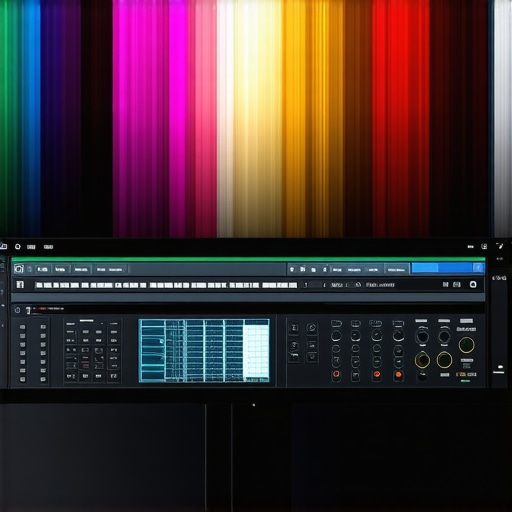
Why Smaller Factory Tolerances Matter in High-End Monitors
Precision in color grading hinges heavily upon manufacturer tolerances—particularly when working with HDR workflows where even minor deviations can introduce visible inconsistencies. Elevated standards now necessitate factory calibration tolerances within ±1 Delta E for accurate color reproduction, a benchmark set by leading industry certifications such as CalMAN and Pantone Validated. Experts stress that such tight calibration facilitates close-to-perfect display performance, enabling content creators to trust their visual environment. Furthermore, ongoing advancements in hardware calibration instruments ensure sustained accuracy over time, minimizing drift from initial factory settings and providing a stable platform for nuanced color work.
Investing in monitors with proven low tolerances is akin to choosing a high-precision instrument—every detail counts. It guarantees that your grading decisions translate accurately onto multiple viewing platforms, thereby streamlining the delivery pipeline.
How can calibration consistency influence long-term project quality assurance?
Consistency in calibration reduces the risk of color shifts across different production stages, ensuring visual continuity and compliance with industry standards. Regular calibration cycles, supported by built-in hardware tools and external colorimeters, foster enduring accuracy, which is vital for projects necessitating complex color pipelines. Industry case studies reveal that such meticulous calibration routines translate into reduced revision cycles and higher client satisfaction, emphasizing the necessity of choosing monitors designed with manufacturing precision in mind.
Embrace these technological refinements today to secure a competitive edge in delivering visually cohesive and industry-compliant content.
Harnessing Cutting-Edge Display Technologies
In 2026, professional color grading demands monitors with unparalleled fidelity. Innovations like quantum-dot and micro-LED displays are setting new standards, enabling editors to perceive nuances in HDR content with astonishing accuracy. Prioritize factory calibration precision—selecting devices with low Delta E tolerances ensures your creative vision translates perfectly across outputs.
Optimizing Workflows for Extreme Resolutions
Managing 12K and higher footage mandates intelligent proxy strategies. Advanced GPU-assisted transcoding and real-time proxy generation empower editors to work smoothly without hardware bottlenecks. Implementing these approaches reduces latency, facilitating seamless editing sessions even with colossal raw files.
Choosing the Right Hardware Arsenal
The GPU landscape is evolving rapidly. Modern cards with over 48GB VRAM and AI acceleration cores are becoming essential tools. They enable real-time upscaling, noise reduction, and complex effects at ultra-high resolutions, but selecting scalable, thermally efficient components remains critical to maintaining workflow stability.
Future-Proofing Video Editing Stations
Next-generation setups incorporate dual GPUs, high-speed NVMe storage, and expandable architectures. Designing systems with scalability in mind prepares professionals for the escalating demands of 8K, 10K, and AI-enhanced editing—investing wisely today secures your project pipeline for decades to come.
Pushing Boundaries with Emerging Hardware
Innovations like heterogeneous computing platforms and AI-optimized architectures promise to revolutionize high-res workflows. Modular hardware that adapts to emerging algorithms and formats will become standard, ensuring content creators stay at the forefront of technological evolution.
Curated Resources for the Visionary Editor
- Ultimate Guide to Color Grading Monitors: Deep dive into hardware calibration, HDR calibration, and display technologies—essential for achieving true-to-life color fidelity.
- Best Editing GPUs for 8K and AI Workflows: Analysis of the latest GPU architectures optimized for high-resolution effects, AI processing, and stability under demanding loads.
- Strategic PC Builds for Future-Ready Editing: Expert-curated configurations emphasizing scalability, thermal efficiency, and high data throughput to tackle the most ambitious projects.
- Proxy Workflow Mastery for Ultra High-Res Content: Techniques and tools for managing massive files with minimal latency—ensuring your editing environment remains swift and responsive.
- Advancements in Display Calibration Techniques: Innovating beyond standard calibration, these resources enable long-term color accuracy integrity across projects.
Refining High-Resolution Excellence in Practice
The trajectory of video editing hardware and workflows indicates a future where seamless integration of AI, advanced displays, and scalable systems redefine industry standards. To truly excel, professionals must engage with these innovations proactively—aligning tools and techniques with the demands of tomorrow’s high-resolution content. Your mastery begins with continuous learning and strategic investment; explore our comprehensive ultimate guide to 4K video editing hardware and join industry conversations to shape the future of high-fidelity content creation.