Elevating Video Production: The Intersection of Color Grading Monitors and GPU Power
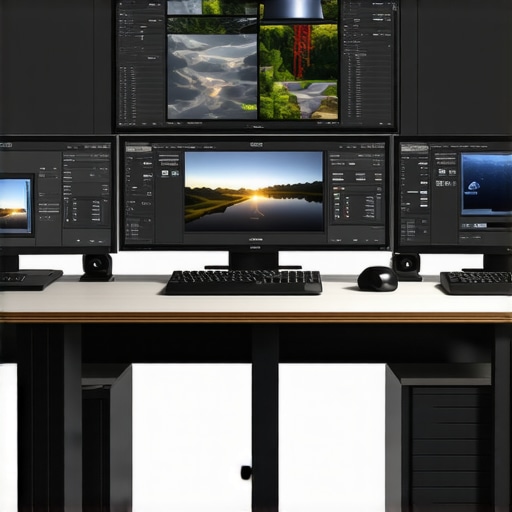
In the highly competitive arena of professional video editing, the synergy between advanced color grading displays and formidable GPU architectures defines the boundary between mediocrity and excellence. As 4K and emerging 8K workflows become the standard, mastering proxy workflows and selecting the right hardware configuration is paramount for seamless, high-fidelity editing.
The Evolving Role of Color Grading Monitors in Professional Workflows
How do the latest advancements in color accuracy impact editing precision?
Contemporary color grading monitors now feature mini-LED and OLED technologies, offering unparalleled contrast ratios and color uniformity crucial for tasks demanding meticulous color precision. Their integration with hardware calibration tools ensures consistent output, reducing the risk of color discrepancies across different viewing environments.
In practice, a high-end monitor not only facilitates accurate color correction but also mitigates encoding artifacts during proxy editing, especially crucial when working with 4K and 8K footage where pixel-level fidelity is non-negotiable. These monitors, coupled with hardware that supports 10-bit color processing, empower editors to make nuanced adjustments that translate well across various devices and broadcast standards.
Proxy Workflow Mastery for High-Resolution Video Synthesis
What strategies enable lag-free editing in demanding 4K and 8K project environments?
Proxy workflows serve as the backbone of efficient high-resolution editing, allowing editors to work with lower-bitrate versions without sacrificing original quality. Implementing real-time proxy switching, supported by fast NVMe SSDs and dynamic cache management, significantly reduces latency and prevents dropped frames during intense editing sessions. As detailed in proxy workflow techniques, leveraging hardware acceleration through the latest GPU architectures ensures smooth playback even when transitioning between proxies and original media.
Furthermore, intelligent proxy generation software can adapt resolution and compression levels dynamically, preserving pixel-perfect detail essential for final color grading and visual effects integration. This approach minimizes workflow bottlenecks, especially when paired with optimized hardware configurations designed for rapid data throughput.
Choosing the Ideal Video Editing PC: Hardware Synergy for 2026
To exploit the full benefits of high-quality monitors and proxy workflows, selecting a PC that balances CPU power, vast VRAM, and a robust GPU ecosystem becomes a strategic imperative. High-performance video editing PCs equipped with 48GB+ VRAM GPUs and dual-channel RAM support enable real-time rendering, complex color grading, and AI-driven effects processing without lag.
For instance, aggressive GPU choices like the latest AI-optimized GPUs facilitate faster rendering times, especially when handling large datasets inherent to 8K workflows. Paired with multi-core CPUs and extensive SSD arrays, this hardware synergy ensures that proxy workflows are complemented by rapid export and rendering pipelines, critical in professional environments where time is money.
Additionally, keeping abreast of innovations such as dual GPU configurations and high-bandwidth interfaces like Thunderbolt 4 ensures readiness for future demands, including 12K editing and real-time AI effects. Continuous hardware assessment and calibration, as recommended by industry experts, optimize output reliability and user confidence.
Are Your Current GPU and Monitor Choices Holding Back Your Creative Potential?
For dedicated video professionals seeking to push the boundaries of quality and efficiency, exploring the latest advancements in display technology and GPU architecture offers tangible benefits. To delve deeper into match-specific hardware solutions for your workflow, visit our contact page and share your professional setup.
Staying ahead in this dynamic field requires continuous learning and adaptation—consider consulting authoritative resources like the NVIDIA GameWorks Research for insights into GPU innovations that directly impact video editing performance.
Breaking Barriers: How Ultimate Hardware Choices Drive Creative Freedom
In the realm of high-end video production, next-generation workflows demand an intricate balance between hardware capabilities and workflow strategies. Choosing the right GPU and monitor setup not only enhances visual fidelity but also accelerates rendering and color grading processes, pushing creative boundaries further than ever before.
Color Grading Precision in a Post-Pandemic World
How do cutting-edge calibration tools and HDR standards influence professional grading accuracy?
Emerging calibration tools and standards like HDR10+ and Dolby Vision redefine how colorists approach consistency and dynamic range. Modern color grading monitors equipped with auto-calibration features and wide color gamuts ensure that every pixel reflects the director’s vision, even across different viewing environments. This progression leads to more reliable color workflows, critical when delivering content for high-end broadcasts and streaming platforms demanding precise color reproduction.
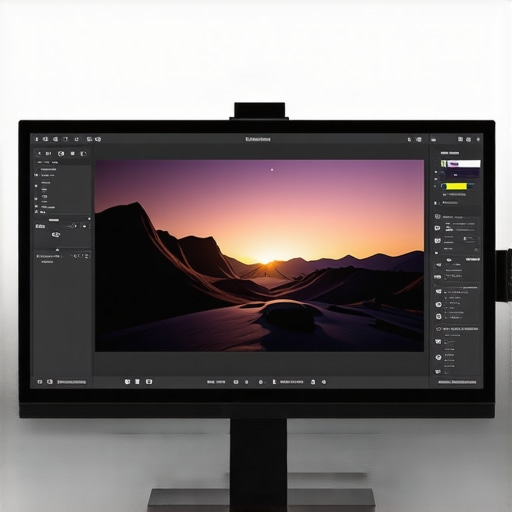
Incorporating hardware that supports 10-bit or 12-bit color processing, coupled with professional-grade calibration software, ensures that subtle shifts in hue and luminance don’t compromise the final quality. As technology advances, understanding and leveraging these tools become essential for professionals aiming for impeccable color fidelity. For additional insights on selecting suitable monitors, consult our guide on color grading monitor selection.
Turbocharging Proxy Workflows with Tailored Hardware Strategies
What are the best practices to eliminate lag and stuttering in high-res proxy editing sessions?
Efficient proxy workflows rely on a combination of fast storage solutions and smart data management. Utilizing proxy generation techniques that dynamically adapt resolution and compression levels ensures smooth playback even during complex edits. Hardware acceleration through the latest GPUs, with a focus on V-Ray or CUDA-enabled cards, significantly reduces encoding times and playback lag.
In addition, incorporating high-bandwidth interfaces such as Thunderbolt 4 and PCIe 4.0 SSDs optimizes data throughput, enabling real-time editing on multi-layer timelines. For workflows involving multiple 8K or 12K streams, hardware configuration specialists recommend strategies like dedicated cache drives and optimized RAID arrays to sustain stability and speed. Delving into GPU feature sets beyond VRAM can unlock even more performance for intensive editing tasks.
To explore hardware configurators designed for high-end proxy workflows, visit our dedicated hardware section.
Is Your Current Setup Maximizing Your Creative Output?
Many professionals underestimate how critical optimal hardware integration is to their workflow. As the industry shifts towards AI-enhanced editing and 8K/12K master projects, understanding the beyond-VRAM capabilities of modern GPUs, such as real-time ray tracing and AI denoising, becomes crucial. Regular evaluation of your setup and expansion into dual-GPU configurations or high-speed external storage can eliminate common bottlenecks.
For tailored recommendations, our consultation services are here to guide your upgrade path. Additionally, staying informed via authoritative sources like the NVIDIA research ensures your hardware choices keep pace with technological innovations shaping 2026’s editing landscape.
What Role Do Advanced Calibration Techniques Play in Achieving Perfect Color Consistency?
Modern calibration tools such as X-Rite i1Display Pro Plus and CalMAN Ultimate have revolutionized color management by offering precise control over monitor luminance, gamma, and white point, which are essential for ensuring that your color grading aligns seamlessly across different viewing devices and broadcast standards. Utilizing these tools allows professionals to create a standardized color environment, reducing discrepancies that could compromise final output fidelity.
Beyond hardware calibration, adopting software solutions integrated with LUTs (Look-Up Tables) enables consistent, reproducible color grading workflows. For instance, incorporating 3D LUTs calibrated specifically to your display environment ensures that every adjustment maintains accuracy—even under varying ambient lighting conditions, which is critical in collaborative post-production settings.
Furthermore, a comprehensive understanding of color science principles, such as color space conversions and gamma curves, empowers editors to make informed decisions during grading, minimizing errors that could lead to costly rework downstream. As the industry gravitates toward higher dynamic range standards like Dolby Vision and HDR10+, mastering calibration becomes indispensable for delivering content that meets these demanding specifications.
How Can External Hardware Innovations Elevate Proxy Editing and Color Fidelity?
Emerging external hardware solutions, including dedicated proxy encoding boxes and portable calibration units, extend the traditional workstation capabilities, offering flexibility and mobility without sacrificing quality. Devices like the Atomos Shinobi SDI/HDR monitor provide real-time monitoring and calibration options at the camera or field level, enabling effective on-set previewing and immediate adjustments, which streamline the editing pipeline.
Additionally, the advent of Thunderbolt 4 and USB-C interfaces supports high-bandwidth external GPU enclosures (eGPU), facilitating on-the-fly GPU upgrades that adapt to project complexity. This modular approach ensures that color grading accuracy and rendering power can be scaled efficiently, providing a tailored workflow suited to high-resolution projects such as 8K or even 12K productions.
On the software front, integrating hardware-accelerated color management systems with native editing platforms like DaVinci Resolve or Adobe Premiere Pro ensures that real-time feedback on color adjustments remains precise and consistent. Such synergy between hardware and software advances is unlocking new heights in post-production quality and efficiency.
Selecting the perfect monitor for high-end post-production work: Key considerations
When evaluating monitors for professional color grading, factors such as color gamut coverage (preferably DCI-P3 or Rec. 2020 for HDR workflows), peak luminance (ideally over 1000 nits for HDR mastering), and bit depth (10-bit or higher) should take precedence. Additionally, features like hardware LUT support, auto-calibration capabilities, and uniformity correction are vital to maintain consistency across the entire screen surface.
Given the rapid evolution of display technology, keeping abreast of innovations like quantum dot filters and nano-cell layers can significantly impact color fidelity and viewing angles. For example, ASUS ProArt PQ22UC offers a combination of OLED’s contrast ratio and 10-bit color depth, making it suitable for critical grading tasks, especially when paired with hardware calibration tools.
Understanding the compatibility of a monitor’s hardware calibration protocols with your existing workflow ensures that efficiency is maintained without compromising accuracy. Embracing these cutting-edge display solutions is essential for professionals aiming to meet the increasingly stringent standards of today’s high-end content delivery ecosystem.
Embracing Future-Proof Hardware: Preparing for the Next Era of Video Editing
As the industry anticipates the proliferation of 16-bit HDR workflows, real-time ray tracing, and AI-driven effects, future-proofing your editing setup is more critical than ever. Investing in scalable GPU architectures, such as the latest RTX 5090 or AMD Radeon RX 8900 XT, equipped with enhanced ray tracing cores and AI acceleration tensor cores, ensures the ability to handle evolving workloads efficiently.
Complementing high-tier GPUs with Fast DDR5 RAM, PCIe 5.0 storage, and high-throughput networking interfaces like Thunderbolt 4 or 8K HDMI 2.1 guarantees that data bottlenecks are minimized, enabling seamless workflow transitions between editing, rendering, and review processes. Moreover, compatibility with emerging standards like AV1 encoding and decoding opens further avenues for quality and compression efficiency improvements.
Keeping a regular hardware upgrade cycle and consulting authoritative sources such as the TechRadar GPU buying guides or manufacturer-specific white papers ensures your setup remains aligned with industry advancements. This proactive approach allows content creators to harness the full potential of innovative hardware, pushing the boundaries of creative excellence and technical precision.
Harnessing the Power of Quantum Dot Displays for Exceptional Color Fidelity
In the realm of professional color grading, the advent of quantum dot technology has revolutionized display calibration, offering wider color gamuts and higher peak luminance levels essential for HDR workflows. Monitors equipped with quantum dot layers, such as the Dell UltraSharp UP3221Q, provide not only vibrant visuals but also improve the accuracy of color rendition when matched with state-of-the-art calibration hardware. Integrating these displays into your workflow can significantly enhance the subtlety of color adjustments, especially in high-dynamic-range content creation.
Why Dual-GPU Configurations Are Critical for 12K and Beyond Content Creation
As resolutions surpass current standards, single-GPU setups increasingly struggle to handle the sheer amount of data processing required for smooth playback and rendering. Implementing dual-GPU configurations, particularly using NVIDIA’s NVLink bridges, offers a substantial performance boost by facilitating faster data exchange between cards. This ensures that real-time editing of multi-layer 12K footage with complex visual effects remains feasible without resorting to compromise or lengthy render times. High-bandwidth connectivity and multi-stream CUDA cores synergize, pushing creative limits further for demanding post-production environments.
Expert Tips for Precise Calibration in Challenging Lighting Conditions
Color grading accuracy depends heavily on stable ambient light environments. Utilizing advanced calibration tools like the CalMAN Studio Suite combined with ambient light sensors ensures consistent monitor calibration, mitigating perceptual shifts caused by inconsistent lighting. For studios with variable lighting, integrating an automated lighting control system synchronized with calibration software maintains optimal viewing conditions, ensuring colorists are never misled by environmental factors. Such meticulous calibration practices minimize the risk of discrepancies when outputting high-fidelity content across different viewing media.
Unlocking AI-Driven Effects for Real-Time 8K Editing Magic
Artificial intelligence has transitioned from experimental to essential in modern editing pipelines. Integrating AI-powered plugins like Adobe’s Sensei or Topaz Video Enhance AI with hardware that supports tensor cores in RTX 5090 cards accelerates non-linear workflows, enabling upscaling and noise reduction in real-time during 8K projects. These AI tools optimize rendering efficiency and open creative avenues previously limited by processing constraints, ultimately elevating production quality while reducing turnaround times.
Pushing Creative Boundaries with Hardware-Accelerated Color Grading Techniques
Emerging hardware solutions, such as the Blackmagic Design UltraStudio Recorder 3G and external GPU enclosures, allow colorists to experiment with high-precision LUTs in portable configurations. Coupling these devices with high-end calibration standards ensures that on-location grading or review sessions maintain color integrity. Moreover, leveraging hardware-accelerated color grading pipelines in DaVinci Resolve or Baselight ensures color manipulations are fluid, with instant feedback, empowering professionals to realize their artistic visions unencumbered by technical limitations.
Expert Insights & Advanced Considerations
Why dual GPU configurations are no longer optional for ultra-high-resolution projects
As resolutions push beyond 8K, single-GPU setups often struggle to deliver real-time playback and rendering speeds. Implementing dual-GPU systems with NVLink bridges facilitates faster data exchange, enabling seamless editing of multi-layer 12K footage and complex visual effects without bottlenecks.
Leveraging high-dynamic-range standards to elevate color grading precision
Modern HDR standards like Dolby Vision and HDR10+, combined with professional-grade monitors supporting wide color gamuts and high peak luminance, allow colorists to create images with astonishing accuracy and consistency. Integrating advanced calibration tools ensures that subtle hue and luminance adjustments translate perfectly across devices and viewing environments.
The importance of hardware-accelerated AI effects in real-time workflow enhancement
AI-powered plugins utilizing contemporary tensor cores accelerate noise reduction, upscaling, and stylistic effects in real-time, drastically reducing rendering times. This hardware-software synergy empowers editors to experiment freely, pushing creative boundaries while maintaining efficient turnaround times.
Choosing monitors that truly match professional grading needs
Investing in monitors with comprehensive coverage of DCI-P3 or Rec. 2020 color spaces, peak luminance over 1000 nits, and factory calibration support ensures high fidelity in color grading. Features like hardware LUT support and uniformity correction further guarantee consistent results across the entire screen surface, essential for delivering broadcast-ready content.
Preparing for the future of video editing hardware
Scalability lies at the core of future-proofing your setup. High-bandwidth interfaces like Thunderbolt 4, PCIe 5.0, and external GPU enclosures provide the flexibility for upgrading components as technology advances. Anticipating upcoming standards such as AV1 codec support and 16-bit HDR workflows ensures your hardware remains relevant amidst rapid industry evolution.
Curated Expert Resources
- Pro Video Coalition – Recognized for in-depth articles and reviews on advanced hardware configurations and workflow optimizations tailored for professional editors.
- Color Grading Central – Offers authoritative guides and updates on monitor calibration, HDR standards, and color management best practices used by industry experts.
- NVIDIA Developer Zone – Provides detailed documentation and insights into GPU architectures, AI acceleration, and real-time rendering capabilities that impact professional video workflows.
- Blackmagic Design Support – Known for comprehensive resources on calibration tools, external monitoring devices, and workflow enhancements for color grading professionals.
- Adobe Creative Cloud Blog – Features authoritative content on leveraging hardware advancements within popular editing and grading software platforms, ensuring optimal integration and performance.
The Most Impactful Leap in Video Production Today
Mastering the synergy between high-end hardware and sophisticated workflow strategies dramatically transforms the landscape of professional video editing. Emphasizing dual GPU systems, calibrated HDR displays, and AI-accelerated effects uncover new creative potential and operational efficiency. Incorporating these insights positions you at the forefront of industry innovation. For tailored advice on your setup, connect with our expert team through our contact page. Keep pushing the boundaries of what’s possible in high-fidelity video production, and stay informed by exploring our comprehensive guides on hardware and software essentials.
![3 Proxy Workflow Tactics to Fix 4K Playback Stutter [2026]](https://videoediting.editinggearpro.com/wp-content/uploads/2026/02/3-Proxy-Workflow-Tactics-to-Fix-4K-Playback-Stutter-2026.jpeg)