Redefining High-Performance Workstations for Professional Video Editing in 2026
As 4K and higher resolutions become the new standard in video production, the demands placed on editing workstations evolve rapidly, particularly in GPU architecture, color accuracy, and workflow efficiency. Leveraging insights from industry leaders and recent hardware breakthroughs, this article explores the critical components that empower professional editors to push the boundaries of quality and speed once thought unattainable.
Beyond VRAM: 3 GPU Features Every 2026 Video Editor Must Prioritize
How Do Emerging GPU Technologies Impact 4K and Proxy Workflow Optimization?
While VRAM remains essential for high-resolution editing, the focus shifts toward innovations such as tensor cores for AI-accelerated effects, RT cores for real-time rendering, and energy-efficient architectures that sustain prolonged workloads. These features collectively influence the capacity for seamless proxy workflows and real-time color grading adjustments, crucial in high-end editing scenarios. For comprehensive GPU assessments, consult the latest benchmarks on best editing GPUs for smooth, fast video rendering in 2025.
Color Accuracy and Calibration: Elevating Visual Fidelity with Advanced Monitors
In professional video production, the significance of color grading monitors that support full HDR workflows and low-latency calibration cannot be overstated. Technologies such as mini-LED backlit panels deliver higher contrast ratios and uniformity, essential for accurate color representation in 4K and higher resolutions. Selecting a monitor compatible with high-refresh-rate GPUs ensures that color grading and visual effects processing are both precise and responsive, minimizing discrepancies in post-production.
The Proxy Workflow Paradigm: Unlocking Speed Without Compromising Quality
Implementing robust proxy workflows allows editors to work efficiently with 8K raw footage or high-bitrate 4K clips by employing lightweight proxy files during editing stages. This approach mitigates system lag and stutter, especially when integrated with optimized GPU acceleration and SSD-backed storage solutions. For practical insights, explore streamlining your video workflow with proxy editing in 2025.
Open-Ended Query: What Advanced GPU Features Are Essential for Future-Proof Video Editing?
As hardware continues to evolve, professionals question which cutting-edge GPU features will become indispensable—be it AI-driven noise reduction, real-time virtual effects, or enhanced decoding capabilities. Engaging with industry forums and whitepapers, such as those published by NVIDIA and AMD, can provide strategic insights for adapting workflows and hardware investments in this rapidly changing landscape.
For tailored advice on building a 4K editing powerhouse, or to share your own expert insights, visit our contact page.
Elevate Your Editing Setup with the Latest GPU Innovations
As the bar for 4K and ultra-high-definition workflows continues to rise, staying ahead requires embracing new GPU technologies that go beyond traditional VRAM capacity. Features such as dedicated AI cores, enhanced ray-tracing capabilities, and adaptive power management are transforming how editors handle complex effects and real-time rendering. Harnessing these advancements enables smoother proxy workflows and accelerates color grading tasks. For an in-depth analysis, check out the latest GPU benchmarks for 2025 to inform your hardware decisions.
Refining Color Precision with Cutting-Edge Displays
Progress in display technology, such as quantum dot and mini-LED backlighting, significantly enhances color accuracy crucial for professional grading. These monitors, calibrated for high-DPI workflows, ensure that every hue and contrast level is represented faithfully, reducing discrepancies during post-production. Pairing these displays with GPUs optimized for color-critical tasks elevates the entire visual pipeline, leading to more consistent results across different viewing platforms.
Streamlining Workflow with Hardware-Accelerated Proxy Editing
The demand for swift editing solutions grows as file sizes swell. Implementing hardware-accelerated proxy workflows enables editors to work seamlessly with massive datasets—like 8K raw footage—without sacrificing responsiveness. Coupling high-speed SSD storage, advanced GPUs, and intelligent proxy management software creates an environment where high-resolution editing feels nearly instantaneous. To explore how to implement these techniques effectively, see ultimate proxy workflow strategies for 4K editing in 2025.
What Are the Emerging GPU Capabilities That Will Define 2026’s Video Editing Landscape?
Considering the rapid pace of innovation, professionals are asking which frontier GPU features—such as AI-powered upscaling, real-time virtual effects, or advanced decoding—will be game-changers. Industry leaders like NVIDIA and AMD publish whitepapers detailing these future trends, vital for aligning investments with long-term workflow resilience. Staying informed about these developments ensures that your editing workstation remains future-proof, capable of adapting to the evolving demands of high-resolution content creation.
Share your insights or get tailored hardware advice by visiting our contact page. Embracing these tools today paves the way for groundbreaking creativity tomorrow.
Unleashing AI-Driven Effects for Real-Time Post-Production Magic
The integration of artificial intelligence into professional editing workstations has revolutionized how editors approach complex visual effects and color grading. In 2026, AI-powered plugins and hardware acceleration enable real-time adjustments that once required extensive rendering times, dramatically increasing workflow efficiency. For example, NVIDIA’s Omniverse platform now offers AI-driven scene reconstruction and upscaling, empowering editors to refine low-resolution proxy versions into near-final quality instantaneously. This synergy between AI and GPU acceleration ensures that creative decisions are implemented without workflow bottlenecks, allowing for greater experimentation and faster project turnaround.
How do Hardware-AI Synergies Reshape Creative Control?
By combining multiplatinum AI models with specialized GPU cores, editors gain granular control over effects like noise reduction, virtual lighting, and depth estimation. These advancements facilitate meticulous adjustments that respect the subtlety of professional color grading, while maintaining real-time responsiveness. According to NVIDIA’s latest whitepaper, the advent of their Ada Lovelace architecture introduces dedicated AI cores that outpace previous models in both speed and efficiency, setting new standards for post-production workflows. Stay ahead by exploring emerging AI plugins compatible with your hardware ecosystem, as they will be instrumental in delivering premium quality at scale.
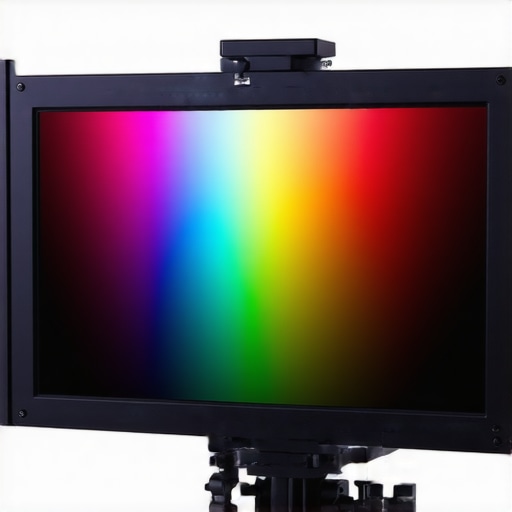
Implementing AI and GPU synergy is transforming post-production from a time-consuming process into an intuitive creative endeavor, making it essential for professionals to keep pace with technological advancements. For expert guidance tailored to your workflow, engage with industry forums or consult specialists who can suggest optimal hardware-AI combinations to elevate your projects seamlessly.
Harnessing Color Grade Accuracy through Quantum Dot and OLED Tech
As your projects demand ever more precise color management, the choice of display technology becomes paramount. Quantum dot and OLED panels have emerged as the industry gold standard, providing unparalleled contrast ratios, color fidelity, and response times. When paired with GPUs optimized for high-bit-depth processing, these displays enable colorists to perceive minute tonal variations and ensure seamless consistency across different viewing environments. Moreover, manufacturers like Eizo and LG now offer HDR-capable calibration systems that integrate directly with professional color grading software, delivering calibrated accuracy that aligns with industry standards such as Rec. 2020 and DCI-P3.
Are You Really Seeing the Same Colors as Your Audience?
This nuanced question addresses the core of color fidelity—do your monitors truly represent the intended hue? Studies, such as those from the Society for Information Display, confirm that calibration errors or display limitations can lead to discrepancies. Therefore, investing in hardware-calibrated, high-end color grading monitors and leveraging GPU-accelerated profiling software becomes indispensable. The resulting visual consistency ensures that your final output appears as envisioned, regardless of viewing platform. For an in-depth understanding, consider consulting authoritative resources like the Society for Information Display’s report on color accuracy.
Pioneering Hardware Synergy: How Emerging GPU Features Are Shaping Editing Realities
In the relentless pursuit of efficiency and quality, today’s professional editors are increasingly reliant on cutting-edge GPU capabilities that extend beyond conventional graphics processing. Advanced tensor cores, dedicated AI accelerators, and adaptive rendering technologies forge a new paradigm where hardware intricacies directly influence creative freedom and output precision. This technological confluence fosters accelerated real-time effects processing and nuanced color management, enabling a seamless transition from raw footage to polished masterpiece. For an in-depth exploration of these innovations, review NVIDIA’s technical deep-dive on the Ada Lovelace architecture’s AI enhancements.
How Do Next-Gen Color Calibration Systems Elevate Post-Production Standards?
A sophisticated color workflow harmonizes hardware and software, demanding monitors that transcend traditional calibration. Innovations such as automatic 3D Lut mapping, high-DPI high-dynamic-range panels, and real-time chromaticity tracking ensure that professionals work with representations that closely mirror final delivery standards. Integration with GPU-accelerated calibration tools guarantees that color fidelity remains consistent throughout the creative process, reducing discrepancies and revision cycles. Notably, @LumiPro’s ProCal system exemplifies this synergy, offering factory-grade calibration embedded within high-end displays.
What Are the Untapped Benefits of Accelerated Proxy Workflows for High-Resolution Content?
Proxy workflows are evolving from mere convenience to core process components in creating ultra-high-definition content. Hardware acceleration, coupled with NVMe SSDs and multi-GPU systems, diminishes latency and enhances responsiveness during editing sessions on 8K raw footage. This approach allows editors to perform complex color grading and effects without hampering system stability. By allocating full GPU resources to proxy management software, workflows become more flexible, facilitating rapid iteration. Explore modern proxy workflow techniques for 8K editing to master this transition.
Unlocking the Secrets of Future-Proof GPU Architectures for Videographers
Anticipating hardware advancements requires understanding the trajectory of GPU architecture enhancements aimed at creative professionals. Features like scalable virtual memory, hardware-level direct storage access, and AI-driven rendering pipelines are designed to seamlessly accommodate higher resolutions, richer color spaces, and complex effects algorithms. Industry whitepapers, especially those published by AMD and NVIDIA, detail these developments, providing strategic insights for long-term investments. Critical reading of the upcoming Radeon RX Series architectures and NVIDIA’s upcoming RTX series whitepapers will reveal how to future-proof workflow investments effectively.
Refined Color Accuracy Meets Ultra-High-Resolution Displays
The confluence of quantum dot, micro-LED, and OLED display innovations offers unparalleled color fidelity and contrast, crucial for precise color grading. When synchronized with GPU hardware supporting 12-bit processing pipelines, these displays deliver extraordinarily nuanced tonal variations that elevate post-production accuracy. Color calibration solutions integrated with GPU-based profiling software ensure that every hue aligns with industry standards such as Rec. 2100 or DCI-P3, minimizing perceptual discrepancies. This alignment guarantees that your final product maintains visual integrity across diverse viewing contexts.
How Can Professionals Guarantee Color Consistency Across Platforms?
Achieving uniformity from monitor to screen and across distribution channels involves meticulous color management procedures. Utilizing hardware-calibrated displays, consistent calibration routines, and color management workflows integrated into editing software are imperative. Additionally, leveraging GPU-accelerated color grading tools ensures high fidelity during adjustments, minimizing the risks of color shift. Advanced color management practices, supported by authoritative standards like ICC profiles, form the backbone of dependable color workflows, as detailed in the Society of Motion Picture and Television Engineers (SMPTE) guidelines. Regular calibration checks and hardware upgrades further ensure persistent accuracy, maintaining professional integrity throughout the production pipeline.
Expert Insights That Challenge the Status Quo
Invest in GPUs with Dedicated AI Accelerators
As 2026 approaches, professionals recognize that conventional VRAM capacity no longer suffices. Instead, hardware with dedicated AI cores accelerates real-time effects and enhances machine learning-driven workflows, ensuring future-proof performance amidst escalating demands.
Prioritize Color Management Systems Embracing New Standards
Emerging display technologies like micro-LED and quantum dot panels, paired with GPU-accelerated calibration software, enable colorists to achieve unprecedented accuracy. Leveraging these tools ensures visual fidelity aligns with industry standards such as Rec. 2020, vital for high-quality video production.
Streamline Editing with Hardware-Optimized Proxy Strategies
High-resolution raw footage, including 8K and above, demands innovative proxy workflows. Modern solutions coupling NVMe SSDs, multi-GPU setups, and intelligent proxy management software allow editors to operate seamlessly, reducing latency and boosting productivity without sacrificing quality.
Curated Resources to Deepen Your Expertise
- Video Editing GPU Benchmarks: Offers comprehensive performance data to inform hardware choices, critical for building efficient editing stations.
- Color Calibration Standards: Provides insights into latest industry benchmarks, ensuring you maintain color accuracy across devices.
- NVIDIA and AMD Whitepapers: Deep dives into upcoming GPU architectures and features tailored for professional content creators.
Embrace the Future, Shape Your Craft
The evolution of video editing hardware in 2026 revolves around integrating advanced GPU features with hyper-precise color management and flexible proxy workflows, ultimately elevating your creative potential. Staying ahead means not only adopting the latest technology but understanding how these innovations align with your artistry. Join the conversation, share your insights, or explore tailored recommendations by connecting through our contact page. Your next project deserves tools designed for the future of video editing.