Achieving Professional Precision with the Right 4K Video Editing Hardware
In the realm of high-end video production, the synergy between monitors and hardware components defines the quality and efficiency of your workflow. For 4K video editing, where every pixel matters, selecting optimal hardware solutions is crucial. Expert editors leverage advanced monitors paired with powerful GPUs and CPUs to ensure color accuracy, smooth playback, and rapid rendering, thereby elevating creative possibilities and meeting professional standards.
Why High-Performance Monitors Are Non-Negotiable for 4K Content Creation
At the heart of any professional 4K editing setup lies a monitor capable of rendering true-to-life colors and detailed imagery. Color grading monitors with high bit-depth support, such as those with 10-bit panels, enable nuanced adjustments essential for cinematic quality. Additionally, wide color gamuts like DCI-P3 or Adobe RGB facilitate accurate color representation, which is fundamental for post-production workflows that demand color fidelity. For optimal results, consider models like the best color grading monitors designed for professional video work.
Hardware Acceleration and GPU Choices for Effortless 4K Playback
Seamless 4K editing hinges on robust GPU capabilities. Modern editing GPUs such as NVIDIA’s RTX series or AMD’s Radeon Pro line deliver hardware acceleration that significantly reduces rendering times and prevents stuttering during real-time playback. This hardware synergy ensures that complex effects, color grading, and high-bitrate footage are processed efficiently, minimizing downtime and maximizing creative flow. To explore top-performing GPUs, visit best editing GPUs for 2025.
Optimal CPU and RAM Configuration for Heavy-Duty 4K Workflows
Complementing high-end GPUs, a multi-core CPU with high clock speeds and ample RAM (at least 32GB) ensures stable multitasking and smooth timeline scrubbing. CPUs from Intel’s Core i9 or AMD’s Ryzen 9 series are preferred for their processing power, especially during rendering and exporting phases. The combination of these components forms a resilient backbone for demanding 4K projects, reducing bottlenecks and enhancing productivity. For detailed build suggestions, see top PC builds for 2025.
How to Balance Hardware Investment with Editing Efficiency
Investing in top-tier hardware yields diminishing returns if not balanced correctly. Effective hardware synergy involves aligning the monitor’s color accuracy with GPU and CPU capabilities to prevent bottlenecks. For example, upgrading your GPU without a matching high-quality monitor might limit your ability to judge color grading accurately. Therefore, a comprehensive hardware assessment, considering workflow demands and budget constraints, is essential. Consult with industry experts or refer to authoritative guidelines such as the ultimate guide to 4K editing hardware.
What are the latest innovations in 4K monitor technology that could redefine editing standards?
Emerging technologies such as mini-LED backlighting, HDR support, and higher refresh rates are transforming 4K monitor capabilities. These advancements enable more precise color grading, better contrast, and smoother visual experiences, which are vital for professional editors. Staying abreast of these innovations ensures your setup remains competitive and future-proof.
For those looking to refine their workflow further, exploring proxy editing techniques can dramatically improve editing speed without sacrificing quality. Discover more about this approach at proxy editing in 2025. If you wish to share your expertise or seek personalized advice, contact our professional team via contact us.
Push the Boundaries of Editing Precision with Cutting-Edge Hardware
In the world of professional 4K video production, hardware synergy plays a pivotal role in achieving seamless workflows and impeccable results. High-performance components such as top-tier GPUs, CPUs, and monitors work in tandem to deliver accurate color grading, swift rendering, and real-time playback of complex effects. Modern advancements, like AI-accelerated encoding and decoding, are further revolutionizing the editing landscape, enabling editors to handle larger files effortlessly. To explore the latest innovations that can elevate your setup, visit this comprehensive hardware guide.
How to Detect When Your Hardware Is Holding Back Your Creativity
Understanding the signs of bottlenecks is essential for maintaining an efficient editing environment. Common indicators include sluggish timeline response, prolonged rendering times, or color inaccuracies during grading. These symptoms often point to mismatched hardware components. For example, an underpowered GPU may struggle with real-time effects, while insufficient RAM hampers multitasking and caching. By running diagnostic tests and benchmarking your system against industry standards, you can pinpoint and address these issues proactively. For expert insights on optimizing your hardware, consider reviewing GPU and CPU configurations for 4K workflows.
Are there emerging hardware trends that could redefine 4K editing standards in the next few years?
Absolutely. Innovations like quantum dot displays, which promise unparalleled color accuracy and brightness, and the advent of AI-driven hardware optimization tools are set to transform professional editing setups. Additionally, the ongoing development of faster interfaces such as PCIe 5.0 and Thunderbolt 4 will facilitate even higher data transfer speeds, reducing latency and enabling more complex real-time processing. Staying informed about these trends ensures your editing environment remains cutting-edge and future-proof. For detailed hardware recommendations tailored to upcoming technology, check the latest hardware reviews.
If you’re eager to upgrade your editing environment or seek personalized advice, don’t hesitate to reach out through our contact page. Sharing your experiences and questions helps build a community of highly skilled editors committed to excellence.
Harnessing the Power of Next-Generation Display Technologies
As 4K video editing demands escalate, emerging display innovations are setting new standards for professional workflows. Mini-LED backlighting, for example, offers superior contrast ratios and uniform brightness, enabling editors to perceive subtle nuances in color grading with unparalleled precision. Coupled with high dynamic range (HDR) support, these monitors can render a broader spectrum of luminance, vital for achieving cinematic quality. Furthermore, OLED technology, with its self-emissive pixels, provides exceptional contrast and color accuracy, making it a favorite among high-end post-production suites. Staying abreast of these advancements is crucial for professionals aiming to maintain a competitive edge in the rapidly evolving visual landscape.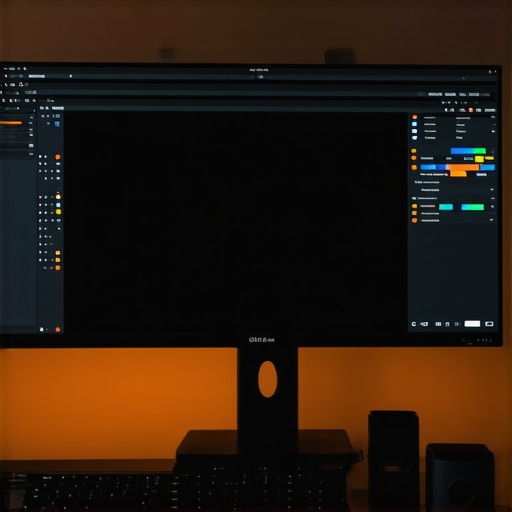
Integrating AI-Driven Hardware Acceleration for Real-Time Creativity
Artificial intelligence is revolutionizing hardware capabilities, especially in the realm of video editing. AI-accelerated encoding and decoding technologies, embedded within modern GPUs and dedicated hardware accelerators, significantly reduce processing times and enhance real-time playback of complex effects. For instance, NVIDIA’s DLSS (Deep Learning Super Sampling) leverages AI to upscale lower-resolution footage without sacrificing detail, saving rendering time and system resources. Similarly, AI-powered noise reduction and color correction tools integrated into editing software streamline post-production, allowing editors to focus on creative decisions rather than technical limitations. For those investing in future-proof setups, exploring AI-optimized hardware components like the NVIDIA RTX 40 series or AMD’s MI200 accelerators is essential.
The Future of Data Transfer: PCIe 5.0 and Thunderbolt 4
Speedy data transfer interfaces are the backbone of high-performance editing environments. PCIe 5.0, with its doubled bandwidth over PCIe 4.0, enables faster SSDs and GPU communications, drastically reducing load and render times. Thunderbolt 4, with support for 8K displays and multi-port connectivity, offers a versatile solution for external storage and peripherals, ensuring minimal latency during editing sessions. These technologies are not just incremental upgrades but foundational shifts that will facilitate the handling of larger 8K+ raw footage and complex multi-camera projects seamlessly. Embracing these interfaces now prepares your workflow for the demands of tomorrow’s high-resolution, high-bitrate media.
Assessing and Overcoming Hardware Bottlenecks for Seamless Creativity
High-end hardware can still be hampered by mismatched components or outdated configurations. Common symptoms of bottlenecks include sluggish timeline responsiveness, delayed previews, and inconsistent color accuracy during grading. Advanced diagnostic tools, such as benchmarking software from SPECviewperf or PugetBench, provide valuable insights into your system’s performance ceilings. Addressing these issues involves a strategic upgrade of critical components—prioritizing GPU and RAM enhancements for real-time effects and high-resolution playback. Moreover, implementing dual-channel memory configurations and ensuring optimal thermal management can prevent thermal throttling, maintaining peak performance under intensive workloads. Regularly reviewing your hardware against industry standards ensures you remain competitive and efficient in the fast-paced world of professional editing.
How Will Quantum Dot Displays and AI Optimization Reshape Professional Editing?
Quantum dot displays promise unprecedented color accuracy and brightness levels, critical for precise color grading and HDR workflows. When combined with AI-driven optimization tools that tailor hardware settings dynamically, editors can experience more consistent performance and output quality. This synergy will not only enhance visual fidelity but also streamline workflows by reducing manual calibration needs. Industry leaders like Samsung and LG are investing heavily in quantum dot research, indicating a shift toward these displays becoming the new standard for high-end editing stations. To stay ahead, professionals should consider integrating these innovations into their setups and remain engaged with ongoing developments through authoritative sources like the Society for Information Display (SID) reports.
For dedicated advice tailored to your specific workflow and hardware investments, connect with our expert team by visiting our contact page. Embrace the future of 4K video editing and transform your creative potential today!
Unlocking Next-Generation Display Technologies for Professional Clarity
As 4K content demands escalate, embracing innovative display solutions becomes essential. Mini-LED backlighting offers superior contrast ratios and uniform brightness, enabling editors to perceive subtle nuances critical for color grading. OLED screens, with their self-emissive pixels, deliver unparalleled contrast and color fidelity, making them indispensable in high-end post-production environments. These advancements not only elevate visual precision but also future-proof your setup against upcoming industry standards. Staying informed about such technologies ensures your editing process remains at the forefront of excellence.
The Role of AI-Enhanced Hardware in Elevating Creative Potential
Artificial intelligence-driven hardware features are transforming the editing landscape. NVIDIA’s DLSS technology, for instance, leverages deep learning to upscale lower-resolution footage seamlessly, optimizing workflow efficiency. AI-powered noise reduction and intelligent color correction embedded within editing software streamline post-production, reducing manual effort and enhancing accuracy. Investing in AI-accelerated GPUs like the RTX 40 series or AMD’s MI200 accelerators empowers editors to handle complex projects effortlessly, unlocking new creative horizons and achieving cinematic quality faster than ever before.
How Will Faster Data Interfaces Enable Future-Ready Editing Spaces?
Emerging data transfer standards such as PCIe 5.0 and Thunderbolt 4 revolutionize external storage and peripheral connectivity, drastically reducing latency and increasing throughput. PCIe 5.0 doubles bandwidth capacity, facilitating rapid access to massive 8K raw footage, while Thunderbolt 4 supports multi-8K display setups and high-speed external drives. These interfaces are critical for managing the ever-increasing size of media files, ensuring smooth playback and real-time editing without bottlenecks. Embracing these technologies now positions your workflow at the cutting edge, ready for the demands of next-generation media production.
Detecting and Eliminating Hardware Bottlenecks Before They Hinder Creativity
High-performance editing systems can still face limitations if components are mismatched or outdated. Common symptoms include delayed rendering, sluggish timeline response, and inaccurate color previews. Diagnostic tools like PugetBench or SPECviewperf provide insights into system performance, enabling targeted upgrades. Prioritizing GPU and RAM enhancements, along with optimizing thermal management, ensures stable, peak performance during intensive tasks. Regularly assessing your hardware against industry benchmarks guarantees your setup remains competitive and capable of supporting complex 4K workflows efficiently.
What emerging hardware trends could redefine 4K editing standards in the coming years?
Quantum dot displays, offering unprecedented color accuracy and brightness, are poised to become the new standard for professional editors. AI-driven hardware optimization tools that adapt system settings dynamically will further streamline workflows, reducing manual calibration efforts. Additionally, faster interfaces like PCIe 5.0 and Thunderbolt 4 will facilitate handling larger files and more complex effects with ease. Staying ahead of these trends ensures your editing environment remains innovative, efficient, and ready for future challenges.
Synergizing Hardware for Flawless Editing Experiences
Achieving seamless workflows requires harmonizing hardware components. High-refresh-rate monitors paired with powerful GPUs facilitate smooth playback of complex effects, while high-core-count CPUs accelerate rendering and encoding tasks. Adequate RAM (minimum 64GB for 8K workflows) and optimized storage solutions, such as NVMe SSDs, minimize bottlenecks. Regular system audits and benchmarking help identify weak links, enabling strategic upgrades that maximize productivity and creative output. Building a balanced setup ensures every component complements the others, delivering professional-grade results consistently.
Visualizing the Future: AI and Display Tech Transformations
Emerging display technologies like quantum dot OLEDs promise extraordinary color fidelity and luminance, transforming how editors perceive their work. Coupled with AI-powered hardware that optimizes performance dynamically, these innovations will redefine standards in professional editing. Industry leaders are investing heavily in these areas, with companies like Samsung and LG pioneering research. Staying engaged with authoritative sources such as the Society for Information Display (SID) will keep you informed about the latest breakthroughs, enabling you to adapt swiftly and maintain a competitive edge.
Expert Insights & Advanced Considerations
Prioritize Hardware-Software Synchronization to Avoid Bottlenecks
Ensuring your GPU, CPU, and monitor work in harmony is fundamental. Mismatched components can cause delays in rendering and color accuracy issues, undermining professional quality. Regularly benchmarking and updating your hardware to match software demands guarantees a smooth workflow.
Leverage Emerging Display Technologies for Enhanced Precision
Innovations like mini-LED backlighting, OLED, and HDR support are redefining standards. They enable editors to perceive subtle color nuances and contrast differences vital for cinematic grading, ensuring a future-proof setup.
Integrate AI Acceleration to Boost Creative Efficiency
Modern AI-accelerated hardware, such as NVIDIA’s RTX series, enhances real-time effects, upscaling, and noise reduction. This technology streamlines post-production workflows, allowing more focus on creative decisions rather than technical bottlenecks.
Stay Ahead with Next-Generation Data Interfaces
PCIe 5.0 and Thunderbolt 4 are not mere upgrades—they are game-changers. They facilitate rapid data transfer, supporting massive 8K footage and complex effects, thus minimizing latency and maximizing productivity.
Monitor Your System’s Health and Performance Regularly
Utilize benchmarking tools and diagnostic software to identify and resolve hardware bottlenecks early. A balanced system tailored to high-resolution workflows ensures consistent, professional-grade results.
Curated Expert Resources
- Society for Information Display (SID) – Offers authoritative updates on display innovations like quantum dot and OLED technology, critical for high-end editing environments.
- PugetBench – Industry-standard benchmarking tool to evaluate and optimize your editing system’s performance.
- NVIDIA Developer Blog – Provides insights into AI-driven hardware acceleration and upcoming GPU technologies for creative professionals.
- Intel’s Innovation in Data Transfer Technologies – Details on PCIe 5.0, Thunderbolt 4, and future interfaces shaping high-speed workflows.
Final Perspective: Embrace the Future of 4K Editing Hardware
In the realm of professional 4K video editing, hardware excellence is non-negotiable. The integration of cutting-edge display tech, AI acceleration, and ultra-fast data interfaces empowers creators to push boundaries with confidence. Staying informed through authoritative sources and continuously upgrading your setup ensures your workflow remains at the forefront of industry standards. For those committed to top-tier quality and efficiency, engaging with expert communities and resources is essential. Connect with us to explore tailored solutions or share your innovative strategies—your journey to mastering advanced hardware starts here.