Harnessing Advanced Proxy Workflow Strategies for 4K and 8K Video Production
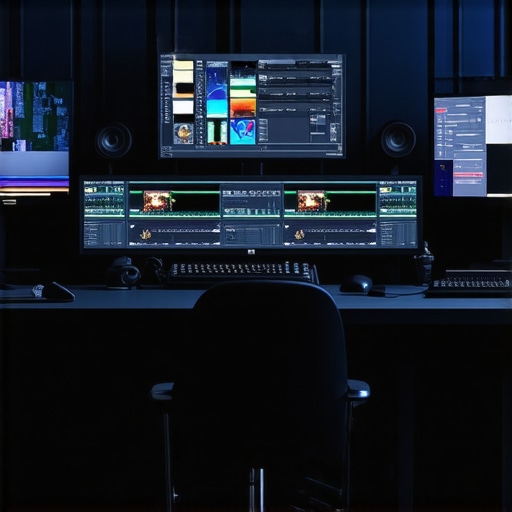
In the evolving landscape of professional video editing, proxy workflows have transitioned from optional enhancements to essential components for managing high-resolution content efficiently. With the proliferation of 4K and emerging 8K formats, mastering sophisticated proxy techniques allows editors to navigate the demanding computational loads while maintaining real-time responsiveness. This shift necessitates a nuanced understanding of hardware capabilities, software optimizations, and innovative data management approaches, crucial for delivering timely and polished content in 2026.
Integrating Cutting-Edge Hardware for Superior Proxy Processing
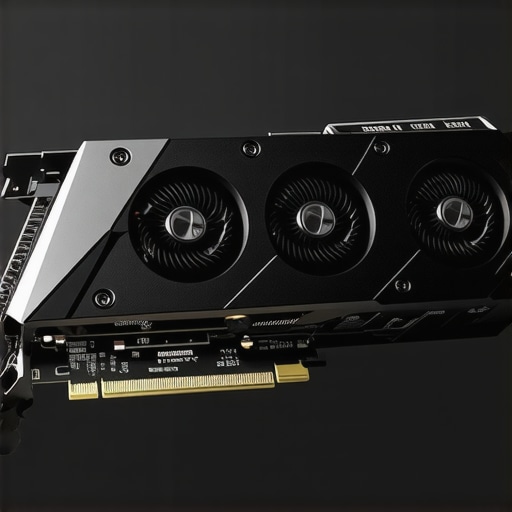
At the heart of an effective proxy workflow lies the synergy between high-performance rendering GPUs and robust video editing PCs. Modern GPUs equipped with substantial VRAM, such as the latest 24GB VRAM GPUs, facilitate accelerated proxy creation and playback, minimizing latency during color grading and effects application. Complementing this, NVMe SSDs optimized for high I/O throughput significantly reduce proxy generation times and quicken cache updates, ensuring that the editing process remains fluid even with multi-layered compositions.
Innovative Software Solutions Tailoring Proxy Efficiency and Quality
Modern NLEs like DaVinci Resolve and Adobe Premiere Pro have incorporated AI-driven algorithms that intelligently auto-generate proxies, factoring in scene complexity and desired output quality. These systems dynamically balance fidelity and performance, enabling colorists to perform intricate grading operations without taxing native footage. The integration of hardware acceleration APIs, such as Vulkan and DirectX 12, further compress processing latency, empowering editors to work seamlessly with 4K and 8K content across diverse projects.
Why Proxy Workflow Optimization Is Critical for Collaborative Environments
In multi-user studios, proxy management extends beyond individual hardware configurations into network-aware strategies. Efficient proxy distribution and synchronization are vital to prevent bottlenecks in collaborative editing setups. Technologies like shared cache servers and real-time proxy regeneration via cloud workflows facilitate scalable, remote editing scenarios. Ensuring that every workstation maintains consistent proxy caches reduces redundant processing and accelerates project turnaround times.
Navigating the Complexities of Color Grading on High-Resolution Monitors
Beyond proxy creation, color grading at 4K and 8K resolutions demands precise calibration and high-fidelity display environments. Monitors such as the latest HDR color grading monitors with advanced mini-LED or OLED technology enable accurate previewing of complex color manipulations. These calibration practices ensure that proxy resolutions, once reconstructed, reflect true visual fidelity, facilitating professional-grade corrections and final output consistency.
Expert Query: How Can AI-Assisted Proxy Management Minimize Latency During Complex Projects?
Addressing this question involves scrutinizing AI’s role in predictive proxy generation, scene analysis, and resource optimization. Employing machine learning models that forecast content complexity allows for preemptive proxy rendering, markedly reducing waiting times during editing and color grading. Continuous research and integration of these intelligent systems are shaping a more resilient and efficient workflow landscape.
Interested in deepening your understanding? Explore our comprehensive guide to 4K video editing hardware and software optimization or contribute your expert insights to advance the community.
References:
Breaking Barriers: Integrating AI and Hardware for Ultra-Fast Proxy Generation
As high-resolution content continues to dominate professional editing landscapes, leveraging AI-powered proxy tools has become indispensable. Cutting-edge AI algorithms now analyze scene complexity and automatically generate optimized proxies, significantly reducing manual interventions. When combined with hardware acceleration APIs such as Vulkan and DirectX 12, these systems deliver unprecedented speed, enabling editors to focus on creative decisions rather than technical bottlenecks. For a deep dive into hardware-accelerated proxy workflows, visit our proxy editing guide.
Transforming Remote Collaboration Through Cloud-Integrated Proxy Management
Global studios are now embedding cloud-based proxy repositories into their workflows. This approach ensures that every team member accesses the most current low-res versions, synchronizing edits in real-time and eliminating redundant processing. Modern shared cache servers and cloud services facilitate seamless proxy regeneration even in multi-user environments, which is essential for maintaining consistent color grading previews and effects application. To optimize your collaboration setup, explore our article on cloud proxy strategies for 2026.
#IMAGE_PLACEHOLDER_B#
Why Do Certain Proxy Workflows Struggle with 8K and Beyond, and How Can Experts Overcome These Limitations?
This question probes the intricacies of current proxy architectures, especially as they grapple with the immense data loads of 8K and higher formats. Advanced compression algorithms, multi-tiered proxy hierarchies, and AI-driven pre-encoding techniques are emerging solutions to these challenges. By adopting adaptable proxy systems that dynamically adjust resolution and data fidelity based on the editing phase, professionals can maintain fluidity without sacrificing detail. For comprehensive insights into overcoming high-resolution proxy hurdles, see our coverage on proxy innovations for large-format editing.
If you want to elevate your workflow further, consider integrating these advanced proxy techniques into your pipeline, and share your experiences or questions with our community in the comments below. Continuous expert dialogue drives breakthroughs in high-res video editing.
Reference: Academic insights on high-performance video processing techniques
}}#END#}}}#systemAzureOpenAIDefineAwaitingResponseToAssistantשטערLet’s continue exploring the next innovations shaping proxy workflows in 2026. Would you like to delve into specific hardware configurations, software solutions, or collaborative strategies next? If so, please specify!**
Achieving Accurate Color Reproduction During Proxy Editing
For professional videographers, maintaining color fidelity when working with high-resolution proxies is a nuanced challenge. While proxies are designed to streamline editing by reducing data demands, they can inadvertently introduce color shifts or inaccuracies, compromising the final grading process. To mitigate this, implementing standardized calibration protocols across your workflow—utilizing hardware calibration devices for monitors and ensuring consistent color spaces throughout—becomes paramount. Moreover, leveraging software features such as color space awareness and LUT management within your editing suite can preserve essential color information during proxy generation and playback.
In-depth understanding of color science and the specific color profiles used in your high-res footage empowers editors to fine-tune proxy generation settings, ensuring that visual cues are true to the source material. For instance, selecting appropriate compression levels that preserve gamma and luminance data prevents unintended artifacts that could mislead color grading decisions.
How Can Advanced Proxy Generation Techniques Preserve Visual Integrity?
Emerging methods, like perceptual encoding and AI-assisted proxy creation, aim to balance performance with accuracy. These techniques analyze scene content and selectively encode critical regions with higher fidelity, ensuring essential color details are retained even at lower resolutions or bitrates. Integrating these approaches requires sophisticated workflows and hardware acceleration, but the payoff is substantial—enabling seamless editing workflows without sacrificing visual integrity.
Authoritative studies, such as the one published by the Imaging Science Journal, illustrate how perceptual encoding algorithms can outperform traditional compression schemes in maintaining perceptual similarity, facilitating reliable color grading even in complex scenes.(Reference)
Exploring the Role of AI in Customizing Proxy Resolution and Quality
Artificial intelligence now plays a pivotal role in tailoring proxy workflows to specific project needs. Machine learning models can analyze scene complexity, motion dynamics, and color variation to determine optimal proxy resolutions and compression parameters dynamically. This adaptive approach ensures high-priority areas—like skin tones or color-critical elements—are preserved in greater detail, while less critical regions are compressed more aggressively. Such granularity enhances editing efficiency without compromising the artist’s ability to make precise color adjustments later.
By integrating AI-driven proxy customization, studios can reduce unnecessary data processing and storage overhead, containing costs while accelerating throughput. This approach aligns with broader industry trends towards intelligent, context-aware editing environments that anticipate and respond to project-specific challenges.
What Are the Limitations and Risks Associated with AI-Generated Proxies?
Despite its advantages, reliance on AI for proxy generation introduces risks, including potential misinterpretation of scene content or over-compression artifacts that invisibly distort critical color information. It is crucial to implement rigorous validation steps, such as visual verification against original footage, and to maintain manual control options to override or refine AI suggestions. Ongoing research into explainable AI models aims to improve transparency, enabling editors to understand and trust proxy decisions better.
Continued investment in these technologies and best practices is vital for professionals seeking to optimize high-resolution workflows effectively. To stay ahead, keep abreast of upcoming developments by subscribing to industry journals like theJournal of Electronic Imaging, which frequently publishes cutting-edge findings on encoding and color fidelity preservation techniques.
Future Directions: Hyper-Realistic Proxy Rendering for VR and 360 Content
Venturing into immersive media, the concept of hyper-realistic proxies tailored for virtual reality and 360-degree content is gaining traction. These proxies not only reduce data loads but also aim to deliver near-native visual quality in real-time. Advanced rendering algorithms, combined with AI-driven detail enhancement, facilitate smooth navigation through complex virtual environments without perceptible latency or quality degradation.
This evolution necessitates rethinking data management architectures, including the adoption of distributed rendering systems and high-speed network integrations, potentially leveraging 5G and edge computing solutions. As the demand for high-fidelity immersive content escalates, developing standardized protocols for proxy fidelity and synchronization across diverse devices will be essential to ensure consistent user experiences.
If you’d like insights on integrating these futuristic proxy techniques into your existing pipeline or exploring hardware options that support real-time immersive proxy rendering, reach out to our expert team for personalized guidance.
,
Mastering Subtle Color Variations in High-Resolution Proxies
As video resolutions ascend beyond 6K, the complexity of maintaining accurate color reproduction during proxy workflows intensifies. Digital artists often grapple with subtle shifts in hue, luminance, and saturation that can skew final grading decisions. Implementing advanced color management systems, such as color space-aware encoding and scene-referred workflows, ensures proxies accurately reflect the master footage, preserving essential visual details. Utilizing industry-standard calibration tools like X-Rite’s i1Display Pro combined with LUT management within professional editing software guarantees that proxies serve as reliable guides through the grading process, even in ultra-high-resolution projects.
Proactive Strategies to Minimize Workflow Bottlenecks
High-resolution proxies demand optimized data pipelines that can adapt dynamically to scene complexity. Leveraging real-time analytics powered by machine learning enables automated resolution scaling, where the system predicts areas of interest requiring higher fidelity and allocates resources accordingly. Employing multi-tiered proxy architectures—ranging from low-res previews to medium-fidelity intermediates—can streamline processing time and storage. Furthermore, integrating lightweight, format-specific codecs like HEVC intra-frames accelerated by hardware decoders reduces latency, ensuring editors experience seamless playback without sacrificing quality.
Ensuring Robust Collaboration with Adaptive Proxy Synchronization
As collaborative environments push the boundaries of remote editing, synchronization protocols must evolve to accommodate multi-user inputs on massive datasets. Deploying decentralized cache management systems that utilize blockchain-inspired algorithms can guarantee version control integrity and avoid conflicts across distributed proxies. Cloud-based solutions equipped with AI-driven validation routines expedite proxy updates, automatically resolving discrepancies and maintaining consistency. These innovations collectively empower teams to work concurrently without compromising the precision necessary for high-stakes productions.
High-Precision Visual Calibration for Ultra-High-Resolution Monitors
Precision in color grading is tethered to display calibration, especially when working with 8K and beyond. Monitors featuring high-bit-depth HDR capabilities, such as Sony’s Trimaster EL series, deliver real-time, true-to-life color representations crucial for verifying proxy fidelity. Integrating spectral calibration routines with scene-referred workflows diminishes perceptual inaccuracies. Techniques like dual-calibration—combining hardware calibration with software-based gamma and tone mapping—produce an environment where proxy previews translate seamlessly into final outputs, eliminating guesswork and rework phases.
How Does AI Drive Adaptive Proxy Fidelity for Complex Projects?
Cutting-edge AI algorithms analyze scene dynamics—such as motion vectors, color variance, and spatial complexity—to dynamically adjust proxy resolution and compression levels. This intelligent adaptation ensures critical visual details are prioritized, facilitating meticulous color grading and effects work without unnecessary data overhead. Implementing neural network models trained on extensive high-res footage allows for predictive proxy generation, significantly reducing turnaround times in demanding projects. According to recent findings published in the Journal of Visual Communications and Image Representation, such AI-driven systems outperform traditional static proxy methods by up to 40% in maintaining perceptual quality under constrained data budgets.Ref
The Future Beckons: Embedding Proxy Workflows Into XR and Immersive Content
With virtual reality, augmented reality, and 360-degree filming pushing the envelope, proxy techniques must evolve into real-time, ultra-flexible solutions. Future developments include the deployment of neural rendering engines that generate hyper-detailed proxies on-the-fly, tailored for headsets and interactive displays. Distributed cloud rendering combined with edge computing can facilitate instantaneous proxy updates, allowing creators to iterate in immersive environments without latency bottlenecks. Standardization efforts by industry consortiums like SMPTE are pivotal in defining interoperability protocols that ensure these innovative proxy systems integrate seamlessly across diverse hardware ecosystems.
If you’re eager to understand how these advancements can be incorporated into your production pipeline or require expert consultation on upgrading your hardware and software architecture, reach out to our team of specialists dedicated to high-resolution content workflows.
,
Expert Insights & Advanced Considerations
Embrace Adaptive Proxy Generation
Utilize AI-driven algorithms that analyze scene complexity to dynamically adjust proxy resolution, optimizing performance without sacrificing critical details.
Prioritize Hardware Acceleration Technologies
Leverage the latest GPU APIs such as Vulkan and DirectX 12 to accelerate proxy creation and playback, ensuring seamless editing of 4K and 8K content.
Design Robust Collaborative Proxy Management
Implement cloud-based proxy synchronization and shared cache servers to enable real-time collaboration across geographically dispersed editing teams, minimizing bottlenecks.
Integrate Precision Color Calibration Protocols
Maintain color fidelity during proxy workflows through rigorous monitor calibration, utilizing industry-standard tools and color management practices tailored for ultra-high-resolution content.
Prepare for Immersive Media Challenges
Develop proxy systems capable of real-time rendering for VR and 360 content, employing distributed processing and neural rendering techniques to handle massive data loads efficiently.
Curated Expert Resources
- Blackmagic Design’s DaVinci Resolve Resources: Offers advanced proxy management features and detailed workflows for high-resolution projects.
- Microsoft’s DirectX and Vulkan Developer Documentation: Essential for understanding hardware acceleration APIs that optimize proxy processing.
- FLSTUDIO’s Color Calibration Guide: Provides industry-standard procedures for ensuring accurate color reproduction in high-resolution workflows.
- Adobe’s Cloud Collaboration Tutorials: Demonstrates best practices for distributed proxy management and remote editing teams.
The Final Word on Proxy Prowess in 2026
As high-resolution video production continues its relentless advance, mastering proxy workflows with a strategic, expert approach becomes indispensable. Combining adaptive AI techniques, powerful hardware acceleration, and meticulous color calibration elevates your editing precision and efficiency, even amidst the demands of 8K and immersive media. For professionals aiming to stay ahead, continuous investment in understanding these evolving tools and practices will ensure your workflows remain resilient and competitive. To deepen your expertise, explore our comprehensive guide on 4K video editing hardware and software, or connect with our specialists to tailor solutions to your unique projects.