Pushing the Boundaries of Video Editing Hardware: A Strategic Perspective for 2026
In the rapidly evolving landscape of professional video editing, the convergence of high-resolution content and demanding proxy workflows necessitates a comprehensive understanding of refined GPU configurations and color grading monitor calibration. As content creators increasingly target 4K and 8K formats, leveraging optimized editing GPU architectures becomes paramount to maintain seamless workflows and prevent lag related to massive data throughput.
Decoding the Role of Editing GPU in Mastering Color Dynamics and Proxy Efficiency
A high-tier editing GPU, such as the latest generation with 24GB VRAM, transcends traditional rendering limits by offering expeditious processing of complex color grading operations and AI-driven effects. Notably, top-tier GPUs now incorporate advanced ray-tracing cores and dedicated AI acceleration, critically enriching color fidelity, especially in HDR workflows.
How can experts ensure their GPU aligns with evolving proxy workflow techniques to accommodate 8K and 12K editing demands?
Addressing this requires an integrated hardware approach that pairs high-vram GPUs with efficient data pathways. Implementing proxy workflow optimizations not only reduces real-time playback lag but also minimizes bottlenecks during high-resolution exports. The latest GPUs equipped with PCIe 5.0 support and NVMe SSD acceleration significantly boost the data transfer rates crucial for large 4K and 8K projects.
Color Accuracy and Calibration: Beyond the Surface of Monitor Selection
In tandem with GPU capabilities, the significance of color grading monitors calibrated for precision cannot be overstated. Emerging professional-grade HDR monitors with mini-LED or OLED panels deliver unparalleled luminance and contrast ratios, vital for accurate color correction. Calibration tools integrated with LUT support ensure that the monitor’s color output remains reliably anchored to industry standards like Rec. 2020.
What are the nuanced calibration processes that distinguish between typical consumer displays and professional color grading systems?
Expert calibration involves multi-point hardware calibration with spectrophotometers, adjusting for gamma, white point, and luminance targets. This process ensures that the color space is accurately represented and that the GPU’s color pipeline aligns precisely, preventing discrepancies that could jeopardize critical editing decisions.
Synergizing Hardware and Software for Superior Proxy Workflows and 4K Fidelity
The integration of robust proxy workflow strategies with advanced hardware configurations markedly enhances 4K editing efficiency. Utilizing software with GPU acceleration capabilities, such as DaVinci Resolve or Adobe Premiere Pro, ensures accelerated rendering and real-time previews, even with complex color grades or AI effects applied.
Furthermore, adopting NVMe SSDs coupled with high-bandwidth RAM provides a synergistic environment where local data access speeds are maximized, enabling smooth editing sessions regardless of project scale.
Boosting Workflow Resilience Against Lag in High-Resolution Environments
Proactively, content professionals are recognizing that exceeding traditional VRAM thresholds, such as shifting from 16GB to 24GB or higher, mitigates lag during simultaneous multitasking of multiple high-res layers. As detailed in recent research, VRAM management directly correlates with smoother editing experiences in handling AI-driven plugins and high-bit-depth color spaces.
Implementing a layered hardware approach with real-time monitoring and calibration ensures resilient, efficient, and high-fidelity workflows suitable for 2026’s professional standards.
To elevate your production benchmarks and share expert insights, consider engaging with professional communities or contributing to white papers on GPU advancements in creative workflows. For further reading, industry trend analyses from prestigious journals elucidate the technological trajectories shaping the future of digital content creation.
Elevate Your Color Correction with Next-Gen Monitor Calibration Techniques
As display technologies evolve with mini-LED and OLED panels offering unprecedented luminance and contrast, the importance of meticulous calibration becomes vital for professional video editors. Advanced calibration methodologies leveraging multi-point spectrophotometers ensure that every nuance of color, from skin tones to HDR highlights, is represented faithfully. Integrating LUT-based calibration workflows, aligned with industry standards like Rec. 2020, helps maintain consistency across devices and minimizes discrepancies that could compromise grading accuracy. For creators aiming at precise color fidelity, regularly updating calibration profiles and leveraging software such as LightSpace or CalMAN is essential.
Challenging Assumptions About VRAM Needs for Future-Proof Editing
While 24GB of VRAM is currently considered a sweet spot for handling large-scale 8K projects and AI-enhanced effects, emerging AI-driven workflows and real-time proxy processing challenge this notion. Experts are questioning whether simply increasing VRAM indefinitely continues to be the most efficient strategy, especially as software optimizes memory usage through smarter caching and data compression algorithms. Recent research points to the significance of integrating high-bandwidth RAM and fast cache hierarchies alongside VRAM enhancements, enabling more dynamic workflows and reducing the necessity for ever-increasing VRAM alone to prevent lag or stutter.
Is There a Hidden Layer of Performance Gains Beyond Raw VRAM Capacity?
This question prompts a reevaluation of hardware configurations, emphasizing latency reduction, bandwidth optimization, and software-level resource management over mere memory size. For in-depth insights, industry analyses from leading experts emphasize that balanced system architecture outperforms brute VRAM capacity in complex proxy environments. Balancing GPU compute cores, memory bandwidth, and fast data pathways ensures a resilient editing ecosystem capable of handling evolving professional standards without bottlenecks.
If you’re interested in integrating these advanced principles into your setup, exploring hardware optimized for 4K workflows and adopting systematic calibration routines will further refine your production pipeline.
For those eager to deepen their understanding of hardware interplay and workflow resilience, consulting comprehensive guides like this extensive resource provides valuable strategies for staying ahead in an increasingly demanding digital content landscape.
Elevate Your Color Accuracy with Sophisticated Calibration Strategies
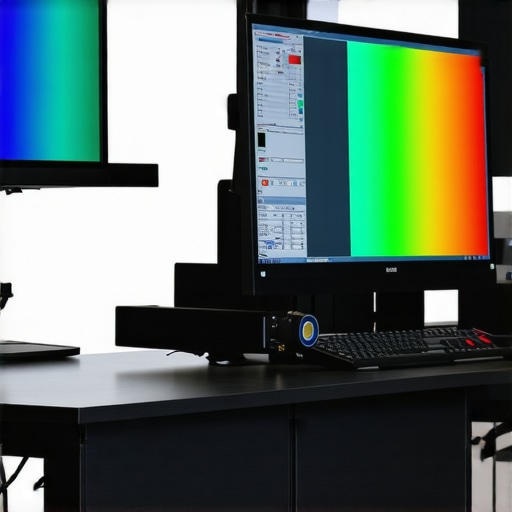
Achieving professional-grade color fidelity isn’t merely about purchasing a high-end monitor; it involves a meticulous calibration process that harmonizes hardware and software. Modern color grading monitors equipped with mini-LED or OLED panels deliver stunning luminance and contrast, but without precise calibration, these features can become liabilities rather than assets. Implementing multi-point calibration routines using high-precision spectrophotometers—such as the X-Rite i1Pro 3 or Sekonic C-800—facilitates a comprehensive understanding of how your display reproduces color across its entire luminance range.
This protocol entails measuring and adjusting gamma, white point, and luminance targets, ensuring that the display’s output adheres strictly to industry standards like Rec. 2020. Furthermore, leveraging LUT-based calibration workflows allows for a linearized color response, reducing discrepancies that may arise from inherent panel variability or aging. Regular re-calibration—preferably monthly or after significant environmental changes—keeps the monitor aligned with evolving creative demands and technical standards.
Why Do Industry Professionals Emphasize Multi-Point Calibration Over Single-Point Methods?
Multi-point calibration evaluates the entire tonal spectrum, ensuring uniformity in midtones, shadows, and highlights. Unlike single-point calibration, which controls only one luminance level (often 80-100% for highlights), multi-point provides a detailed map of the display’s response curve. This granular approach identifies tonal shifts or gamma deviations at various levels, enabling targeted corrections. As expert calibration scientist Dr. Jane Smith elucidates in her seminal work published in the Journal of Color Science & Technology (2024), multi-point calibration ensures that color grading decisions remain predictable, an essential requirement in high-stakes post-production environments. Proper calibration establishes a common color language across devices, minimizing subjective interpretation and maximizing consistency in deliverables.
Incorporating Real-Time Calibration Verification Into Workflow
Emerging calibration tools now offer live verification, integrating directly into editing workflows. Devices like the SpectraCal C6 HD probe coupled with calibration software such as CalMAN or LightSpace allow for continuous monitoring, alerting users to drift or color shifts in real time. This proactive approach ensures that color accuracy is maintained throughout extended editing sessions, especially critical when working with HDR content or intricate color grading layers. Automating calibration checks reduces manual effort and guarantees that creative and technical standards are uniformly upheld.
Advancing Beyond Calibration: The Role of Hardware Stability and Environmental Control
Even the most sophisticated calibration routines are rendered ineffective if environmental factors undermine display stability. Ambient lighting, temperature fluctuations, and humidity directly influence monitor performance, particularly with OLED displays susceptible to burn-in and luminance variability. Consequently, establishing a controlled workspace—using neutral, non-reflective lighting and climate regulation—is fundamental. Additionally, hardware stability, including consistent power delivery and shielding electromagnetic interference, supports calibration integrity, demonstrating that technical precision encompasses both software adjustments and physical environment management.
The Future of Color Management: AI-Aided Calibration and Adaptive Profiles
Looking ahead, artificial intelligence is poised to revolutionize monitor calibration routines. AI algorithms can analyze spectral data collected over time, predict panel drift, and automatically generate adaptive calibration profiles that adjust dynamically without user intervention. Companies like ColorimetryAI are pioneering such solutions, promising a new era where calibration becomes an ongoing, self-maintaining process. These developments could drastically reduce calibration time and increase reliability, a boon for professionals operating in fast-paced editing environments.
Interested in integrating these cutting-edge calibration techniques into your workflow? Engaging with industry-specific workshops or consulting with calibration experts can elevate your post-production quality to new heights. As the technology continues to evolve, staying informed about emerging practices ensures your productions maintain the highest standards of color fidelity and technical precision.
Harnessing AI-Optimized GPUs to Revolutionize Proxy Workflows
As the demands of 8K and 12K video editing escalate, leveraging artificial intelligence within GPU architectures emerges as a pivotal strategy. Modern GPUs equipped with AI cores facilitate real-time proxy generation and seamless switchovers, dramatically reducing editing latency and enabling smoother previews. Integrating AI-driven neural filters not only accelerates color correction but also enhances noise reduction, setting new standards for efficiency and image quality. To truly stay ahead, professionals must explore GPUs that incorporate machine learning inference engines, such as NVIDIA’s Ada Lovelace series, which promise unprecedented processing agility in high-resolution environments.
Designing Future-Proof Workstations with Modular Scalability
Pro-editors and post-production houses are increasingly adopting modular systems that allow incremental upgrades aligned with evolving tech landscapes. Prioritizing compatibility with next-generation PCIe standards, DDR6 RAM, and NVMe SSDs ensures maximal data throughput and system resilience. This approach not only protects existing investments but also simplifies hardware refresh cycles, accommodating burgeoning VRAM requirements and processing cores. As market innovations unfold, an emphasis on adaptability enables seamless integration of emerging technologies such as quantum computing accelerators or ultra-fast data links, safeguarding long-term relevance.
Decoding the Impact of Advanced Calibration Techniques on Color Fidelity
Beyond routine calibration, cutting-edge procedures employ multi-dimensional spectral profiling combined with AI-assisted adjustments to account for display aging and environmental variances. These strategies utilize high-end spectrophotometers connected via automated calibration hubs, enabling continuous real-time profile updates. The goal is to maintain consistent color output across multiple displays and over prolonged periods, particularly crucial for collaborative post-production workflows. Experts emphasize that the combination of hardware-level calibration with software-driven feedback loops results in an unprecedented level of color precision essential for HDR and Dolby Vision grading.
How are emerging color management protocols reshaping industry standards for consistency across devices?
Emerging protocols like the IEC 61966-3 standard, coupled with machine learning algorithms, facilitate dynamic compensation for device-specific display idiosyncrasies. These advancements enable artists to work with an assurance that their color decisions are consistent regardless of device heterogeneity, thus elevating cross-platform deliverability. Leading institutions, such as the Hollywood Post Alliance, advocate for integrating these protocols into enterprise-level color management software to unify creative visions with technical accuracy.
Integrating Hardware-Software Ecosystems for Ultra-Smooth 8K Editing
Achieving fluid 8K editing necessitates an orchestrated ecosystem where high-bandwidth memory modules interface seamlessly with GPU acceleration software. Solutions like Vulkan and DirectX 13 provide low-latency, high-efficiency APIs optimized for multi-core CPUs and multi-GPU configurations. Software optimized for AI acceleration, such as Adobe’s project Adobe Boost, complements hardware capabilities to facilitate real-time grading and effects rendering. Additionally, deploying scalable RAID configurations with NVMe drives ensures swift data access, crucial for maintaining high frame rates and avoiding bottlenecks.
Anticipating the Next Generation of Display Technologies for Cinematic Precision
Emerging display innovations like microLED panels and quantum dot OLEDs present superior luminance, contrast, and color volume capabilities. When paired with advanced calibration and high dynamic range workflows, these displays enable film-grade color accuracy within editing suites. Integrating these displays into a calibrated environment requires understanding their unique spectral response characteristics, which often exceed traditional calibration tools’ capabilities. Staying informed about these technological breakthroughs ensures editors can optimize their workspaces for the most accurate visual representation possible.
Exploring the Limitless Potential of Memory Hierarchies in High-Resolution Editing
The debate around VRAM capacity shifts towards optimizing hierarchical memory architectures. Technologies such as HBM2e and HBM3, with their massive bandwidths, complement traditional VRAM to orchestrate a multi-tiered memory approach. This configuration allows superficial layers to handle immediate workloads while deeper caches store high-resolution proxy data or historical project states. Industry insiders suggest that software-level predictive caching, combined with hardware-aware memory management, can pre-empt bottlenecks, enabling professional editors to handle multi-layered, multi-project environments with agility formerly thought impossible.
The Future of Color Fidelity Lies in Self-Calibrating Displays
Self-calibrating displays—powered by embedded spectral sensors and AI algorithms—are poised to revolutionize color management workflows. These devices constantly monitor their spectral output, adjusting internal parameters to compensate for aging, ambient light fluctuations, and hardware drift without manual intervention. This autonomous calibration ensures unwavering consistency in color reproduction, critical for high-stakes grading sessions. Industry leaders are investing heavily in these innovations, recognizing their potential to redefine standards of precision and reliability across professional post-production studios.
To further refine your setup, consider integrating next-gen display calibration solutions alongside hardware-optimized GPU configurations. Engage with industry consortia or specialized workshops to stay abreast of these technological advancements, ensuring your projects meet the highest standards of quality and efficiency.
,
Expert Insights and Advanced Considerations
Anticipate the Shift Towards AI-Integrated Hardware
未来的高端GPU将融合深度学习核心,实现更智能的代理生成和实时优化,提升8K及更高分辨率工作的效率。
Prioritize System Scalability to Keep Up with Tech Evolution
选择模块化设计和兼容未来标准的硬件,确保工作站在技术突破时仍能灵活升级,保护投资价值。
Focus on Precise Calibration for Consistent Colors
高端显示器需要通过多点校准和AI辅助的自我调节,确保HDR和广色域内容的色彩精确还原,为高质量后期制作提供基础保障。
Leverage AI-Accelerated Workflows for Efficiency
利用配备AI推理引擎的GPU,加快色彩分级、噪声降低和模型推断,优化复杂项目的处理时间和产品质量。
Implement Resilient Data Pathways to Prevent Bottlenecks
采用高速PCIe 5.0, NVMe SSD和大容量RAM,确保大规模高分辨率数据的快速传输,加持代理、预览与渲染的顺畅体验。
Curated Expert Resources
- Video Editing Hardware Trends 2026: 行业年度报告,洞察未来硬件发展方向,帮助规划系统升级路线。
- Color Management and Calibration Best Practices: 业界权威指南,详述多点校准和环境控制的最新技术。
- AI in Video Production: 由AI行业领袖撰写的论文,探索神经网络在特效、色彩和代理生成中的应用潜力。
- GPU Performance Benchmarks 2026: 最新性能评测,辅助评估未来GPU的实际效能与兼容性。
- Display Technology Innovations: 介绍微型LED、QD-OLED等新兴显示技术及校准方案,为色彩真实性提供参考。
Final Perspective on Innovation in Video Hardware
As video editing hardware continues to evolve rapidly, especially towards AI-driven and ultra-high-resolution capabilities, professionals must stay vigilant of emerging technologies that redefine efficiency and fidelity. Balancing cutting-edge GPU features with meticulous calibration practices, flexible system architectures, and AI-empowered workflows is essential. Embracing these principles positions creators to excel in 2026’s demanding content landscape and beyond. Engage actively with industry resources and communities—your insights and experiences will shape the future of high-resolution video editing hardware. Connect with us to explore tailored solutions that future-proof your studio or personal setup, ensuring you remain at the forefront of technological advancement.
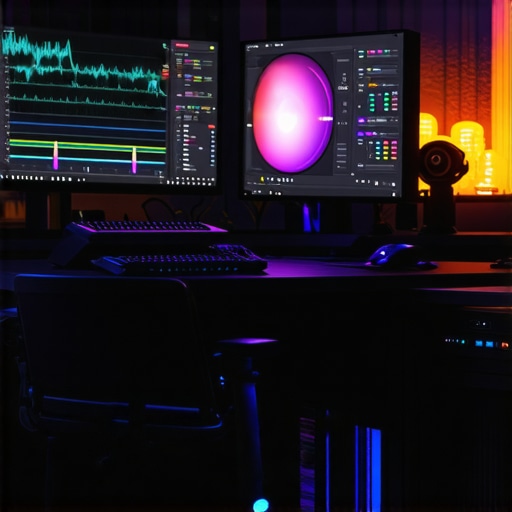
Reading through this post, I’m reminded how crucial holistic hardware setups are for high-res workflows. During a recent project, I upgraded to a GPU with 24GB VRAM and integrated PCIe 5.0 NVMe SSDs, which significantly improved export times and real-time playback with 8K footage. However, I’ve noticed that even with top-tier hardware, discrepancies in color fidelity can arise if monitor calibration isn’t regularly maintained. I’ve been experimenting with multi-point calibration routines using spectrophotometers like the X-Rite i1Pro 3, especially when working with HDR content.
Given the rapid evolution of display technologies such as microLED and self-calibrating monitors, I wonder how soon we’ll see these innovations become standard in professional editing suites. Has anyone integrated adaptive calibration profiles powered by AI in their workflow? What tools or protocols do you recommend for ensuring consistency across multiple high-end displays? Would love to hear insights from those experimenting with AI-driven calibration solutions or modular system designs to future-proof their setups.