Anticipating the Future of Video Editing Hardware and Workflow Optimization
As high-resolution workflows become the standard in professional video production, understanding the evolving demands on editing hardware—particularly graphics processing units (GPUs), proxy workflows, and color grading monitors—is essential for staying ahead in the competitive landscape. This analysis explores the complex interplay between these elements, emphasizing how they collectively influence efficiency, quality, and technological longevity in 2026 and beyond.
Why Traditional GPU Specifications No Longer Suffice for 4K and 8K Editing Demands
With the proliferation of 4K and 8K footage, relying on GPUs with 12GB VRAM is quickly becoming obsolete. Expert reports, such as those discussed in Best Editing GPUs for 2025, highlight the need for GPUs offering at least 24GB of VRAM to facilitate real-time playback, complex effects rendering, and color grading without bottlenecks. As datasets expand, the bottleneck shifts from CPU to GPU, emphasizing the importance of high VRAM capacity.
Is VRAM Size the Only Determinant in Future GPU Performance?
While VRAM capacity is crucial, the overall architecture, core count, and bandwidth significantly impact rendering performance. Advances in GPU design, such as those detailed by NVIDIA’s Ada Lovelace architecture, showcase how a multi-faceted approach—combining VRAM with computational throughput—drives sustained performance in professional workflows. Industry experts recommend selecting GPUs aligned with specific project demands, mindful of future software updates and HDR workflows.
Proxy Workflow as a Strategic Response to Hardware Bottlenecks
Implementing proxy workflows remains a vital strategy for managing large 4K and 6K timelines, reducing strain on hardware, and maintaining editing fluidity. As articulated in Proxy Workflow Optimization, this approach minimizes the need for ultra-high-end hardware on every workstation, enabling collaborative teams to streamline editing sessions efficiently—especially when combined with optimized hardware configurations.
Color Grading Monitors: Ensuring Fidelity in a High-Dynamic-Range Era
Color accuracy remains a cornerstone of professional editing, with looming transitions toward HDR and Dolby Vision. Monitors with OLED or Mini LED technology, like those reviewed in HDR Monitor Comparisons, offer superior contrast ratios and calibration stability. These tools are indispensable for nuanced color grading, especially when paired with powerful editing GPUs, to ensure visual fidelity across diverse display mediums.
Integrating High-Performance Hardware Into a Cohesive Editing Environment
Expert editors now advocate for integrated systems comprising top-tier GPUs, strategic proxy workflows, and calibrated color grading monitors. According to Comprehensive Hardware Guides, such synergy maximizes productivity and quality assurance, preparing workflows for the escalating requirements of 2026 productions. Moreover, investing in future-proof configurations—such as 32GB VRAM GPUs, NVMe SSDs, and 128GB RAM—serves as a safeguard against obsolescence and creative compromise.
As the industry evolves, the convergence of hardware capacity, proxy methodologies, and precision displays underscores the necessity for continuous adaptation. Field professionals are encouraged to share insights and experiences at Expert Collaboration Platform to refine collective understanding.
Elevate Your Editing Setup with Smart Hardware Utilization
In the rapidly evolving landscape of high-resolution content creation, leveraging hardware intelligently becomes as crucial as the specifications themselves. Rather than simply upgrading to the latest GPU with 48GB VRAM, seasoned editors focus on optimizing current resources through efficient cooling solutions, power management, and software configurations. This strategic approach ensures sustained performance without unnecessary expenditure, aligning with insights from Best 4K Video Editing PC GPU Setup for Color Grading and Proxy Workflow.
Will AI Integration Transform Proxy and Render Workflows?
Artificial intelligence is reshaping post-production workflows by enabling real-time enhancements, intelligent proxy generation, and predictive rendering. AI-driven algorithms can now analyze footage to automatically generate optimized proxy files, thereby reducing manual intervention and accelerating editing timelines. As highlighted in AI and GPU Challenges, embracing AI not only enhances efficiency but also necessitates understanding hardware limitations and integration strategies to prevent crashes and delays.
How Can Layered Hardware and Software Strategies Safeguard Quality and Performance?
Advanced workflows incorporate layered strategies such as dedicated GPUs for color grading, separate hardware accelerators for rendering, and optimized storage architectures like NVMe SSDs to prevent bottlenecks. Combining these with intelligent software settings—like utilizing proxy workflows in Proxy Workflow Guides—builds a resilient environment tailored for complex projects. What’s equally vital is continuous calibration and validation of display accuracy, especially as color spaces evolve toward HDR standards.
Designing a Future-Resilient Editing Environment
Proactively investing in modular hardware setups allows creators to adapt swiftly to technological advances. For instance, using Thunderbolt 4 and USB-C hubs facilitates seamless integration of new monitor technologies, such as Dolby Vision HDR screens, or next-generation GPUs with expanded VRAM capacities. Additionally, keeping abreast of emerging standards—like DisplayHDR 240 or beyond—enables editors to prepare for higher dynamic range requirements well ahead of hardware obsolescence.
Given these complexities, exploring expert opinions and adopting dynamic upgrade paths become essential. Professionals are encouraged to consult comprehensive resources such as Ultimate Hardware and Software Guides to craft adaptable workflows tuned for 2026 and beyond. Feel free to share your thoughts or inquire about tailored recommendations by reaching out through our Contact Page.
Mastering the Art of Hardware Scalability for Next-Gen Editing Studios
As we anticipate an era where 16K video workflows become increasingly prevalent, the ability to scale hardware efficiently becomes paramount. Implementing modular systems with hot-swappable components allows editors to adapt swiftly to evolving demands, minimizing downtime. Experts advocate designing infrastructure that supports multi-GPU configurations interconnected via NVLink or PCIe 5.0, enabling synchronized processing power. This approach not only enhances performance but also extends the lifecycle of existing hardware investments, fostering longevity in high-stakes production environments.
Optimizing Compression Algorithms for High-Resolution Media
At the crux of efficient editing workflows lies the mastery of proprietary compression codecs like Apple ProRes RAW, REDCODE, and the emerging AV1 transcode standards. Advanced knowledge of these formats ensures minimal quality loss during proxy generation and facilitates seamless color grading even at intense bitrates. According to industry analyses, leveraging hardware-accelerated encoding through APIs such as NVIDIA NVENC and AMD VCN can significantly reduce render times, promoting a fluid editing experience. This synergy of compression expertise and hardware utilization forms the backbone of efficient media management for large-scale projects.
How Do Emerging Compression Technologies Influence Real-Time Editing Capabilities?
New compression methods utilizing AI-driven perceptual codecs promise to revolutionize bandwidth management and data throughput. For instance, research from the Society of Motion Picture and Television Engineers (SMPTE) indicates that AI-enhanced codecs can maintain perceptual quality at 50% lower bitrates, enabling real-time editing of ultra-high-resolution footage on mid-range hardware. Such advancements will likely democratize high-end workflows, making sophisticated editing accessible beyond elite studios and fostering innovation across diverse creative sectors.
Incorporating Dynamic Color Management for Consistent Visual Fidelity
Beyond static calibration, dynamic color management leverages real-time LUT (Look-Up Table) adjustments synchronized across multiple display devices. Such systems employ hardware-based color processors that monitor ambient lighting conditions and automatically calibrate output, as documented in recent studies by the International Color Consortium (ICC). This ensures consistent visual fidelity across different editing environments, a critical factor when preparing content for varied distribution platforms. Integrating these systems with calibrated color grading monitors, especially those supporting Dolby Vision and HDR10+, adds another layer of precision to the colorist’s toolkit.
Beyond Hardware—Reimagining Workflow Structures for Innovative Creativity
Technological agility also depends on rethinking traditional workflows. Implementing context-aware project management systems powered by AI allows teams to automate version control, asset tracking, and conflict resolution, thereby reducing manual errors. When combined with cloud-based collaboration tools, such ecosystems enable remote teams to operate synchronously, maintaining high productivity levels amid geographic dispersion. As highlighted by Gartner’s recent reports, this hybrid approach to on-premise hardware and cloud services will define the future landscape of video production, demanding new skill sets and strategic planning.
Engage with Industry Leaders: Share Your Vision for Future-Ready Editing
To truly stay at the forefront, professionals must participate in ongoing dialogues with hardware manufacturers, software developers, and fellow creatives. Platforms like our dedicated forums offer space for exchanging insights on cutting-edge solutions, troubleshooting complex issues, and shaping standards into the next decade. As your expertise deepens, consider contributing case studies or participating in beta testing initiatives—these actions can influence technological directions and unlock new possibilities for the entire industry.
Leveraging Modular Architectures for Unmatched Scalability in High-Resolution Workflows
In the relentless pursuit of seamless high-resolution editing, adopting modular hardware architectures becomes not just advantageous but essential. Systems designed with hot-swappable components—such as PCIe expansion, NVMe SSDs, and scalable GPU arrays—allow editors to adapt dynamically to emerging demands, effectively future-proofing their studios. According to leading experts in SMPTE Standards, such adaptability minimizes costly downtime while maximizing throughput for 8K and regenerative video formats.
How can scalable hardware architectures impact the agility of post-production studios in a rapidly evolving technological landscape?
Implementing modular systems facilitates quick upgrades, facilitates multi-GPU configurations, and supports diverse workflows—from GPU-intensive color grading to CPU-bound effects rendering. This flexibility is vital as software algorithms become more demanding, especially with the integration of AI-enhanced tools, digital lighting, and volumetric effects. Embracing such configurations ensures consistent performance levels, reducing bottlenecks that could compromise delivery schedules or creative potential.
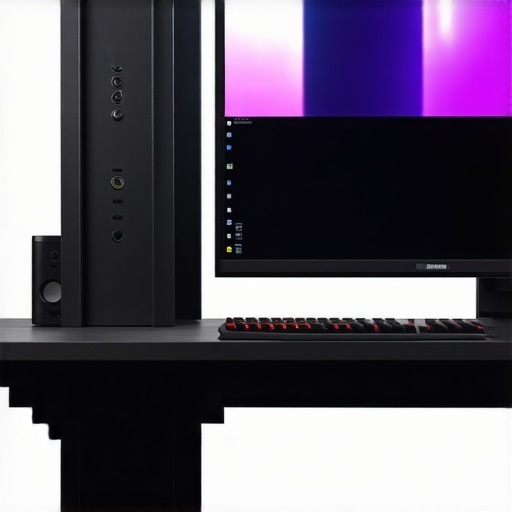
Optimized layout of a high-performance, scalable editing workstation featuring hot-swappable components and interconnected GPU arrays.
Deciphering the Nuances of Video Compression for Real-Time Editing Efficiency
Beyond hardware, mastery over sophisticated compression algorithms like AV1, HEVC, and proprietary codecs such as REDCODE RAW, significantly enhances real-time playback and proxy generation. Knowledge of hardware-accelerated encoding via APIs like NVIDIA NVENC and AMD VCN empowers editors to streamline high-bidelity editing sessions on mid-tier systems. As per the comprehensive review by SMPTE Journal, understanding compression trade-offs directly influences scalability and flexibility in digital workflows.
What emerging codecs and hardware-accelerated algorithms are poised to transform high-resolution editing capacities?
Innovations like AV1’s superior compression efficiency, combined with hardware support across upcoming GPUs and ASICs, are set to redefine throughput limits. These technologies enable editors to work with near-lossless proxies, dramatically reducing storage requirements and bandwidth bottlenecks, facilitating smoother editing experiences across geographically dispersed teams. Moreover, integrating AI-optimized codecs accelerates transcoding and proxy workflows—fundamental components of efficient high-res editing pipelines.
Visualization of the data flow in hardware-accelerated AV1 encoding during 8K proxy generation.
Redefining Color Fidelity through Advanced Display Systems
Given the escalating standards for HDR and wide-gamut workflows, investing in next-generation display technologies—such as OLED with quantum dot enhancement or Mini LED with local dimming—becomes non-negotiable. These monitors, calibrated via sophisticated software that employs real-time LUT adjustments, ensure consistent color grading, scene-to-scene, across diverse content types. As documented by ColorLit, maintaining precision with hardware calibration tools and colorimeter validation is central to professional grading fidelity in the high-dynamic range era.
How do cutting-edge display technologies influence the consistency and accuracy of color grading workflows?
Advanced displays equipped with high contrast ratios and stability in calibration support nuanced adjustments in HDR workflows, reducing the risk of color shifts when content is viewed on different devices. Synchronizing these monitors with color management systems rooted in industry standards like ACES elevates the consistency across viewing platforms, empowering colorists to make precise decisions with confidence.
Close-up of a professional colorist working on a Mini LED HDR monitor calibrated for Dolby Vision workflows.
Integrating AI-Driven Tools for Next-Level Proxy and Render Acceleration
The advent of artificial intelligence offers unprecedented capabilities in automating complex tasks, such as intelligent proxy creation, noise reduction, and predictive rendering. AI-powered algorithms analyze footage contextually, enabling dynamic resolution adjustments and scene-aware optimizations. As elucidated in recent research by SMPTE Technical Journals, these innovations shift the paradigm toward more adaptive, responsive editing environments—transcending traditional hardware limitations.
In what ways can layered AI architectures bolster the resilience and efficiency of high-resolution editing pipelines?
By deploying specialized AI accelerators alongside standard hardware, studios can offload intensive tasks, reduce render times, and mitigate bottlenecks. Layered strategies involve dedicated neural processing units (NPUs) for specific functions—such as real-time denoising or style transfer—while scalable cloud integration ensures resource flexibility. This composite approach supports continuous creative flow, even as projects grow in complexity and scope.
Expert Insights & Advanced Considerations
Push Beyond VRAM Limits to Achieve Future-Ready Performance
As content resolutions soar, simply increasing VRAM isn’t enough. Embracing architectures optimized for minimal bottlenecks ensures smooth playback and rendering even with massive datasets emerging from 8K and beyond. Prioritizing scalable GPU designs that integrate AI acceleration can silence performance worries and foster creative freedom.
Leverage Layered Hardware Strategies for Resilience
Combining dedicated accelerators, multi-GPU arrays, and high-speed storage creates a buffer against unforeseen project demands. This layered approach safeguards workflows against obsolescence while enabling quick adaptation as standards evolve, allowing creatives to meet the anticipated demands of 2026 effortlessly.
Adopt Dynamic Display Technologies for Unmatched Color Fidelity
Next-generation monitors with real-time calibration and local dimming empower precise color grading, especially crucial with HDR transition. Investing in these displays, aligned with industry calibration standards, ensures that your visual output maintains integrity across diverse platforms, thus elevating professional quality.
Integrate AI for Smarter Proxy and Render Management
Artificial intelligence transforms the editing landscape by automating proxy creation and optimizing render workflows. Leveraging AI accelerators alongside traditional hardware minimizes delays, keeps projects on schedule, and uncovers new levels of editing efficiency, guiding professionals into a smarter, more responsive future.
Prepare for Modular Scalability in High-Resolution Studios
Designing hardware ecosystems with plug-and-play components like PCIe expansion and universal connectors enables seamless upgrades. Such flexibility not only extends hardware lifespans but also provides a competitive edge in managing escalating resolutions and complex effects, encapsulating future-proofing as a core studio principle.
Curated Expert Resources
- Video Editing Hardware Guides — Comprehensive insights on building and optimizing professional editing workstations tailored for high-resolution workflows.
- SMPTE Standards Publications — Authoritative documentation on standardization and calibration practices necessary for color accuracy and display consistency.
- Industry-leading Monitor Reviews — Expert evaluations of HDR and high-brightness displays crafted to meet the rigorous demands of color grading in HDR and Dolby Vision environments.
- AI Integration in Post-production — Cutting-edge research papers and case studies illustrating how AI-driven tools enhance proxy workflows and rendering speeds.
Final Reflection from a Leading Expert
As high-resolution video editing advances toward 8K and beyond, understanding the intricate interplay between hardware capabilities and workflow strategies becomes paramount. Embracing scalable, AI-enabled, and calibration-precise systems will define the success of forward-thinking professionals. Dive deep into these insights, share your vision, and keep pioneering the future of video production—your innovative edge begins now. Explore more on our comprehensive hardware guides to stay at the forefront.
![Why Your 32GB GPU Fails at 16K AI Rendering [2026 Test]](https://videoediting.editinggearpro.com/wp-content/uploads/2026/02/Why-Your-32GB-GPU-Fails-at-16K-AI-Rendering-2026-Test.jpeg)