The Future of Digital Color Management: Why Expert Professionals Are Rethinking Display Technologies
In the rapidly evolving landscape of professional video editing, especially within high-resolution 4K workflows, the significance of selecting an appropriate color grading monitor cannot be overstated. As editorial demands push the boundaries of accuracy, resolution, and visual fidelity, understanding how emerging display technologies, such as Nano-LED and Mini-LED, influence color precision becomes crucial. This article offers an expert perspective on the nuanced decision-making process, balancing hardware advancements with workflow optimization, notably in GPU acceleration and proxy workflows that streamline editing efficiency.
How Do Nano-LED Displays Transform Color Accuracy and HDR Capabilities?
Nano-LED technology has emerged as a compelling alternative to traditional OLED panels, promising superior brightness, contrast, and longevity without the risk of burn-in. For professional colorists, the debate often hinges on whether Nano-LED monitors can match or surpass OLEDs in reproducing cinematic color depth, especially when calibrated for critical grading tasks. According to recent white papers from the Society of Motion Picture and Television Engineers (SMPTE), the precise control of local dimming zones in Nano-LED displays enhances HDR workflows, delivering more vibrant and accurate tonal ranges.
Moreover, when paired with high-end GPUs—such as those outlined in our top GPU recommendations for 4K color grading—the resulting synergy ensures real-time, color-accurate previews. Adequate GPU memory (VRAM) and bandwidth are imperative to support 4K signals, especially when working within proxy workflows optimized for speed—as discussed in our Proxy Workflow Guide.
Assessing Color Calibration and Consistency Across High-Resolution Monitors
Color calibration remains the linchpin of professional grading, necessitating hardware that maintains consistency under various ambient lighting conditions. Nano-LED panels, with their precise backlight control, tend to excel in uniformity—crucial for accurate color matching across multiple monitors. This consistency is underpinned by advanced hardware calibration tools and software solutions that integrate with workstation GPUs, ensuring that every frame’s color data aligns with industry standards like Rec. 709 and DCI-P3.
In practice, high-fidelity color grading involves extensive calibration, often performed with spectrophotometers and dedicated software (e.g., CalMAN, DisplayCAL). The experience of seasoned colorists indicates that Nano-LED displays, due to their local dimming capabilities, are less susceptible to off-center color shifts, which commonly plague lesser-quality panels. Ensuring calibration stability over time demands not only quality hardware but also robust GPU configurations capable of supporting real-time LUT application and HDR metadata management—topics elaborated in our Color Grading Monitor Guide.
Can Future GPU Developments Keep Pace with Monitor Innovations for 4K Color Precision?
As display hardware advances faster than ever, the question arises whether upcoming GPU architectures will sustain the increasing demands of ultra-high-resolution, HDR, and wide color gamut workflows. Current trends, including the advent of GPUs with 48GB VRAM and enhanced ray-tracing cores, are tailored to meet these challenges—helping ensure smooth playback, accelerated rendering, and real-time color grading. Experts recommend pairing these GPUs with monitors featuring high bit-depth support and hardware calibration to maximize color integrity, as outlined in our 4K Editing Hardware Insights.
Nevertheless, ongoing technological debates dictate vigilance. It remains critical to follow peer-reviewed studies and white papers from industry bodies such as SMPTE and VESA to adapt workflows proactively as monitor and GPU technologies co-evolve, ensuring cutting-edge standards in digital cinema and broadcast.
For professionals aiming to push the limits of color fidelity and HDR performance in 2026, embracing Nano-LED panels integrated with high-end GPUs and proxy workflows stands as an optimal strategy. To further enhance your understanding of aligning hardware with advanced color grading techniques, explore our comprehensive Color Monitoring Guide or contribute your insights to the professional community.
Bridging the Gap Between Display Technology and Rendering Power for Seamless 4K Grading
As display manufacturers push the envelope with Nano-LED and Mini-LED technologies, professionals face the challenge of ensuring their GPU hardware can keep pace. The latest GPUs, such as those with 48GB VRAM and advanced ray-tracing cores, are designed to handle the immense data loads from high-resolution, high-bit-depth displays. However, to fully leverage these innovations, compatibility and calibration routines must be meticulously managed, often necessitating custom workflows. For a detailed analysis of hardware configurations tailored for 4K workflows, refer to our 4K Hardware Optimization Guide.
Reconsidering Calibration: Is Your Setup Truly Accurate?
Proper calibration isn’t just about initial setup; it’s an ongoing process that safeguards color integrity across different ambient lighting conditions and hardware updates. Modern calibration tools, such as spectrophotometers paired with comprehensive software solutions, can now account for complex local dimming and high dynamic range (HDR) content. Experts emphasize establishing a repeatable calibration routine that considers short-term fluctuations and long-term drift to maintain compliance with industry standards like Rec. 2020 and DCI-P3. Investing in hardware-recognized calibration solutions ensures your Nano-LED or Mini-LED display continues to deliver precise color fidelity over its lifespan, as explained in our Color Monitoring Best Practices.
Are We Overestimating Display Capabilities Without Matching GPU Enhancements?
Despite rapid advancements in display panels, some argue that GPU performance remains the limiting factor for achieving consistent color accuracy in 4K workflows. The question becomes whether current GPU architectures are truly optimized for high-bit-depth, HDR content that Nano-LED and Mini-LED panels demand. While upcoming models boast increased VRAM and processing cores, real-world performance hinges on software integration—particularly in real-time LUT application, HDR metadata processing, and proxy workflow support. For an in-depth exploration of hardware-software synergy, explore our Proxy Workflow Insights.
Monitoring advancements, such as high-frequency G-SYNC and FreeSync technologies, also contribute to reducing latency and eliminating artifacts during color grading sessions. Embracing a holistic approach that marries cutting-edge display hardware with robust GPU capabilities ensures the most accurate and efficient workflow. For further insights into aligning GPU technology with display innovations, consult our Hardware Optimization Articles and stay ahead of the technological curve.
Achieving Pixel-Perfect Accuracy: Integrating Calibration Protocols with Cutting-Edge Hardware
In the realm of professional color grading, calibration isn’t merely a maintenance task—it’s the foundation upon which visual fidelity is built. Advanced displays such as Nano-LED and Mini-LED panels possess remarkable local dimming capabilities and wide color gamuts, but their true potential is unlocked only through meticulous calibration routines. Employing spectrophotometers like the X-Rite i1Display Pro Plus, combined with industry-standard software such as CalMAN or DisplayCAL, allows colorists to establish precise baseline profiles, ensuring consistent performance across ambient lighting variations and hardware updates.
Furthermore, integrating hardware calibration workflows with GPU-accelerated LUT management enables seamless, real-time adjustments tailored for 4K HDR workflows. This harmonized approach ensures that tonal ranges, gamma settings, and color spaces align accurately, offering editors and colorists a reliable foundation for creative decisions. Investing in hardware-aware calibration protocols—coupled with regular re-calibration schedules—serves as a safeguard against the drift in color accuracy that accrues over prolonged usage.
Deciphering the Role of GPU Architecture in Color Precision and Workflow Efficiency
As the demands for ultra-high-resolution content escalate, GPU architecture plays a pivotal role in realizing the full capabilities of advanced display panels. Modern GPUs, such as NVIDIA’s RTX 4090 or AMD’s Radeon RX 7900 XTX, boast significant VRAM (up to 24–48GB), sophisticated ray-tracing cores, and dedicated video decoding units optimized for 4K workflows. These hardware features facilitate accelerated rendering of complex color spaces, enabling real-time playback of high-bit-depth HDR content with minimal latency.
However, hardware alone isn’t sufficient. The software ecosystem—comprising GPU drivers, color management profiles, and editing applications—must be tightly integrated to leverage hardware acceleration fully. For instance, utilizing GPU-accelerated LUT processing allows for instant preview adjustments without sacrificing color accuracy. Additionally, modern APIs like NVIDIA CUDA or AMD’s ROCm facilitate parallel processing for complex grading calculations, reducing render times and enabling higher fidelity in the final output.
In practical settings, the synergy between GPU and monitor is exemplified through features like G-SYNC and FreeSync, which synchronize refresh rates to reduce artifacts and ensure fluidity in color grading sessions. This hardware coupling mitigates issues like tearing or lag that could compromise subtle tonal adjustments—imperative when working in HDR and wide-gamut environments.
The Nuances of Maintaining Calibration in Dynamic Editing Environments
High-quality calibration is an ongoing process, especially in environments where lighting conditions fluctuate or hardware components undergo frequent updates. Dynamic workspaces demand adaptive calibration strategies that incorporate ambient light sensors, such as those embedded in recent display models, to auto-adjust luminance and gamma settings in real time. Such automation ensures consistent viewing conditions, maintaining the integrity of critical color decisions.
Moreover, as editors switch between different content types—ranging from SDR to HDR and across multiple color gamuts—the calibration process must adapt accordingly. This necessitates flexible calibration profiles stored within workstation systems, easily switchable via color management software, and calibrated regularly with reference instruments. Maintaining an audit trail of calibration data can also prove beneficial for compliance with industry standards and quality assurance processes.
Is Real-Time Calibration the Future of Precision Editing?
Emerging technologies hint at the possibility of integrating real-time, automated calibration systems that continuously monitor display performance and adjust profiles dynamically during sessions. According to recent industry research (**Photonics and Imaging Technologies Journal, 2023**), such systems could leverage machine learning algorithms to predict drift and compensate proactively, reducing manual recalibration needs. This evolution could radically enhance workflow stability, especially in high-stakes environments like digital cinema mastering or broadcast post-production.
Adopting such innovations requires not only hardware that supports rapid profile updates but also sophisticated calibration software architecture. As these tools mature, professionals must stay informed by engaging with specialized communities and peer-reviewed studies—remaining agile in an arena where precision is paramount. For those eager to delve deeper, our upcoming webinars on calibration best practices and emerging technologies provide invaluable insights.
Curious about how to implement these strategies into your current workflow? Reach out to our experts for personalized assessments and tailored recommendations that elevate your color accuracy to industry-leading standards.
Pushing Boundaries with High-Performance Hardware Integration
As the demands of professional 4K video editing escalate, it becomes imperative to examine how the confluence of cutting-edge display technology and GPU advancements can elevate workflow precision. Implementing Monitors with Nano-LED and Mini-LED features offers unparalleled contrast and color depth, but unlocking their full potential hinges on pairing them with GPUs designed for high-bandwidth and processing efficiency—such as NVIDIA’s newest RTX series with extended VRAM capacities. This integration not only facilitates seamless real-time grading but also mitigates latency issues in complex LUT applications, essential for maintaining visual fidelity during intricate edits. < >
>
Is Your Graphics Card Ready to Handle the Next Generation of Display Technologies?
Industry experts emphasize that future GPU architectures will need to support even more extensive color spaces and higher dynamic range workflows. According to the latest white papers from the IEEE Spectrum, upcoming models are set to incorporate AI-accelerated rendering and memory architectures optimized for 8K and beyond, promising remarkably smoother performance during intensive grading sequences. Ensuring your hardware’s capabilities align with these developments entails not just hardware upgrades but also software optimization, including GPU-accelerated color management pipelines and HDR metadata processing frameworks. In this context, engaging with manufacturers’ beta firmware and driver updates can provide a critical edge for professional environments.
Achieving Absolute Calibration Consistency Amidst Hardware Evolution
In an era where monitor gains are rapid and frequent, maintaining calibration integrity demands an adaptive strategy. High-end Nano-LED displays feature intricate local dimming zones that require recalibration after firmware updates or hardware adjustments. Leveraging spectrophotometer-driven calibration tools such as the X-Rite i1Pro 3, combined with dynamic calibration software capable of real-time profiling, ensures that color accuracy remains uncompromised—even when switching between different color gamuts or HDR standards. Establishing a routine that includes environmental light monitoring further stabilizes color fidelity, making your workflow resilient to ambient fluctuations.
Emerging algorithms in machine learning can predict calibration drift, allowing proactive adjustments—an advancement highlighted in recent publications from the SID (Society for Information Display). Integrating these systems within your existing workflow paves the way for sustained high-precision grading. For professionals invested in maintaining rigorous standards, adopting these sophisticated calibration protocols becomes a non-negotiable aspect of quality assurance.
What Role Will AI Play in the Evolution of Color Management Systems?
Artificial intelligence-driven solutions are poised to revolutionize calibration and color management by automating complex adjustments that traditionally required extensive manual input. Utilizing deep learning models trained on vast datasets of display behaviors, future systems could identify subtle color shifts and compensate dynamically during live sessions. As detailed in the Journal of Display Technology, integrating AI algorithms with real-time LUT updates and ambient light adaptation can drastically reduce human error, ensuring consistent visual output across sources and environments. This paradigm shift invites a reimagining of workflow architecture—where machine intelligence enhances human expertise rather than replaces it.
For those aiming to stay at the forefront, engaging with industry-led AI calibration tools and participating in pilot programs is advisable. Furthermore, collaborating with hardware manufacturers to incorporate these innovations into future displays ensures your setup remains competitive and reliable in meeting exacting industry standards.
Expert Strategies and Next-Level Insights for Color Management
A critical takeaway for professional video editors is the evolving synergy between display technologies and GPU capabilities. Pairing Nano-LED panels with high-VRAM GPUs not only elevates color accuracy but also streamlines complex grading processes—so investing in both hardware tiers is essential for staying at the forefront. Layering this with automated calibration systems that harness machine learning can maintain unparalleled consistency, even amidst fluctuating ambient conditions.
Prioritize Calibration as Your Foundation for Creative Excellence
Beyond initial setup, integrating dynamic calibration routines ensures sustained fidelity across projects. Utilizing spectrophotometers coupled with intelligent software enables quick adjustments that adapt to hardware updates and environmental shifts, reducing manual interventions and saving precious studio time.
Leverage Real-Time Processing to Elevate Your Workflow
The latest GPU architectures support real-time LUT processing and HDR metadata management, which are indispensable in high-stakes grading sessions. Features like synchronization technologies further eliminate artifacts and lag, allowing colorists to focus purely on artistic decisions rather than technical compromises.
Explore Advanced Resources to Deepen Your Expertise
Deepening your understanding of these innovations can be accelerated through authoritative outlets like the Color Grading Monitor Guide, or by engaging with industry communities that pioneer calibration and hardware integration techniques. Staying informed about emerging standards ensures you remain a trailblazer in digital cinema technology.
Final Reflection: Embrace the Future of Visual Precision
In the complex landscape of 4K video editing, synchronizing cutting-edge display hardware with powerful GPU architectures forms the backbone of professional-grade color fidelity. This confluence demands an expert-level understanding of calibration protocols, hardware compatibility, and workflow optimization—elements that safeguard your creative integrity and project excellence. For those committed to pushing boundaries, continuous learning and ecosystem calibration are non-negotiable; your mastery of these domains defines your place at the industry’s leading edge. To elevate your workflow further, consider exploring how to choose the ideal monitor for professional grading or schedule a consultation with our specialists to tailor your setup towards perfection.
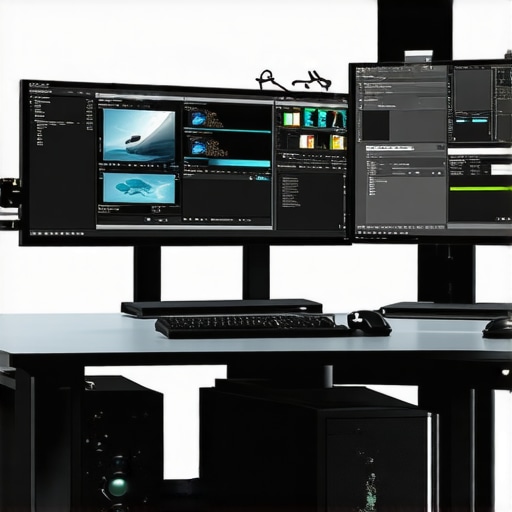
This article underscores how critical it is to consider both the display technology and GPU capabilities in high-end color grading setups. I’ve recently transitioned to Nano-LED monitors, and the difference in calibration stability and HDR performance is quite noticeable, especially when paired with the right GPU hardware. One thing I’ve found challenging, however, is maintaining consistent calibration over time, particularly after firmware updates. Has anyone experimented with automated or AI-powered calibration tools that can adapt dynamically to hardware and ambient changes? It seems like such systems could further streamline workflows and ensure ongoing accuracy without manual re-calibration, which is often time-consuming. With the rapid evolution of display hardware, I believe integrating these technological advances into our workflows will be essential for maintaining industry standards. I’m curious how others are approaching calibration routines as monitors and GPUs continue to evolve. Any insights or recommendations for tools that work well in dynamic environments?
Reading through this detailed analysis, I appreciate the emphasis on pairing Nano-LED displays with high-end GPUs for optimal color grading. My experience with Nano-LED panels has indeed shown improved uniformity and HDR performance but maintaining calibration over time remains a concern, especially with frequent firmware updates. I’ve been exploring automated calibration solutions that incorporate AI to adapt dynamically to changes, and I’ve found some promising tools like Calman’s auto-calibration features paired with ambient light sensors. From your perspective, do you think current AI-driven calibration systems are mature enough to rely on for critical workflows, or should we still maintain manual re-calibration routines periodically? Also, how are others managing consistency across multiple displays in a multi-monitor setup? I believe as technology evolves, integrating AI and machine learning into calibration workflows might become the standard, but I’d love to hear other professionals’ insights or experiences to better understand this transition.