Reevaluating GPU VRAM Capacity in High-Resolution Video Production
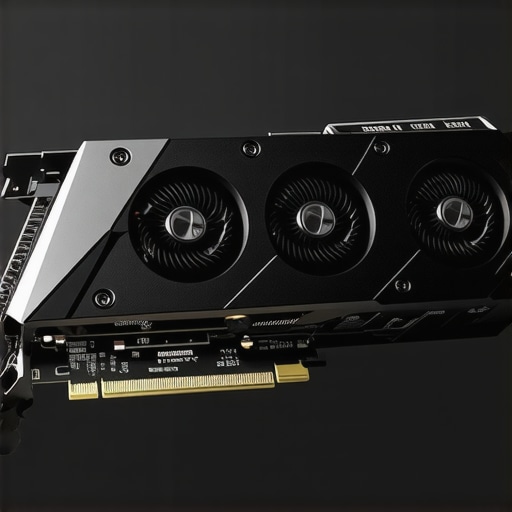
As 4K editing becomes the industry standard, the assumed adequacy of 16GB VRAM GPUs is increasingly under scrutiny. Despite advancements in GPU architecture, many professional editors encounter performance bottlenecks that directly impact rendering times, real-time playback, and color accuracy during high-fidelity workflows. This disconnect underscores a need for a nuanced understanding of how VRAM limitations influence complex tasks, especially when integrated with sophisticated proxy workflows and color grading techniques.
Are Current GPU VRAM Limits Hindering Creative Flexibility in 4K Editing
Proprietary applications like Adobe Premiere Pro and DaVinci Resolve depend heavily on GPU memory to facilitate seamless editing experiences. When working with demanding color grading monitors, the disparity between GPU capabilities and workload requirements becomes apparent. Real-world scenarios have demonstrated that 16GB VRAM, once sufficient, now struggles under the weight of simultaneous 4K proxies, layered effects, and high-dynamic-range (HDR) grading, leading to sluggish preview refresh rates and rendering failures.
architectural bottlenecks versus VRAM capacity in professional GPU selection
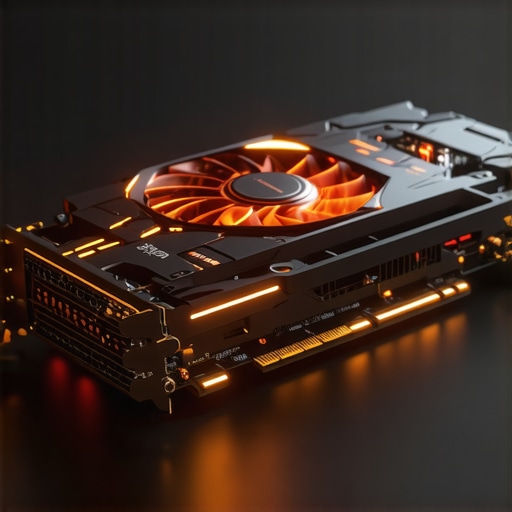
While increased VRAM provides a larger buffer for high-bit-depth color information, architectural factors such as shader processing power, memory bandwidth, and core counts increasingly dictate overall performance. For instance, the latest best editing GPUs for 2025 emphasize unified memory architectures paired with advanced cooling solutions, enabling sustained workloads beyond basic VRAM considerations.
How can advanced proxy workflows mitigate GPU VRAM constraints?
Proxy workflows have emerged as a practical solution to circumvent VRAM limitations. By delegating heavy processing tasks to lower-resolution copies of source footage, editors significantly reduce real-time GPU memory demands, thus extending the utility of 16GB VRAM configurations. However, the trade-offs involve potential quality loss and increased workflow complexity, necessitating increasingly intelligent software solutions that optimize proxy generation and management.
The impact of evolving color grading standards on GPU resource allocation
With the advent of 2026 standards, color grading monitors equipped with OLED and mini-LED backlights introduce a new performance paradigm. These displays demand high-bandwidth processing to handle peak luminance and contrast features, which in turn exert additional strain on GPU resources. Consequently, selecting a GPU with robust memory and processing capabilities is critical for professionals striving to maintain fidelity without sacrificing efficiency.
What hardware configurations are truly future-proof for 4K editing in 2026?
Considering current trajectories, a hybrid approach incorporating 32GB or higher VRAM GPUs, complemented by high-speed NVMe storage and optimized proxy workflows, appears essential. Moreover, integrating dedicated encoding hardware and leveraging cloud rendering services can offload non-real-time tasks effectively. For a comprehensive discussion, consult resources like ultimate guide to 4K video editing hardware.
If you are aiming to push the boundaries of professional 4K and even 8K workflows, exploring optimized hardware setups for proxy workflows, and staying informed about the latest GPU innovations can equip your studio for future success. Your insights as a seasoned editor can contribute to this evolving dialogue—share your experiences and strategies for overcoming hardware limitations in the comment section or via our contact portal.
Balancing GPU Power and Display Precision for Professional Color Grading
Achieving cinematic-quality color grading requires more than just a powerful GPU; it hinges on the harmonious pairing of high-performance hardware and meticulously calibrated displays. As industry standards evolve toward 2026, understanding how to optimize both components is vital for professionals seeking consistent accuracy across workflows. Modern color grading monitors with features like mini-LED backlighting and OLED technology demand GPUs equipped to handle dynamic luminance and HDR content without compromising real-time playback or processing speed.
What should experts consider when syncing GPU capabilities with advanced grading monitors for maximum fidelity?
To seamlessly integrate high-end color grading workflows, professionals must evaluate GPU architectures capable of supporting the color workflows’ bandwidth requirements. This includes ensuring that the GPU can process high-bit-depth color data, such as 12-bit or higher, without bottlenecks. Moreover, compatibility with calibration tools and color profiles—supported by both GPU drivers and monitor firmware—is essential to maintain color consistency during post-production. Incorporating GPUs with robust hardware acceleration features, like real-time LUT (Look-Up Table) processing, can dramatically reduce render times and improve preview accuracy. Trusted industry authorities, such as Dolby Cinema’s calibration standards, emphasize the importance of matching GPU and display specs to preserve cinematic color integrity throughout the editing process.
Push Beyond Limits: Harnessing Hardware Acceleration for Ultra-High-Resolution Workflows
Embracing hardware acceleration isn’t merely a perk; it’s a necessity for professional editors tackling 4K and 8K projects. Modern GPUs equipped with dedicated hardware for encoding, decoding, and image processing can dramatically reduce rendering times, especially when combined with optimized software settings. Techniques such as toggling hardware-accelerated effects and leveraging GPU-accelerated codecs like NVENC and VCE can unlock new levels of efficiency, ensuring deadlines are met without sacrificing quality.
Are Your Storage and Data Pipelines Slowing Down Creative Potential?
While GPU prowess is vital, the speed of data access plays an equally pivotal role. Current research from NVIDIA’s GPU-driven encoding technologies demonstrates that high-speed NVMe SSDs, combined with direct GPU storage access, can minimize bottlenecks during real-time playback and export. Optimizing data pipelines by integrating RAID configurations and tailoring file systems enhances the workflow’s throughput, enabling creators to focus on the art, not the tech.
Negotiating the Complexity of Color Fidelity and Monochrome Workflows
In high-end post-production, balancing accurate color reproduction with complex grading requires an intimate understanding of both hardware and software intricacies. State-of-the-art GPUs support high-bit-depth color spaces, including 12-bit or 16-bit processing, essential for preserving subtle tonal gradations. Simultaneously, calibrated monitors with advanced color management ensure that what is seen on-screen reflects the final output reliably. Supplementing this setup with spectral profiling tools and LUT calibration further tightens the integrity of the color pipeline, bridging the gap between digital precision and perceptual accuracy.
What are the implications of emerging AI-driven enhancements on GPU resource planning?
Artificial intelligence is revolutionizing post-production workflows — from smart noise reduction to automated masking. For example, AI-enhanced tools embedded within editing suites like Adobe After Effects employ neural networks optimized to utilize GPU cores efficiently. According to NVIDIA’s latest AI research, future GPU architectures will incorporate dedicated AI cores, further offloading intensive tasks. This evolution prompts a reevaluation of hardware budgets, highlighting the importance of scalable architectures that can accommodate increasing AI demands without compromising traditional rendering and playback performance.
Integrating Cloud-Based Rendering for Seamless Scalability
As local hardware reaches its practical limits, contemporary workflows are increasingly integrating cloud rendering solutions. Platforms like Amazon Web Services and Google Cloud offer GPU instances tailored for intensive video processing, enabling studios to scale resources on demand. This hybrid approach alleviates local hardware constraints, allowing editors to work uninterrupted on high-stakes projects. Strategically integrating cloud rendering requires understanding data security, workflow synchronization, and cost management—skills that distinguish elite post-production teams from the rest.
How will future GPU innovations redefine professional editing environments?
Looking ahead, the convergence of quantum computing, real-time ray tracing, and AI-driven design suggests a paradigm shift in video editing. As quantum processors become more accessible, they could unlock unprecedented processing power, enabling real-time rendering of complex scenes at resolutions and fidelities previously thought impossible. Simultaneously, the development of ultra-efficient, energy-conscious GPU architectures will facilitate sustainable workflows in increasingly compact setups. The intersection of these innovations points toward a future where the boundaries between creation and technology continue to blur, demanding that professionals stay abreast of emerging developments to maintain competitive advantage. For ongoing insights, subscribe to leading industry journals such as ACM Transactions on Graphics and participate in specialized forums and workshops dedicated to hardware evolution in digital media production.
Redefining GPU Memory Strategies to Master Ultra-High-Resolution Workflows
As the industry accelerates towards 8K workflows and beyond, the conventional emphasis on VRAM capacity alone no longer suffices. In this increasingly complex ecosystem, integrating innovative memory management techniques, synergistic hardware configurations, and scalable cloud solutions becomes paramount for maintaining seamless editorial pipelines. To truly elevate your post-production capabilities, a critical examination of how layered hardware architectures and emerging technologies converge is essential.
Can adaptive memory architectures revolutionize 4K and 8K editing environments?
Emerging research from NVIDIA’s Advanced Memory Systems explores dynamic VRAM allocation strategies that optimize resource usage in real-time, effectively mitigating bottlenecks during complex compositions. These solutions leverage intelligent caching and predictive pre-fetching, distributing memory loads across localized and system-wide buffers. This not only enhances performance but also reduces thermal and power consumption—crucial factors in designing sustainable editing stations for demanding workflows.

Envision a state-of-the-art GPU cluster with adaptive memory modules dynamically allocating resources to high-resolution video processing tasks, illustrating the future of scalable memory architectures.
Synergizing Hardware Acceleration with Intelligent Proxy Management
Utilizing hardware acceleration extends beyond GPU capabilities; it encompasses an ecosystem where multi-tiered proxy workflows, hardware-accelerated decoding/encoding, and AI-driven management coalesce. Integrating these components maximizes performance efficiency, allowing real-time editing at resolutions previously deemed impractical on single workstations.
What are the best practices for orchestrating proxy workflows amid advanced hardware setups?
Implementing intelligent proxy systems that adapt to project complexity involves utilizing software platforms capable of automating proxy creation, switching, and quality scaling. Combining this with hardware-accelerated encoding routines and AI algorithms for predictive media management, editors can dynamically allocate processing power where needed most. This holistic approach reduces latency, preserves image fidelity, and ensures swift turnaround times, especially for collaborative environments with mixed hardware configurations.
Leveraging Cloud-GPU Integration for Continuous Scalability
Combining on-premises high-performance GPUs with cloud-based resources opens pathways to unprecedented scalability. With services offering on-demand GPU instances specifically tailored for high-resolution editing, studios can temporarily upscale their processing capabilities during peak demands, ensuring smooth workflows without massive capital expenditure.
How can seamless integration between local and cloud resources be achieved to optimize large-scale edits?
Achieving fluid hybrid workflows entails adopting robust orchestration platforms that enable real-time synchronization of media assets, project states, and rendering tasks across environments. Data security protocols, efficient file transfer pipelines, and standardized APIs are fundamental components. Incorporating this paradigm allows creative teams to harness the full spectrum of technological innovations, ensuring that hardware limitations no longer constrain artistic ambitions.
Illustration depicting a hybrid editing setup with local high-end GPUs connected to cloud rendering services, exemplifying scalable video production infrastructure.
Cutting-edge Insights: AI and Quantum Computing’s Role in Future-Proofing Video Editing
Artificial intelligence continues to redefine automated editing, color grading, and asset organization. Concurrently, the advent of quantum computing promises transformative shifts in processing paradigms, enabling instantaneous rendering of complex scenes and real-time simulation of physics-based effects.
Are you prepared for a future where quantum processors and AI collaboratively redefine post-production?
Proactively integrating AI-accelerated tools with emerging quantum algorithms necessitates a reevaluation of hardware investments. System architects must consider architectures that facilitate seamless interfacing with quantum simulators and accelerators, embedding adaptability into core workflows. Staying informed through authoritative sources like NVIDIA’s Quantum Research and participating in specialized industry symposia will position professionals at the forefront of this revolutionary wave. Embracing these innovations today ensures your studio remains agile and competitive amidst the technological evolution.
Expert Insights & Advanced Considerations
The Evolution of VRAM Needs
With the rapid advancement of 4K and 8K workflows, relying solely on VRAM capacity as a performance indicator is outdated. Modern GPUs integrate adaptive memory management, leveraging intelligent caching and predictive pre-fetching, which optimize memory utilization dynamically during complex editing tasks.
Synergy Between GPU and Display Technologies
To achieve true color fidelity, it’s crucial to pair high-bandwidth GPUs with calibrated displays supporting OLED or mini-LED backlighting. This combination ensures real-time accuracy during color grading, especially when working with HDR content and high-bit-depth color spaces.
Harnessing Hardware Acceleration for Efficiency
Dedicated hardware for encoding, decoding, and real-time effects accelerates high-resolution workflows significantly. Employing GPU-accelerated codecs like NVENC and leveraging AI-enhanced editing tools can also vastly reduce rendering times, enabling faster project turnaround.
Scaling Through Cloud Integration
Integrating cloud GPU resources offers scalable solutions for demanding projects. Seamless synchronization between local hardware and cloud instances can alleviate local bottlenecks, facilitating collaborative workflows and large-scale rendering without substantial capital expenditure.
Curated Expert Resources
- Video Editing Hardware Guide: An in-depth resource detailing the latest GPU architectures, storage solutions, and display calibrations essential for professional 4K and beyond editing workflows.
- Advanced Color Grading Monitors: Industry standards and calibration techniques for OLED and mini-LED displays, ensuring true color fidelity during post-production.
- Cloud Rendering Platforms: Comparisons and best practices for integrating cloud GPU solutions into existing editing pipelines to enhance scalability and efficiency.
Reflections from the Cutting Edge of Video Production
As the landscape of professional video editing continues to push toward higher resolutions and more sophisticated workflows, understanding the interconnectedness of hardware components becomes paramount. In particular, the nuanced evolution of GPU memory strategies and integration with display technology shapes how creatives can realize their visions with precision and speed. Embracing adaptive architectures and cloud scalability isn’t just beneficial — it’s essential for staying ahead in this competitive field. Engage with industry forums, share your experiences with diverse hardware setups, and stay informed about emerging innovations; this proactive approach ensures your studio remains at the forefront of visual excellence and technological adaptation.