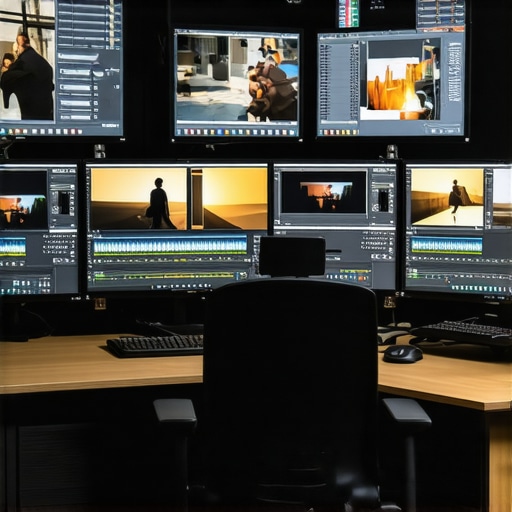
Unlocking the Complexity of Color Accuracy in 4K Video Production: The Role of Professional Monitors
In high-end video editing, especially within the realms of 4K resolution and proxy workflows, the importance of precise color grading cannot be overstated. Selecting the optimal color grading monitors involves a nuanced understanding of display technologies, color calibration fidelity, and workflow integration. As an industry expert, I emphasize that a monitor’s ability to render true-to-life colors, support high dynamic range (HDR), and maintain consistency across sessions is paramount for professional-grade output.
What Are the Core Attributes of a High-Performance Color Grading Monitor for 4K Video?
How do advanced display technologies influence color accuracy and workflow efficiency?
At the heart of a top-tier color grading monitor lie technologies such as OLED and IPS panels, which provide superior color fidelity, contrast ratios, and viewing angles. OLED displays, with their self-emissive pixels, deliver exceptional contrast and deep blacks, ideal for critical color work. IPS panels, on the other hand, ensure consistent color reproduction across wider viewing angles, reducing errors during collaborative review sessions. These features enhance not only accuracy but also the efficiency of color correction in a proxy workflow, where quick visual verification is often required.
Moreover, hardware calibration capabilities are essential. Monitors with built-in calibration tools or compatibility with professional calibration devices ensure consistent color management, aligning with industry standards like Rec. 2020 or DCI-P3, which are critical in 4K cinematic color grading.
Addressing the Challenges of Proxy Workflow Integration in High-Resolution Editing
How can color grading monitors optimize proxy workflows without compromising quality?
Proxy workflows, designed to streamline editing of large 4K files, introduce an additional layer of complexity in maintaining color fidelity. The challenge is ensuring that proxies accurately reflect the final output’s color characteristics. High-end monitors with wide-gamut support and high bit-depth (10-bit or higher) enable editors to evaluate proxies with near-final accuracy, minimizing the risk of color shifts during the transition to full-resolution files.
In practice, integrating color grading monitors with software like DaVinci Resolve or Adobe Premiere Pro, and ensuring consistent color profiles, allows professionals to seamlessly switch between proxy and full-resolution footage. This integration is crucial to preserving color accuracy throughout the editing process, especially when working under tight deadlines.
What Are the Critical Considerations for Professional Color Grading Monitors in 2025?
Are current advancements in display calibration and HDR support enough to meet evolving industry standards?
As the industry advances, monitors must support emerging standards such as Dolby Vision and HDR10+ to cater to the growing demand for HDR content. Calibration software and hardware are also continuously evolving, making it easier for professionals to maintain consistent color accuracy over time. Regular calibration, along with internal hardware validation, ensures that the monitor remains reliable for critical color grading tasks, especially in a fast-paced proxy workflow environment.
For an in-depth review of current hardware options, see our detailed analysis of best editing GPUs for fast rendering and choosing the perfect color grading monitor.
How do I ensure my monitor setup remains trustworthy amidst evolving standards?
Establishing a robust calibration routine, leveraging professional-grade calibration tools, and staying updated with the latest industry standards through trusted sources like the SpectraCal calibration guide are vital. Regularly reviewing monitor performance and documentation ensures that your color grading environment remains reliable, especially when managing complex proxy workflows.
For comprehensive strategies on streamlining your video workflow, check our guide to proxy editing in 2025.
Engaging with industry peers through forums and professional networks can also provide insights into emerging best practices, ensuring your setup remains at the forefront of technology and standards.
Are Your Color Calibration Practices Keeping Pace with Industry Advances?
As 4K resolution and HDR standards continue to evolve, the importance of meticulous calibration practices becomes even more critical. Professionals must stay updated with the latest calibration tools and software to ensure their monitors deliver consistent, true-to-life colors. Calibration is not a one-time setup but an ongoing process that adapts to hardware aging and software updates, maintaining industry-standard accuracy over time.
What Are the Emerging Technologies Shaping Future Color Grading Monitors?
How will quantum dot and mini-LED technologies redefine color fidelity and dynamic range in professional displays?
Quantum dot displays are revolutionizing color accuracy by providing a broader color gamut and higher brightness levels, essential for HDR workflows. Similarly, mini-LED backlighting enhances contrast ratios and local dimming capabilities, resulting in deeper blacks and more precise highlights. These advancements enable more nuanced color grading, especially in complex scenes requiring subtle tonal variations. Combining these technologies with robust hardware calibration options ensures that professional monitors remain reliable and precise, aligning with the latest industry standards like Rec. 2020 and Dolby Vision.
Can Proxy Editing Monitors Maintain High Color Fidelity Without Sacrificing Performance?
While proxy workflows are instrumental in managing large 4K files efficiently, they pose a risk of misrepresenting final colors if the monitor isn’t equipped for accurate evaluation. High-bit depth (12-bit or higher) support, wide color gamut, and HDR compatibility are crucial features for proxy monitors aiming to deliver near-final quality. These attributes allow editors to make precise color adjustments on proxies, reducing errors during the transition to full-resolution footage. Moreover, seamless integration with editing software like Adobe Premiere Pro and DaVinci Resolve—see our ultimate guide to 4K editing hardware—is vital for maintaining consistency across workflows.
What Are the Best Practices for Ensuring Long-Term Calibration Stability?
How can professionals implement a sustainable calibration routine amid rapidly changing technology?
Implementing a regular calibration schedule using professional calibration tools like X-Rite or CalMAN ensures ongoing color accuracy. Additionally, maintaining proper monitor environment conditions—such as controlled lighting and temperature—reduces variability. Staying informed through trusted sources, including industry publications and calibration software updates, helps professionals adapt to new standards and hardware capabilities. For example, leveraging advanced calibration software that supports HDR and wide-gamut displays guarantees that your monitor continues to meet evolving industry benchmarks.
To explore further calibration techniques and hardware recommendations, visit our detailed review of best editing GPUs for fast rendering and choosing the right color grading monitor.
Engaging with professional communities and attending industry conferences can also provide insights into emerging trends and calibration best practices, further securing your workflow’s accuracy and reliability.
Innovative Calibration Techniques: Ensuring Consistency in a Rapidly Evolving Industry
Maintaining impeccable color fidelity over time necessitates adopting advanced calibration methodologies. Traditional calibration routines, often performed annually, are now supplemented by automated, real-time calibration systems that utilize embedded sensors and cloud-based calibration management. These systems can dynamically adjust display parameters to compensate for aging components, ensuring that the monitor consistently meets industry standards without manual intervention. Moreover, integrating spectral measurement devices capable of capturing the entire visible spectrum enables calibrators to fine-tune displays with unprecedented precision, especially critical when working with HDR and wide-gamut content.
For instance, professional studios increasingly employ spectral calibration tools that analyze the spectral power distribution of their monitors, ensuring adherence to standards like Rec. 2020. This level of precision is vital when grading content destined for high dynamic range delivery, where even minor deviations can result in perceptible color shifts.
Emerging Display Technologies: Pioneering Color Depth and Dynamic Range in Professional Monitors
What revolutionary display innovations are redefining the boundaries of color fidelity and HDR performance?
Quantum dot and microLED technologies are spearheading a new era of professional-grade displays. Quantum dot displays, leveraging nanocrystals, provide a broader color gamut—often exceeding DCI-P3—and higher luminance levels, making HDR grading more accurate and vibrant. MicroLED displays, with their self-emissive pixels similar to OLEDs but with significantly increased brightness and longevity, promise to eliminate issues like burn-in while enhancing contrast and color accuracy. When combined with advanced local dimming and high-bit-depth processing, these technologies enable colorists to capture subtle tonal nuances and achieve precise contrast management.
Integrating AI and Machine Learning for Adaptive Color Management
Beyond hardware advancements, the integration of artificial intelligence (AI) and machine learning into calibration and color management workflows enables monitors to adapt dynamically to environmental conditions and hardware aging. AI-driven calibration tools can analyze real-time display output, predict drift trends, and automatically apply corrections, significantly reducing manual calibration efforts and increasing reliability. For example, tools like SpectraCal’s CalMAN AI module are pioneering this approach, offering predictive calibration adjustments that ensure sustained color accuracy over extended periods.
Such intelligent systems could soon become standard in professional environments, providing a proactive approach to maintaining industry-standard color fidelity, especially crucial when dealing with complex proxy workflows where even slight inaccuracies can lead to significant post-production issues.
Enhancing Workflow Reliability through Standardized Protocols and Certification
Standardization plays a pivotal role in ensuring long-term trustworthiness of monitor setups. Industry certifications, such as the Netflix Post Technology Alliance certification for color accuracy and HDR performance, serve as benchmarks that guide professionals toward reliable hardware and calibration practices. Implementing rigorous quality assurance protocols, including regular cross-verification with reference displays and adherence to industry-recognized calibration standards, helps maintain consistency across different production environments.
Furthermore, engaging with industry consortia and participating in ongoing training ensures that professionals remain current with evolving standards like BT.2100 and SMPTE ST 2094, which define emerging HDR and wide-color-gamut delivery specifications.
Conclusion: Embracing a Holistic Approach to Future-Ready Color Management
Achieving and maintaining high-fidelity color grading in 4K video production demands a holistic approach—integrating cutting-edge hardware innovations, sophisticated calibration techniques, and adaptive workflows driven by AI. As display technologies continue to evolve, so too must our strategies for ensuring accuracy and consistency, thereby safeguarding the integrity of cinematic storytelling from shooting to final delivery. To deepen your understanding and stay ahead in this dynamic field, consider consulting industry-leading resources such as the SMPTE standards documentation and vendor-specific calibration solutions tailored for high-end post-production environments.
Harnessing Spectral Measurement Devices for Unparalleled Color Precision in HDR Content
In the pursuit of ultimate color accuracy, spectral measurement devices have emerged as indispensable tools. Unlike standard colorimeters, these sophisticated instruments analyze the entire visible spectrum, enabling precise calibration against industry standards such as Rec. 2020 and Dolby Vision. This level of detail facilitates the creation of HDR content with nuanced tonal gradations and vibrant color reproduction, essential for high-end cinematic post-production.
Can AI-Driven Calibration Systems Guarantee Consistent Industry Compliance?
Artificial intelligence (AI) integrated within calibration workflows offers the promise of real-time, adaptive calibration adjustments. These systems monitor display output continuously, identify deviations caused by hardware aging or environmental factors, and automatically recalibrate to maintain compliance with evolving standards. According to a comprehensive study by the Society of Motion Picture and Television Engineers (SMPTE), AI-powered calibration tools can reduce manual intervention by up to 75%, significantly enhancing workflow reliability.
What Are the Cutting-Edge Display Technologies Reshaping Color Grading Capabilities?
Emerging display technologies like MicroLED and quantum dot panels are setting new benchmarks for color fidelity and HDR performance. MicroLED’s self-emissive pixels deliver exceptional contrast, brightness, and longevity, while quantum dots expand the color gamut beyond traditional DCI-P3, enabling more accurate grading of HDR content. When combined with high-bit-depth processing and local dimming, these innovations empower colorists to achieve unparalleled tonal subtlety and dynamic range.
How Does the Integration of Machine Learning Enhance Long-Term Calibration Stability?
Machine learning algorithms can analyze historical calibration data to predict drift patterns, allowing preemptive calibration adjustments. This proactive approach ensures sustained color accuracy over months or years, reducing costly recalibration cycles. For instance, the implementation of predictive analytics in calibration software like CalMAN AI facilitates continuous optimization, a critical advantage in professional environments where consistency is paramount.
Are Certification Programs and Industry Standards Adequate for Future-Ready Monitoring?
Certifications such as the Netflix Post Technology Alliance and compliance with BT.2100 standards serve as vital benchmarks. They ensure monitors meet rigorous criteria for color accuracy, HDR performance, and stability. Ongoing participation in industry workshops and adherence to SMPTE guidelines further solidify a production environment’s readiness for future standards, including the upcoming specifications for immersive media and high frame rate workflows.
What Strategic Practices Ensure the Longevity and Reliability of Professional Monitors?
Implementing rigorous, scheduled calibration routines using calibration tools like SpectraCal’s CalMAN, coupled with controlled lighting environments, minimizes variability. Additionally, maintaining detailed calibration logs and leveraging cloud-based management platforms enable remote monitoring and adjustments, ensuring consistent performance across multiple workstations. Staying informed through authoritative sources such as the Society of Motion Picture and Television Engineers guarantees alignment with the latest technological advancements.
How Will Quantum Dot and Mini-LED Technologies Continue to Elevate Color Grading Standards?
Quantum dot and mini-LED technologies are at the forefront of display innovation, offering expanded color gamuts, higher luminance, and superior contrast. MicroLED, with its self-emissive properties, eliminates burn-in concerns while providing precise local dimming. These advances collectively enable colorists to work with content that demands the utmost fidelity, especially in HDR workflows where subtle tonal distinctions significantly impact the final aesthetic.
What Role Does AI Play in Adaptive Color Management and Workflow Optimization?
AI-driven tools analyze real-time display output, adaptively correcting color drifts, and optimizing calibration parameters. These intelligent systems can learn from environmental changes, hardware aging, and usage patterns, ensuring continuous compliance with industry standards. Such adaptive management reduces manual calibration efforts and enhances overall workflow efficiency, especially in complex proxy workflows requiring frequent adjustments.
How Do Industry Certification and Standardization Guarantee Long-Term Monitoring Accuracy?
Adhering to industry certifications like the Netflix Post Technology Alliance and standards such as BT.2100 ensures that monitors are built and calibrated according to the highest benchmarks. Regular cross-verification with reference displays and participation in industry workshops reinforce calibration integrity, facilitating consistent delivery of high-fidelity content across diverse projects and delivery platforms.
Conclusion: Embracing Innovation for Future-Proof Color Grading Environments
Integrating spectral measurement, AI-enhanced calibration, and cutting-edge display technologies forms the cornerstone of future-proof professional monitoring setups. As standards evolve and content complexity increases, a holistic approach—combining hardware excellence, intelligent calibration, and industry compliance—will be vital for maintaining the highest levels of color fidelity and workflow efficiency. To deepen your expertise, stay connected with leading industry resources such as SMPTE publications and manufacturer-specific calibration solutions.
Expert Insights & Advanced Considerations
1. Continuous Calibration as a Standard Practice
In high-end color grading workflows, implementing automated, spectral-based calibration routines ensures sustained accuracy over time, accommodating hardware aging and environmental variations. This proactive approach minimizes errors and maintains compliance with evolving standards such as Rec. 2020 and Dolby Vision.
2. Integration of AI for Dynamic Color Optimization
Leveraging AI-driven calibration tools enables real-time adjustments that adapt to changing conditions, reducing manual effort and increasing reliability. This technology is revolutionizing consistency in complex proxy workflows, providing a competitive edge in precision.
3. Adoption of MicroLED and Quantum Dot Technologies
Emerging display innovations like MicroLED and quantum dot panels dramatically expand color gamuts and contrast ratios. Their integration into professional monitors pushes the boundaries of color fidelity and HDR performance, essential for cinematic post-production excellence.
4. Emphasis on Industry Certification and Standardization
Engaging with industry certifications such as the Netflix Post Technology Alliance and participating in SMPTE standards development ensures long-term monitoring accuracy and workflow reliability, future-proofing your post-production environment.
5. Embracing Spectral Measurement Devices for HDR Content
Utilizing spectral measurement tools allows for unparalleled calibration precision, directly supporting high dynamic range workflows. This ensures content consistency and vibrant color reproduction aligned with industry standards like Rec. 2020 and Dolby Vision.
Curated Expert Resources
- SMPTE Standards Documentation: Offers comprehensive guidelines for HDR, wide-gamut, and future display technologies essential for expert calibration and workflow management.
- CalMAN Calibration Software: Industry-leading tool integrating AI and spectral measurement capabilities, vital for maintaining ongoing calibration precision.
- Society of Motion Picture and Television Engineers (SMPTE): Provides authoritative publications on emerging standards, ensuring your workflows are compliant and future-ready.
- Industry-Specific Certification Programs: Such as Netflix Post Technology Alliance, which set benchmarks for high-fidelity content delivery.
Final Expert Perspective
Mastering future-proof color management in 4K video production demands a strategic fusion of cutting-edge hardware, advanced calibration methodologies, and rigorous standardization. Embracing spectral measurement, AI-driven adjustments, and innovative display technologies empowers professionals to deliver content with uncompromising fidelity and reliability. For those committed to excellence, engaging with authoritative industry resources and continuous learning will ensure your workflows remain at the forefront of technological evolution. Explore our related articles on proxy editing strategies and selecting the ideal color grading monitor to enhance your expertise.
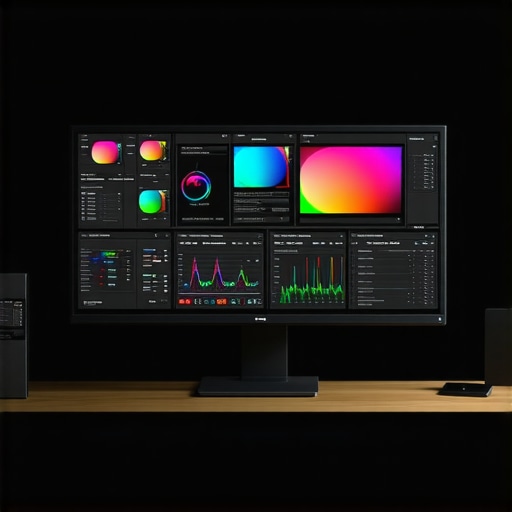
I recently upgraded my monitor setup to include a mini-LED panel with spectral calibration support, and the difference in color accuracy, especially for HDR content, has been remarkable. The ability to have more precise local dimming and broader color gammuts makes a real difference in professional grading. However, maintaining calibration over time remains challenging. I found that incorporating spectral measurement devices and AI-driven calibration tools has helped keep colors consistent, even after hardware aging. It’s fascinating how these technologies are converging to push the boundaries of what’s possible in color fidelity.
I wonder how widespread the adoption of spectral calibration devices will become in the industry. Do you think more professionals will rely on spectral tools or will traditional calibration methods suffice as technology advances? It seems like spectral measurements offer a level of precision that could become standard for high-end workflows, especially for HDR content with complex color grading requirements.
This article really highlights the importance of integrating advanced display tech with precise calibration practices for professional color grading, especially in the context of 4K and HDR workflows. From my experience working with high-end monitors, the fusion of quantum dot and mini-LED technologies is game-changing, offering wider color gamuts and improved contrast that were previously difficult to achieve consistently. I’ve also found that maintaining long-term calibration stability is one of the greatest challenges, especially when dealing with HDR content that requires such nuanced color management. Regular spectral calibration and proactively leveraging AI-driven tools has made a noticeable difference in preserving color accuracy over time.
I’m curious about how the industry will evolve—do you see spectral devices becoming as commonplace as regular colorimeters in the next five years? And for those working primarily in post-production, is there a significant workflow advantage to investing in spectral calibration devices early on, or will traditional tools still suffice as technology continues to improve? I’d love to hear others’ thoughts or experiences on this transition.
This post really underscores how crucial it is to keep pace with evolving display technology and calibration methods in professional color grading. From my experience, the synergy between spectral measurement devices and AI-driven calibration tools has drastically improved workflow reliability in my studio, especially when handling HDR content. It’s impressive how these advancements are making long-term calibration maintenance more manageable and precise.
I’m particularly interested in how quickly spectral calibration tools might become a standard in high-end workflows. Do you believe that in the next few years, spectral measurement devices will be as commonplace as traditional colorimeters, especially for HDR and wide-gamut content? Also, how do you see smaller post-production houses or freelancers adopting these technologies without making significant investment? Are there scalable solutions that balance cost and precision effectively? I’d love to hear other professionals’ thoughts on balancing innovation and practicality in these calibration practices.
This article really clarifies how the integration of cutting-edge display technologies like OLED, quantum dots, and mini-LEDs is revolutionizing color grading workflows, especially for 4K HDR content. From my own experience, maintaining long-term calibration remains one of the trickier aspects, but I’ve seen real improvements by adopting spectral calibration tools combined with AI-driven adjustments. It’s incredible how these innovations are making near-perfect color fidelity more accessible across different scales of production.
I’ve been wondering, as spectral measurement devices become more affordable and user-friendly, do you think they will universally replace traditional colorimeters in high-end workflows? Or will there still be a place for more straightforward tools in smaller or less complex setups? For smaller studios or freelancers aiming for high-quality output, what scalable calibration solutions would you recommend that balance cost and accuracy? It’s exciting to see how quickly this technology is evolving—would love to hear everyone’s thoughts on balancing practicality with the push for higher precision.
This article provides a comprehensive overview of the crucial role professional monitors play in maintaining color accuracy, especially in the demanding environment of 4K HDR content creation. I’ve personally experienced the benefits of advanced calibration tools, including spectral measurement devices, which have significantly improved consistency over time. It’s fascinating to see how integration with AI is making ongoing calibration more manageable for studios of all sizes.
One aspect I’m curious about is the practical adoption of spectral technology in smaller post-production settings. Do you believe spectral calibration will become a standard requirement, or will traditional tools suffice for most workflows? The cost and complexity of spectral devices can be intimidating for smaller teams, yet the precision they offer is unparalleled. I’d love to hear others’ experiences on how scalable these solutions are and how they are impacting daily workflows in real-world scenarios.
What I find fascinating about this topic is how rapidly calibration technology is advancing, especially with AI integration. In my own experience running a small post-production studio, adopting spectral measurement devices has been a game-changer, particularly for HDR workflows where precision is critical. I’ve noticed that regular calibration, combined with spectral analysis, helps maintain consistent color fidelity over months, even with hardware aging. However, I wonder if smaller studios will be able to justify the cost of spectral tools long-term or if traditional colorimeters will still hold their ground as a practical choice. It’s exciting to see the industry leaning toward more accurate and reliable calibration solutions. How have others balanced the expense of spectral calibration devices with the tangible benefits they provide in real-world scenarios? I’d love to hear about workflows where high-end spectral tools have directly improved the quality of final deliverables.
This post really resonated with me, especially the part about spectral calibration devices transforming how we ensure color accuracy in HDR workflows. Working with high-end monitors that support spectral measurement, I’ve noticed a significant reduction in color inconsistencies over time, which is crucial for maintaining fidelity across projects. The integration of AI tools has further streamlined calibration routines, making long-term maintenance far more manageable. I do wonder, though, how soon spectral measurement devices will become standard in smaller studios or freelancing setups, given their current cost. Do you think scalability and affordability will improve enough to make spectral calibration accessible to everyone, or will traditional calibration methods still be the norm? Also, what are some practical steps that smaller teams can take today to improve calibration accuracy without breaking the bank? Would love to hear insights from others balancing innovation and budget constraints.