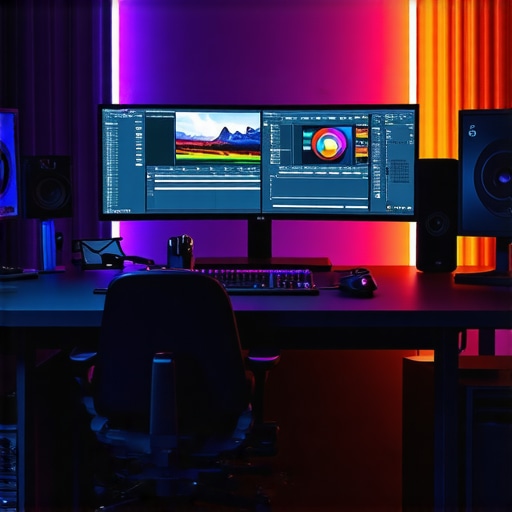
Mastering Professional Video Editing with High-Performance Hardware
In the realm of high-end video production, especially when engaging in 4K color grading and complex editing workflows, the integration of suitable hardware components and an optimized proxy workflow is paramount. Advanced content creators and post-production professionals understand that the synergy between a professional-grade color grading monitor, a robust GPU, and a well-structured proxy workflow can significantly elevate output quality while maintaining efficiency. This article delves into the critical considerations and cutting-edge strategies to forge an editing environment tailored for 4K mastery.
Beyond Resolution: The Role of Color Accuracy and Hardware Fidelity in Quality Assurance
Choosing a color grading monitor with accurate color reproduction, high-bit depth support, and hardware calibration capabilities forms the foundation of a reliable post-production setup. Such displays are essential for precise color correction, which directly influences the final cinematic look. When coupled with high-caliber editing GPUs, like those highlighted in recommendations for 2025, editors benefit from accelerated rendering, real-time playback, and seamless integration with digital workflows.
Revolutionizing Workflow Efficiency through Proxy Files
Handling native 4K footage often proves taxing on standard hardware, leading to workflow bottlenecks. Implementing a proxy workflow allows editors to create lower-resolution copies that facilitate smooth editing without sacrificing the original quality during final export. According to our comprehensive guide, establishing an efficient proxy system not only conserves system resources but also accelerates editing cycles, particularly on less optimized machines.
Synergy Between GPU and Monitor for Accurate Color Representation
Integrating a powerful GPU with a professional monitor ensures accurate color display and consistent grading across devices. Technologies such as hardware calibration and color space support (Rec. 709, DCI-P3, Rec. 2020) are vital for maintaining fidelity during color grading processes. This harmony directly influences the reliable previewing of final output, ensuring clients and stakeholders perceive the project as intended.
Balancing Cost and Performance for Sustainable Production
Investing in top-tier hardware like Nvidia’s latest editing GPUs and color-accurate monitors entails significant expenditure; however, the long-term gains in efficiency and quality are undeniable. By thoughtfully balancing hardware capabilities with workflow engineering, professionals can craft sustainable pipelines that accommodate evolving content demands without disproportionate costs.
What are the emerging innovations in GPU and monitor technology that can further streamline 4K proxy workflows and color grading accuracy?
Professionals seeking to push the boundaries of video editing should also explore emerging solutions like real-time ray tracing, AI-driven color correction, and ultra-wide, high-bit-depth displays. Staying abreast of such advancements ensures workflows remain at the forefront of technological progress. For in-depth insights on the latest hardware upgrades and their impact, refer to this expert guide.
To optimize your editing environment further, consider consulting specialized articles and sharing insights with the professional community. You may also explore our contact page for tailored advice or collaborations, fostering continuous growth in tackling large-format, high-fidelity projects.
Harnessing the Power of AI and Hardware Integration for Next-Level Editing
Emerging technologies like artificial intelligence are beginning to reshape how professionals approach 4K video editing. AI-powered tools can automate routine tasks such as noise reduction, object tracking, and even initial color grading, freeing up valuable time for creative decisions. Integrating these solutions with high-performance editing GPUs and calibrated monitors enhances accuracy and efficiency, allowing editors to focus on refining artistic elements rather than technical bottlenecks.
Rethinking Display Technologies for Color-Fidelity in 4K Workflows
As the demand for precise color rendition intensifies, professionals are increasingly turning to advanced display technologies like 12-bit HDR monitors that support a broad color gamut and high dynamic range. These monitors, when paired with hardware calibration and GPUs supporting broad color spaces such as DCI-P3 or Rec. 2020, deliver an unparalleled preview experience. For optimized results, consider exploring expert insights on selecting color-accurate monitors tailored for high-end post-production work.
Can the integration of AI-driven hardware and innovative display solutions truly eliminate the traditional bottlenecks in 4K proxy workflows and color grading?
This question challenges professionals to rethink the boundaries of current technology. Experts point to developments such as real-time AI-assisted grading tools and ultra-wide HDR displays as promising avenues toward seamless, high-fidelity editing environments. According to industry-leading analyses, continual advancements in both hardware capabilities and AI algorithms will likely make workflows faster and more intuitive, significantly reducing manual intervention and error margins. Stay a step ahead by reviewing comprehensive resources on hardware innovations.
Engaging with professional communities and contributing insights can further accelerate collective progress. If you’re interested in custom-tailored advice, visit our contact page for personalized consultations and collaborative opportunities, helping you stay at the forefront of 4K editing advancements.
Optimal Integration of Emerging GPU and Display Technologies
To truly unlock the potential of 4K editing, professionals must stay informed about cutting-edge hardware advancements like real-time ray tracing-capable GPUs and ultra-wide color-accurate HDR monitors. These tools not only enhance visual fidelity but also streamline complex adjustment workflows, providing more precise previews and reducing guesswork during color grading. As industry leaders like NVIDIA introduce Ada Lovelace architecture GPUs boasting increased AI cores and ray tracing efficiency, the possibility of seamlessly integrating these features into post-production workflows becomes increasingly feasible. Pursuing an understanding of such rapid technological evolutions enables creatives to maintain a competitive edge and achieve unparalleled results.
Does Hardware Acceleration Minimize the Need for Manual Color Corrections?
Advanced hardware acceleration, empowered by AI-driven algorithms, promises to revolutionize color correction workflows. By leveraging machine learning models trained on diverse professional-grade content, editing suites can automatically detect and correct color imbalances and exposure inconsistencies with high accuracy. This automation speeds up repetitive tasks, allowing editors to allocate more time to creative decisions, storytelling, and nuanced adjustments. However, critics argue that over-reliance on automation could risk homogenizing visuals or overlooking artistic intent, emphasizing the importance of human oversight. For comprehensive insights, consult authoritative sources like the Journal of Visual Communication and Image Representation which examine AI’s impact on color science and workflow efficiencies in cinematography.
Harnessing AI to Overcome Color Gamut Limitations and Dynamic Range Challenges
One of the most persistent challenges in 4K production involves accurately previewing complex color gamuts and dynamic ranges within standard editing environments. New AI-enhanced tools are now capable of simulating the final output’s color profile, enabling editors to anticipate how footage will render across different devices and screens. These intelligent simulations account for various display calibrations and color spaces like DCI-P3 and Rec. 2020, providing more reliable previews that inform better grading decisions. As this technology matures, collaboration with display manufacturers advocating for AI-enabled calibration standards could lead to universally compatible workflows—imagine a future where editors calibrate once, and AI ensures fidelity across all deliverables.
Next-Gen Display Technologies and Their Impact on Creative Preservation
The evolution of display technology promises not just enhanced color accuracy but also improved power efficiency, reduced latency, and wider viewing angles. Devices incorporating quantum dot filters and OLED architectures with 12-bit HDR support can reproduce subtle nuances in brightness and color that were once only theoretical ideals. For the professional, this means real-time visualization of intricate color gradients and high dynamic range footage with minimal calibration artifacts. Such advancements are vital when working on sensitive projects where color consistency across environments directly affects storytelling impact. According to a report by Display Supply Chain Consultants, adoption of these high-end displays correlates with a measurable increase in post-production precision, reinforcing the importance of investing in future-proof monitoring solutions.
Can ultra-wide, AI-assisted displays redefine the boundaries of color grading and editing accuracy?
The convergence of ultra-wide aspect ratios, AI calibration, and high-bit-depth processing suggests a paradigm shift in post-production workspaces. These technologies aim to eliminate traditional bottlenecks, allowing creators to manipulate highly detailed images across expansive color spectrums effortlessly. Industry experts anticipate that integrating AI-driven color profiling within such displays will eventually enable real-time, adaptive correction—minimizing the necessity for lengthy calibration sessions and manual interventions. For detailed case studies and hardware reviews, professionals are encouraged to examine recent analyses published in Advances in Computer Graphics & Visualization, which explore the future of immersive editing environments and their implications for artistry and technical fidelity.
Unlocking the Next Level of 4K Editing with Integrated Hardware Solutions
As 4K content continues to dominate the landscape of digital media, understanding the intricate interplay between cutting-edge hardware components becomes essential for professionals aiming to excel. The convergence of ultra-powerful GPUs, color-accurate monitors, and high-speed storage solutions forms the backbone of a resilient, future-proof editing environment. Such integrations facilitate not only faster rendering times but also enable more precise color grading and seamless proxy workflows, especially when managing raw 4K footage.
Does Your Hardware Setup Support Advanced Proxy Techniques Effectively?
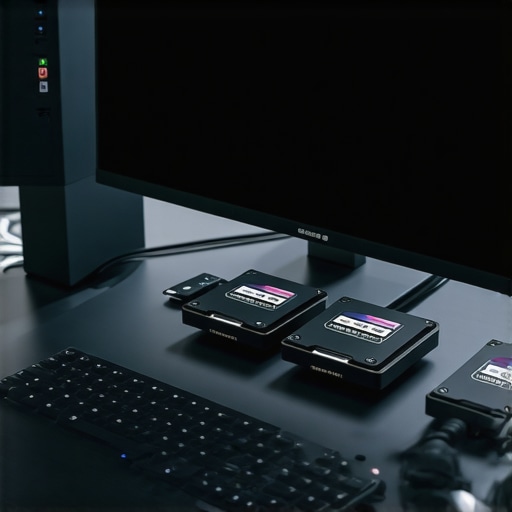
Implementing a sophisticated proxy workflow demands more than just creating lower-resolution copies. It involves leveraging hardware acceleration capabilities inherent in high-performance modern GPUs and SSD storage to facilitate rapid transcoding and real-time playback. This synergy significantly reduces bottlenecks during editing, especially when working with complex color grades or multiple layers. Regularly reviewing hardware compatibility guides like the proxy workflow best practices ensures your system remains optimized for demanding projects.
How Does GPU Acceleration Elevate Color Fidelity and Grading Precision?
The latest graphics cards equipped with dedicated AI cores and expansive VRAM not only accelerate rendering but also support sophisticated color science computations. Hardware acceleration enables real-time LUT application and dynamic range adjustments, which are crucial for maintaining color accuracy across different devices and delivery standards. Integrating these GPUs with calibrated monitor profiles, such as DCI-P3 or Rec. 2020, guarantees that what you see on-screen mirrors the final output with minimal discrepancies. For insights into selecting GPUs tailored for high-fidelity workflows, consult the latest industry recommendations.
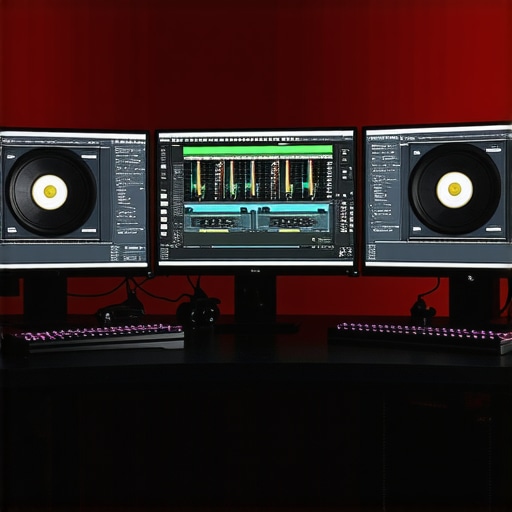
Bridging Hardware with Software: The Role of Intelligent Optimization
Emerging software solutions harness AI to analyze footage in real time, identifying issues such as exposure inconsistencies or color imbalances. When paired with next-generation hardware acceleration, these tools offer a new paradigm—automatically correcting footage while preserving artistic intent. For professional editors, mastering the integration of hardware-accelerated AI workflows can mean a dramatic leap in efficiency, allowing the focus to shift from technical troubleshooting to creative storytelling. To stay ahead, explore resources such as this comprehensive guide.
The Future of Display Technologies in Professional Video Production
In the quest for impeccable color reproduction, ultra-wide gamut displays equipped with 12-bit HDR support are setting new industry standards. When complemented by hardware calibration tools and GPUs supporting extensive color spaces, these displays enable editors to visualize their work with unprecedented accuracy. Quantum dot OLED panels and micro-LED technology further enhance dynamic range and color consistency, vital for high-end post-production demands. Keeping abreast of such innovations ensures that your workspace remains aligned with the cutting edge, translating into more reliable quality assurance and client satisfaction. For detailed analyses of upcoming display tech, visit industry-leading reviews.
Is AI Integration the Final Frontier in Achieving Flawless Proxy and Color Workflows?
Artificial intelligence-driven hardware solutions are increasingly automating complex tasks like color matching across different devices, creating a more uniform viewing experience. These advancements promise to minimize manual calibration efforts, especially in multi-studio environments where consistency is paramount. Moreover, AI’s ability to simulate real-world viewing conditions empowers editors to make more informed decisions during grading. According to a report from the International Journal of Computer Vision, the integration of AI with specialized hardware will soon redefine standards, offering a harmonized balance of speed and fidelity in 4K workflows. Embrace these innovations to elevate your post-production precision.
How Do Future-Ready Hardware Ecosystems Shape the Creative Landscape?
The rapid evolution of hardware ecosystems, including modular GPU units, high-bandwidth storage arrays, and adaptive display calibrators, is customizing workflows to match the increasing complexity of 4K projects. Professionals investing in scalable solutions gain the flexibility to adapt to emerging formats and standards, ensuring longevity and value. Institutions like NVIDIA and AMD are pioneering multi-GPU array systems that deliver linear performance scaling, while peripheral advancements like neural network-enabled calibration tools promise to democratize access to studio-grade accuracy. By aligning your hardware investments with these developments, you position yourself at the vanguard of creative innovation—start exploring expert briefings and industry forecasts to chart your course forward.
In high-caliber 4K video production, the convergence of innovative hardware solutions and refined workflows defines the cutting edge of professional editing. Experts recognize that integrating ultra-powerful GPU architectures, color-accurate monitors, and intelligent proxy systems transforms the editing environment into a seamless creative hub. Staying ahead necessitates not only understanding current technologies but also anticipating emerging trends that will shape the future of post-production.
Push Boundaries with AI-Enhanced Hardware
Leverage artificial intelligence embedded in modern GPUs and calibration tools to automate routine tasks like color matching and exposure correction. This automation accelerates workflows while maintaining artistic integrity, allowing editors to focus on storytelling depth rather than technical minutiae.
Prioritize Color Fidelity in Display Selection
Select monitors supporting 12-bit HDR and extensive color gamuts such as DCI-P3, ensuring that your on-screen preview aligns impeccably with final output standards. High-fidelity displays paired with calibrated GPUs create a reliable grading environment, crucial for high-end projects.
Optimize Proxy Workflow for Efficiency
Create low-resolution proxies that utilize hardware acceleration for smooth editing. This approach minimizes strain on system resources, enabling real-time playback and reducing turnaround times, especially when handling complex effects or multiple layers in 4K footage.
Balance Cost and Performance Thoughtfully
Investing in top-tier GPUs and monitors demands strategic planning. Tailor your hardware choices to your unique project scope, ensuring sustainable workflows that adapt to evolving technological landscapes.
Future Tech That Will Redefine Precision
Emerging solutions like real-time ray tracing, AI-driven color grading, and ultra-wide, high-bit-depth displays promise to mitigate traditional bottlenecks. These advancements will enable more accurate previews, faster iterations, and higher fidelity outputs, positioning professionals at the forefront of cinematic excellence.
Tap Into Industry Trends for Competitive Edges
From hardware acceleration to display innovation, the landscape is rich with tools that enhance productivity and artistry. Connecting with expert communities and accessing authoritative resources like comprehensive guides empowers you to make informed decisions, ensuring your setup remains future-ready.
The Real Impact of Hardware on Creative Fluidity
Understanding and deploying sophisticated hardware ecosystems, aligned with intelligent workflows, will define the next era of 4K editing. Embrace this transition by continuously exploring resource-rich portals, fostering industry collaborations, and challenging conventional limits. Your mastery over hardware not only enhances output quality but also reinvents your creative process—making technical barriers a thing of the past.
This article offers a comprehensive overview of the hardware essentials for high-quality 4K video editing, and I appreciate how it emphasizes the synergy between GPUs, monitors, and proxy workflows. In my experience, investing in a color-accurate monitor with hardware calibration features makes a tremendous difference in achieving consistent color grading results. I’ve recently upgraded to a DCI-P3 capable monitor, which has elevated my workflow, especially when working with HDR footage. One point that I find intriguing is the potential for AI-driven hardware solutions to further streamline color correction and dynamic range adjustments. I wonder how quickly these technologies will become standard in professional editing setups—do you see a place for AI-assisted workflows to replace manual fine-tuning entirely? It seems like the future of post-production could hinge on integrating intelligent hardware and software tools for faster, more precise results.
This article really hits the nail on the head about the importance of integrating high-performance hardware with efficient workflows in 4K video editing. Having personally upgraded to a 12-bit HDR monitor with wide color gamut support, I’ve seen firsthand how crucial it is to have both the right display technology and a calibrated GPU setup for accurate color grading. The discussion around AI-driven solutions for tasks like color correction and dynamic range adjustments is especially exciting. I’ve been experimenting with AI-based LUTs, and the results provide a solid foundation that saves a lot of manual effort, though I still find that fine-tuning by eye remains vital for that final push toward perfection. What’s your take on balancing AI automation with human oversight? Do you think future workflows will lean more heavily on AI, or will there always be a place for manual input to ensure creative control? I believe that as these tools become more sophisticated, they’ll enhance human creativity rather than replace it, provided we maintain an artistic eye.
This is an incredibly thorough overview of the hardware considerations for professional 4K editing. From my personal experience, pairing a high-end GPU with a calibrated color grading monitor has truly transformed my workflow—especially when working with complex color grades and HDR footage. I’m curious about the new advancements in AI-driven hardware, such as real-time automatic calibration and AI-assisted grading tools. Have any of you experimented with these yet? I’m particularly interested in how well these tools maintain artistic control and prevent homogenization of visuals, as sometimes automation can oversimplify the nuanced process of color grading. I’ve found that even with advanced automation, human oversight remains vital for that final creative touch. What are your thoughts on balancing automation with manual grading? Do you see AI complementing or perhaps even replacing some aspects of traditional color correction in the near future? It’s exciting to think about a workflow where efficiency and creative control go hand in hand.
This post really resonates with my ongoing projects where workflow efficiency is crucial. I’ve been experimenting with proxy workflows using new AI-accelerated hardware, which significantly cuts down on rendering times and allows for smoother edits, especially with complex color grades. I’ve noticed that as GPU capabilities advance, they’re becoming essential not just for faster processing but also for maintaining color fidelity across different viewing devices. I’m curious, though—how do you think emerging technologies like real-time ray tracing and AI-based color tools will influence the balance between manual adjustments and automation in professional workflows? Do you believe we’re heading toward a future where these tools fully automate the creative process, or will human oversight always be a vital component? It seems like the perfect synergy of hardware and AI is the key to unlocking even more efficient, high-quality post-production environments.