Elevating 4K Video Editing Through Expert Color Grading Monitor Selection
In the realm of professional video production, the fidelity of color grading monitors directly influences the quality and accuracy of your final output. As creators transition to 4K editing workflows, particularly within proxy editing environments, understanding the nuanced requirements for high-end monitors becomes essential for maintaining seamless color precision and workflow efficiency.
Why High-Resolution Displays Are a Non-Negotiable for 4K Content Creation
Opting for monitors with 4K resolution—such as those detailed in top color grading monitors for 4K video—ensures that editors can accurately assess fine details and color gradients. Such displays prevent the pitfalls of pixelation and allow for precise color matching across HDR and SDR content, which is crucial when preparing footage for broadcast or cinematic delivery.
Color Space Coverage and Calibration Precision as Workflow Cornerstones
An ideal color grading monitor must exhibit near-complete coverage of industry-standard color spaces like DCI-P3, Rec. 709, and Rec. 2020. Furthermore, hardware calibration capabilities enable consistent color accuracy over extended editing sessions. Professional-grade monitors equipped with 10-bit panels and factory calibration deliver the reliability and nuance required for critical color work, especially in proxy workflows where quick review and color validation are key.
Empowering Proxy Workflow for Efficient 4K Editing
Proxy workflows significantly enhance editing efficiency without sacrificing color accuracy, provided that the GPU and monitor interplay harmoniously. As explained in best GPUs for smooth 4K proxy editing, selecting a GPU that offers ample VRAM and CUDA cores ensures swift rendering and playback. When combined with a professionally calibrated monitor, editors can perform high-fidelity grading and review in real-time—fundamental to creative decision-making.
Role of the Editing GPU in Color Fidelity and Workflow Speed
The editing GPU not only accelerates rendering times but also affects color grading precision. Modern GPUs with robust compute capabilities facilitate real-time playback of complex effects and high-bit-depth color streams. Benchmarking reports, such as those found here, confirm that pairing a high-performance GPU with a monitor that accurately displays color nuances optimizes the overall editing experience, especially in professional environments where color accuracy is non-negotiable.
Integrating Hardware Choices for a Cohesive Workflow
Synchronization between the monitor’s capabilities and GPU performance ensures that high-resolution, color-critical tasks are executed flawlessly. Investing in color-accurate displays with hardware calibration support, alongside GPUs optimized for editing workflows, results in a cohesive system that minimizes bottlenecks and maximizes productivity. For editors considering upgrades, firms like top tips for GPU and monitor pairing provide valuable insights into achieving this harmony.
What Advanced Techniques Do Experts Use to Maintain Color Consistency Across Mixed Hardware Configurations?
Ensuring color consistency across various hardware components in a professional editing environment involves meticulous calibration, consistent workflow procedures, and leveraging color management software. Many experts utilize hardware calibration tools like X-Rite’s i1Display Pro coupled with calibration software to standardize display output. Additionally, creating and following standardized color workflows within editing applications safeguards against discrepancies, particularly when integrating proxies and UHD source footage, ensuring that artistic intent remains intact throughout the post-production process.
Stay informed about evolving hardware and software integrations by exploring our ultimate guide to color grading monitors, and contribute your insights to advance industry standards.
,
Embracing Hardware Synergy for Superior Color Accuracy in 4K Editing
Achieving impeccable color fidelity in 4K video production hinges on the harmonious integration of high-end displays and powerful GPUs, tailored specifically for creative workflows. When selecting a color grading monitor, professionals should prioritize hardware calibration support and industry-standard wide color gamut coverage. Pairing this with a robust GPU from recommended editing GPUs ensures real-time playback of complex effects at high bit depths, essential for nuanced color grading tasks.
Beyond the Basics: Fine-Tuning Your Workflow to Prevent Color Discrepancies
While hardware choices form the foundation, implementing meticulous workflow practices safeguards consistency. This involves regular calibration using industry-standard tools like X-Rite’s colorimeters and the adoption of comprehensive color management profiles within editing software. Standardized procedures for media transcoding, exporting, and viewing environment setup are vital to maintaining true-to-source color across different platforms and devices, particularly when working with proxy files designed for efficiency without sacrificing accuracy.
Can Adaptive Color Management Technologies Revolutionize Post-Production?
Emerging advancements in adaptive color management—that dynamically adjust display profiles based on viewing conditions—promise to further cement consistency throughout the editing process. Technologies like OLED displays with auto-calibration, combined with AI-driven color correction algorithms, could substantially reduce color drift and manual calibration needs. Staying updated on such innovations, as highlighted in industry reports, offers a competitive edge for professionals aiming for uncompromising quality in their projects.
What are the biggest misconceptions about color management that professionals need to challenge today?
Many assume that plugging in a high-caliber monitor automatically guarantees color accuracy; however, without rigorous calibration and workflow discipline, discrepancies are inevitable. Another common myth is that a single monitor setup suffices for all stages of post-production—whereas, in reality, multiple calibrated displays and consistent color pipelines are essential for different tasks, from editing to mastering. For more insights on creating resilient color workflows and understanding hardware limitations, visit our ultimate guide to color calibration.
Overcoming Hardware Variability: Ensuring Uniform Color Experience Across Diverse Editing Stations
One of the persistent challenges in professional post-production is maintaining consistent color representation across multiple editing environments. Even with meticulously calibrated monitors, discrepancies can arise due to hardware variations, ambient lighting, and signal processing chains. Advanced color management strategies involve implementing comprehensive calibration protocols combined with uniform viewing conditions. For example, integrating hardware calibration tools like X-Rite’s i1Profiler with display profiling software allows for creating precise color profiles tailored to each workstation, minimizing the impact of hardware variability and ensuring that color grading decisions are reliable regardless of the environment.
Unveiling the Impact of LUTs and Color Pipelines on Final Output Precision
Look-Up Tables (LUTs) serve as crucial bridges between source footage and the desired color grade, enabling granular control over the tonal and color shifts. However, improper application or unstandardized LUT workflows can lead to color inconsistencies, especially in high-bit-depth 4K projects. Experts emphasize establishing a robust color pipeline—using 3D LUTs embedded within color management systems or utilized within grading software—that maintains linear color spaces and supports HDR workflows. Incorporating calibration-compatible LUTs ensures that the visual intent remains intact from grading through to delivery, bolstering fidelity across various playback devices.
How Adaptive Displays Elevate the Accuracy of Color Grading for 4K Content
Adaptive display technologies—such as auto-brightness, auto-calibration, and ambient light compensation—are gaining traction among professionals seeking to optimize color accuracy dynamically. High-end OLED monitors equipped with AI-driven calibration algorithms continuously adjust their output based on environmental feedback, reducing human error and maintaining consistent performance over time. Such innovations can substantially enhance the reliability of color decisions, particularly during long grading sessions where display drift can impact judgment. Staying ahead by adopting adaptive display solutions can thus translate directly into higher quality and more predictable final outputs.
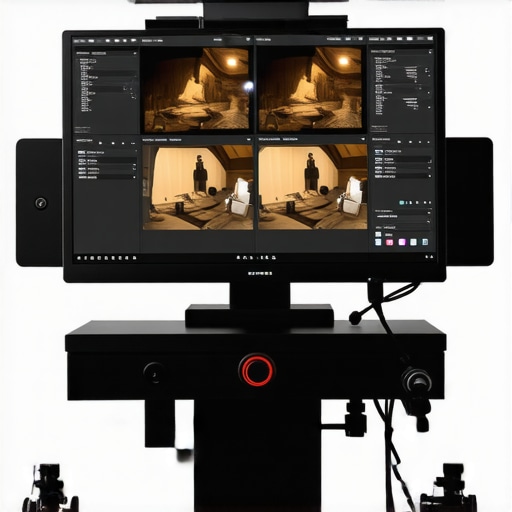
Imagine a high-end OLED monitor with embedded auto-calibration and adaptive light sensors, seamlessly maintaining color accuracy throughout intensive grading sessions.
Precision in Light and Shadow: Advanced Contrast and HDR Push the Limits of Color Fidelity
Achieving nuanced tonal reproduction involves understanding and leveraging advanced contrast technologies, particularly for HDR content delivery. Monitors supporting HDR10+ or Dolby Vision standards, combined with local dimming zones and high peak brightness, enable artists to sculpt light and shadow with incredible depth. Such control allows for precise color grading in scenes with challenging exposure ranges and subtle gradations, elevating cinematic quality. According to authoritative industry standards outlined by the Society of Motion Picture and Television Engineers (SMPTE), mastering these technical capabilities is essential for delivering content that meets modern viewing expectations while preserving artistic intent.
Are Software-Driven Color Management Solutions Catching Up to Hardware Advancements?
While hardware calibration tools have long been the backbone of color fidelity, sophisticated software solutions now offer comprehensive color management frameworks that adapt dynamically to hardware specifications. Color grading suites like DaVinci Resolve and Baselight incorporate hardware profiling APIs, ensuring real-time calibration and color accuracy during workflows. Moreover, emerging AI-powered calibration algorithms can detect and correct subtle color deviations automatically. This confluence of hardware and software innovations empowers professionals to achieve unparalleled consistency, even when managing complex multi-device configurations or when rapid iteration cycles are required—raising the bar for what’s feasible in premium post-production environments.
Why Investing in Future-Proofed Hardware Choices Validates Your Creative Vision
In an industry characterized by rapid technological evolution, selecting hardware that is scalable and forward-compatible is crucial. Opting for monitors supporting the latest standards—such as HDMI 2.1, DisplayHDR 1400, or wider color gamuts—ensures your setup remains relevant amidst shifting industry benchmarks. Similarly, choosing GPUs with expandable VRAM and advanced compute cores provides headroom for future workflows that may incorporate higher dynamic range, higher frame rates, or more complex visual effects. Investing wisely today translates into sustained creative freedom and consistency for years to come. To explore cutting-edge hardware options aligned with your workflow ambitions, consult industry specialists and authoritative hardware guideline publications.
Breaking Barriers with Customized Calibration Protocols
Developing tailored calibration routines that adapt to evolving industry standards ensures sustained color accuracy over time. Integrating advanced hardware calibration tools like the X-Rite i1Pro 2 with sophisticated software environments allows professionals to create dynamic profiles responsive to ambient lighting variations. This proactive approach minimizes color drift, guaranteeing that every pixel aligns precisely with artistic intent, especially crucial when managing complex proxy workflows for 4K content.
Harnessing AI-Enhanced Color Correction Techniques for Proxy Optimization
Emerging AI-driven color management algorithms are transforming proxy workflows by rapidly analyzing source footage and recommending optimal LUTs and correction parameters. These intelligent systems facilitate seamless transitions between proxy and original media, preserving color fidelity amidst compression artifacts. Experts leveraging machine learning models can preemptively identify potential inconsistencies, enabling real-time adjustments that uphold high standards of visual integrity in demanding post-production environments.
How do adaptive color pipelines influence long-term consistency across diverse hardware ecosystems?
Implementing adaptive color management pipelines—combining hardware calibration, software profiling, and environmental sensors—ensures that color decisions made on one workstation translate accurately across multiple devices. This approach mitigates discrepancies caused by hardware variability and shifts in viewing conditions, resulting in a cohesive editing experience. Consulting authoritative standards such as those published by the Society of Motion Picture and Television Engineers (SMPTE) informs best practices for maintaining uniformity in multi-operator film and video projects.
Illustration of a professional editing station equipped with adaptive calibration tools and environmental sensors demonstrating real-time color management adjustments.
Elevating HDR Workflows for Cinematic Realism
Advanced HDR workflows demand an intimate understanding of luminance mapping, tone mapping algorithms, and local dimming technologies. Monitors supporting Dolby Vision and HDR10+ utilize pixel-level control to accurately render high-contrast scenes, essential for cinematic grading perfection. Mastering these tools enables colorists to craft visuals with depth and nuance comparable to theatrical presentations, significantly elevating the viewer’s emotional engagement and immersive quality.
Beyond Hardware: Sculpting the Perfect Environment for Visual Precision
The physical workspace profoundly impacts color perception accuracy. Controlling ambient light with high-quality neutral gray walls, specialized blackout curtains, and controlled lighting fixtures creates an environment where display calibration remains reliable. Professionals also employ spectroradiometers and light analyzers to verify that the viewing environment supports precise color judgment, especially crucial when working on high-stakes projects destined for premium theatrical or broadcast screens.
What innovative tools are emerging to automate and simplify complex color workflows in high-resolution editing?
Cutting-edge solutions like AI-powered display profiling and cloud-based color management platforms are beginning to automate routine calibration and consistency checks. These technologies reduce reliance on manual processes, lower the risk of human error, and provide instant diagnostic reports. By integrating such tools, professionals can focus on creative decision-making, assured that their technical foundation remains flawless, thus enabling more efficient delivery of compelling visual narratives.
Expert Insights & Advanced Considerations
Invest in Calibration Robustness
High-quality calibration tools and routines are essential to ensure your monitor maintains color accuracy over time, especially in demanding 4K workflows where precision is critical for professional results.
Embrace Future-Ready Hardware
Choosing monitors and GPUs that support the latest standards, such as HDMI 2.1 and wider color gamuts, prepares your editing setup for upcoming technological advancements and ensures longevity.
Prioritize Color Management Workflow
Implementing standardized workflows with hardware calibration and consistent environment control minimizes discrepancies across devices, maintaining visual integrity from editing to delivery.
Leverage Emerging Display Technologies
Adaptive displays with AI-driven calibration and ambient light compensation offer dynamic color stability, reducing manual adjustments during long editing sessions.
Optimize HDR Content Handling
Mastering high-dynamic-range workflows with compatible monitors supporting Dolby Vision or HDR10+ enables nuanced tonal grading aligned with cinematic standards.
Curated Expert Resources
- Society of Motion Picture and Television Engineers (SMPTE) Standards – Provides authoritative guidelines on color accuracy and display standards essential for professional grading.
- X-Rite i1Display Pro Calibration Tools – Industry-leading hardware for precise display calibration across editing environments.
- DaVinci Resolve Color Management – Advanced software for developing consistent color workflows in high-resolution projects.
- OLED and Quantum Dot Display Reviews – Expert analyses of next-generation monitor technologies supporting accurate color reproduction.
- Upcoming Industry Conferences (e.g., NAB, IBC) – Platforms for discovering the latest innovations in display and GPU technologies pertinent to 4K editing.
Final Perspective from the Experts
Achieving unparalleled color fidelity in 4K video editing hinges on understanding the intricate dance between high-performance monitors and GPUs, coupled with disciplined workflows that uphold color integrity. Continually upgrading your hardware with future-proof standards and adopting meticulous calibration routines ensure your artistic vision translates flawlessly from screen to screen. For professionals aiming to elevate their craft, engaging with authoritative resources and emerging technologies remains vital. We invite you to share your insights and explore comprehensive guides to refine your color grading environment—your projects deserve nothing less than excellence.