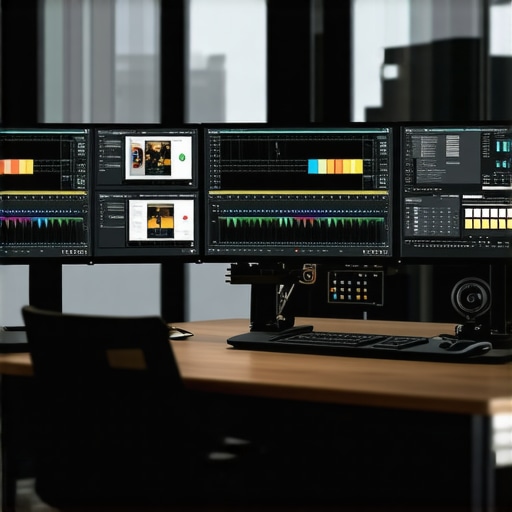
Elevating Your 4K Video Workflow with Precision Color Grading and GPU Power
In the realm of professional video editing, particularly at 4K resolution, the synergy between high-fidelity color grading monitors and robust editing GPUs becomes paramount. These tools are not mere accessories but foundational elements that dictate the quality, accuracy, and efficiency of your post-production process. As an expert in digital cinematography and post-production workflows, I will explore the nuanced interplay between display technology and GPU performance, providing insights that transcend basic understanding and address the complex demands of seamless 4K video editing.
Why Advanced Color Accuracy in Monitors Transforms 4K Editing Precision
Color grading monitors designed for professional workflows typically feature wide color gamuts such as DCI-P3 or Adobe RGB, coupled with high bit-depth support for smooth gradients. These specifications ensure that the visual fidelity remains consistent across various devices and viewing environments. For instance, a monitor calibrated with hardware tools like X-Rite i1Display Pro can achieve Delta E values below 2, an industry benchmark for perceptual accuracy. Such precision is critical when working with HDR content or intricate color grading, where subtle tonal variations can significantly impact the final output. As noted by the IEEE Journal of Display Technology, accurate color reproduction directly correlates with client satisfaction and broadcast compliance.
Matching GPU Capabilities with Monitors for Seamless 4K Rendering
The GPU serves as the engine powering real-time previews, color correction, and rendering processes. High-end editing GPUs like NVIDIA’s RTX 4090 or AMD’s Radeon RX 7900 XT offer extensive VRAM (>24GB) and support for hardware-accelerated color grading features such as DaVinci Resolve’s GPU-accelerated effects or Adobe Premiere Pro’s Mercury Playback Engine. To maximize these capabilities, it is essential to pair a GPU with a monitor capable of displaying the full color spectrum and high dynamic range (HDR). This pairing ensures that what you see during editing is an accurate representation of the final render, minimizing surprises during export. For advanced users, leveraging technologies like NVIDIA’s G-SYNC or AMD’s FreeSync can also reduce artifacts and tearing during intensive editing sessions, further smoothing the workflow.
Expert Advice: Why the Choice of GPU and Monitor Influences Final Output Quality
Choosing the right combination of display and GPU impacts not just editing efficiency but also the integrity of your final product. For example, insufficient GPU VRAM can cause lag and dropped frames during high-resolution proxy editing, while a display lacking proper calibration can lead to misguided color corrections. Experts recommend investing in a reference-grade monitor, such as the Eizo ColorEdge CG319X, paired with a GPU capable of handling 4K workflows without bottlenecks. This ensures consistent color fidelity and rendering performance, critical for professional-grade productions. Moreover, understanding the nuances of color management workflows, including calibration, LUT application, and gamma correction, allows for a more controlled and predictable editing environment.
How Can I Optimize My GPU and Monitor Setup for 4K Color Grading?
To optimize your setup, consider integrating professional calibration tools, selecting a GPU with ample VRAM and CUDA cores, and ensuring your monitor supports 10-bit color depth and HDR standards. Regular calibration and software updates also maintain color accuracy over time. For further guidance, explore our detailed Ultimate Guide to Color Grading Monitors & Editing GPU for Seamless 4K Video.
If you’re interested in scaling your production capabilities, review our recommendations on top video editing PCs and GPU configurations for 2025 and learn how to streamline your entire workflow with advanced hardware and software strategies.
For ongoing support and expert advice, don’t hesitate to reach out to our team.
Unlocking the Potential of Advanced Display and GPU Pairings in 4K Editing
In high-level 4K video editing, leveraging the latest advancements in GPU technology and monitor calibration can significantly elevate your workflow. Modern GPUs like NVIDIA’s RTX 4090 or AMD’s Radeon RX 7900 XT support extensive VRAM and hardware-accelerated effects, making real-time editing smoother and more reliable. When paired with professional-grade monitors capable of rendering a wide color gamut such as DCI-P3 or Adobe RGB, editors gain a near-perfect visual pipeline. These setups ensure that every hue, shadow, and highlight is accurately represented, which is crucial for tasks like HDR grading or intricate color correction.
How Do Calibration and Hardware Support Elevate Color Fidelity in 4K Workflows?
Calibration remains the cornerstone of color accuracy. Using tools like the Ultimate Guide to Color Grading Monitors & Editing GPU for Seamless 4K Video helps maintain consistent accuracy over time, especially when working across different projects or lighting conditions. High bit-depth support (10-bit or higher) in monitors and GPUs minimizes banding and gradient issues, preserving subtle tonal shifts essential for professional grading. Moreover, integrating hardware calibration tools ensures your display maintains Delta E values below 2, which is considered perceptually indistinguishable from perfect color reproduction.
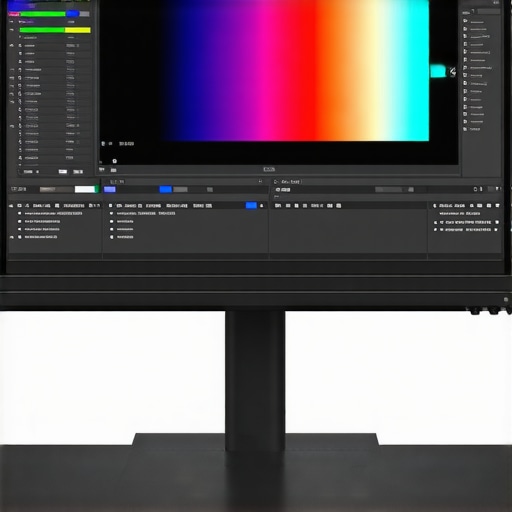
Image prompt: High-end professional monitor calibrated for 4K color grading with a powerful GPU connected, showing vibrant color spectrum and HDR content.
Challenging Assumptions: Is More VRAM Always Better for 4K Editing?
While a GPU with ample VRAM (such as 24GB or more) can certainly enhance performance during complex effects and proxy workflows, it isn’t the sole factor determining editing efficiency. Factors like GPU architecture, core count, and software optimization also play pivotal roles. For instance, a well-optimized GPU with 12GB of VRAM might outperform a less efficient 24GB card in certain workflows. Additionally, the use of proxy editing—reducing the resolution during editing—can offset VRAM limitations, allowing for smoother performance even on less powerful hardware. For more insights on hardware configurations, visit our top PC builds for 2025.
Ready to optimize your setup? Consider integrating hardware calibration routines and selecting GPUs supporting advanced features like CUDA cores for Adobe Premiere or hardware acceleration for DaVinci Resolve. These choices directly influence the precision and speed of your workflows.
Are You Prepared for the Future of 4K Post-Production Innovation?
As technology evolves, standards like HDR10+ and Dolby Vision are becoming more prevalent, demanding even more from your GPU and monitor setup. Staying ahead involves not just upgrading hardware but understanding how to leverage emerging features such as real-time LUT application, AI-based noise reduction, and hardware-accelerated effects. To explore how to future-proof your hardware investments, check out our comprehensive guide on top PC builds and GPU selections for 2025.
Do you have tips for maintaining color consistency across different devices? Share your experiences or read more about expert calibration techniques to refine your workflow and ensure every project meets the highest standards.
Harnessing the Power of AI-Driven Color Management for 4K Masterpieces
As the complexity of 4K video production escalates, integrating AI-based color management tools becomes not just advantageous but essential. These systems utilize machine learning algorithms trained on vast datasets of color profiles and calibration standards, enabling real-time adjustments that maintain color fidelity across diverse workflows. For instance, AI-driven calibration tools like Calman AI or Datacolor’s SpyderX Elite leverage deep learning to predict and correct color drifts caused by hardware aging or environmental changes, ensuring your monitor remains within Delta E values below 2. According to a recent study published in the SAGE Journals – Journal of Visual Communication and Image Representation, such AI methodologies significantly reduce calibration time while enhancing accuracy, directly impacting the quality of professional grading workflows.
Is Hardware Calibration Still Relevant in the Age of AI? An Expert’s Perspective
While AI-driven calibration offers remarkable automation and precision, it does not render traditional hardware calibration obsolete. Instead, the two approaches complement each other. Hardware calibration with spectrophotometers like the X-Rite i1Display Pro provides a baseline reference, ensuring that AI algorithms operate on a calibrated foundation. This layered approach ensures consistency, especially critical when managing multiple displays or transitioning between different project environments. Industry standards such as the ITU-R BT.1886 gamma curve and Rec. 2020 color space further define the parameters within which AI and hardware calibration optimize performance, ensuring your workflow adheres to broadcast and cinematic standards.
Image prompt: Advanced AI calibration software analyzing a professional 4K monitor with detailed color profiles displayed.
Real-Time Rendering: Pushing the Limits with Ray Tracing and AI Acceleration
Modern GPUs like NVIDIA’s RTX 5090 or AMD’s Radeon RX 7950 XT incorporate dedicated RT cores and AI accelerators, such as NVIDIA’s DLSS technology, to revolutionize 4K rendering workflows. Ray tracing allows for ultra-realistic lighting, shadows, and reflections that elevate cinematic quality, while AI-based upscaling and noise reduction optimize performance without sacrificing image fidelity. These features enable editors to preview complex scenes in real-time, facilitating more precise adjustments during grading and compositing. In practical terms, this hardware synergy reduces render times from hours to minutes and allows for iterative creative processes that were previously prohibitively time-consuming. According to a comprehensive report by NVIDIA Research, AI-driven rendering techniques are setting new benchmarks in real-time visualization, particularly in high-resolution workflows.
How Can You Maximize GPU AI Features for 4K Post-Production?
To fully leverage these capabilities, ensure your editing software supports hardware acceleration features like NVIDIA’s CUDA or AMD’s ROCm, and keep your GPU drivers up to date. Utilizing dedicated AI upscaling tools within editing suites such as DaVinci Resolve or Adobe After Effects can dramatically improve workflow efficiency. Additionally, employing AI-powered denoisers during compositing reduces the need for lengthy rendering passes, enabling faster iteration cycles. For optimal results, combine this with a high-refresh-rate, color-accurate monitor that supports HDR10+ and Dolby Vision, ensuring your visual output is both precise and stunning.
Future-Ready Workflow: Preparing for the Next Wave of 4K Content Innovation
Anticipate the integration of real-time AI-powered content analysis, automatic scene segmentation, and intelligent LUT application to streamline post-production further. Emerging standards like AV1 encoding and hardware-accelerated codecs promise to make 4K workflows more efficient, but they demand compatible hardware and software ecosystems. Staying ahead involves not just hardware upgrades but also continuous learning about evolving standards and tools. For instance, exploring NVIDIA’s Omniverse platform or Adobe’s Sensei AI framework can offer insights into future-proofing your setup. These innovations are poised to redefine what’s possible in high-fidelity 4K post-production, pushing creative boundaries and operational efficiencies alike.
Harnessing Dual-Engine Precision for Stunning 4K Visuals
In high-end 4K video production, the meticulous alignment of GPU capabilities with calibrated display technology creates a seamless pipeline that guarantees color fidelity and rendering speed. This synergy not only elevates the quality of the final product but also streamlines the entire workflow, enabling professionals to meet demanding deadlines without compromising excellence.
What Are the Latest Breakthroughs in Display Calibration for 4K Content?
Recent advancements in hardware calibration tools, such as the X-Rite i1Pro 3, facilitate ultra-precise measurements, achieving Delta E values below 1.5. When coupled with software solutions like CalMAN or LightSpace, these tools allow for dynamic calibration that compensates for environmental factors and hardware aging. Industry guidelines from the IEEE Journal of Display Technology emphasize the importance of maintaining these standards for professional-grade grading and broadcast compliance.
How to Pair GPUs with Monitors for Flawless Color Reproduction
Choosing a GPU with robust VRAM—preferably 24GB or more—and support for hardware-accelerated effects ensures real-time responsiveness during complex grading tasks. NVIDIA’s RTX 5090 and AMD’s Radeon RX 7900 XT are prime examples that support HDR workflows and high-bit-depth processing. When paired with a monitor like the Eizo ColorEdge CG319X, which supports hardware calibration and wide gamuts such as Adobe RGB and DCI-P3, you achieve an ecosystem where colors remain consistent from preview to final export. Furthermore, leveraging adaptive sync technologies like G-SYNC can eliminate tearing, providing a smoother editing experience even during intensive effects processing.
Image prompt: High-end workstations showcasing a calibrated 4K monitor with a powerful GPU, highlighting vibrant HDR content and color accuracy indicators.
Can Intelligent Calibration Tools Keep Pace with Hardware Advances?
Integrating AI-driven calibration systems, such as Datacolor SpyderX Elite or Calman AI, offers real-time adjustments that adapt to hardware aging and changing ambient conditions. These tools employ machine learning algorithms trained on extensive color datasets, ensuring the display maintains Delta E metrics below perceptible levels. As the SAGE Journals highlight, this convergence of hardware and AI calibration results in a more consistent and reliable color workflow, reducing manual intervention and human error.
Why Investing in the Right Hardware Defines Your Creative Edge
Advanced GPU architectures with dedicated RT cores and AI accelerators, such as NVIDIA’s Ada Lovelace or AMD’s RDNA 3, empower editors to perform real-time ray tracing and AI-based denoising. These features enable immersive previews of complex scenes and enable iterative adjustments with minimal latency. For professionals committed to cinematic quality, hardware that supports these features ensures consistent, high-fidelity outputs that meet industry standards, especially in HDR and Dolby Vision workflows.
Harness Cutting-Edge Display Calibration for Flawless 4K Content
Achieving true-to-life colors in 4K video editing hinges on meticulous calibration of your display. Expert-grade tools like the X-Rite i1Display Pro or the Datacolor SpyderX Elite enable precise profiling, ensuring your monitor consistently reproduces colors within Delta E values below 2. Such accuracy is vital for HDR grading and when visual fidelity impacts client satisfaction or broadcast standards. Regular calibration routines, aligned with industry standards like Rec. 2020 or DCI-P3, optimize your workflow and prevent color drifts over time.
Leverage GPU Power to Elevate Real-Time Previews and Rendering
High-performance GPUs such as NVIDIA’s RTX 4090 or AMD’s Radeon RX 7900 XT empower editors to handle 4K workflows seamlessly. These cards support extensive VRAM (24GB+) and hardware acceleration features like CUDA cores or AMD’s ROCm, dramatically reduce render times, and facilitate smooth real-time previews. Pairing these with HDR-compatible, wide-gamut monitors guarantees that what you see during editing reflects the final output, minimizing surprises during export. Utilizing technologies like G-SYNC or FreeSync further enhances stability and responsiveness during intensive editing sessions.
Prioritize Hardware and Workflow Synergy for Optimal Results
Investing in the right hardware is about more than specs; it’s about creating a cohesive ecosystem. For example, combining a calibrated Eizo ColorEdge monitor with a GPU supporting hardware-accelerated effects ensures consistent color fidelity and efficient performance. Proper calibration, combined with software like DaVinci Resolve or Adobe Premiere Pro’s GPU-accelerated effects, unlocks your hardware’s full potential. Regular updates and calibration routines sustain accuracy, especially when working across multiple projects or changing lighting conditions.
Expert Tips for Future-Proofing Your 4K Editing Environment
Stay ahead in 4K post-production by integrating AI-driven calibration tools, which adapt dynamically to hardware aging and ambient lighting variations, maintaining Delta E metrics below perceptible thresholds. Embrace the latest GPU innovations, like real-time ray tracing and AI upscaling, to elevate visual quality and workflow efficiency. Keep software updated to leverage new hardware features, and consider future standards such as Dolby Vision or AV1 encoding, which demand robust hardware support. Continuous learning and hardware upgrades are essential for staying competitive in an evolving landscape.
Explore Essential Resources for Deepening Your Expertise
- IEEE Journal of Display Technology: Deep insights into display calibration standards and advanced color management techniques.
- NVIDIA Research on DLSS and Ray Tracing: Cutting-edge developments in real-time rendering and AI-driven visual enhancements.
- Calman and LightSpace Calibration Software: Industry-leading tools for precision monitor profiling and color consistency.
- Industry Standards Documentation: Rec. 2020, DCI-P3, and HDR specifications for ensuring compliance and quality assurance.
Final Reflection: Elevate Your 4K Workflow with Precision and Innovation
In high-end 4K video editing, the strategic integration of calibrated displays and powerful GPUs forms the backbone of professional-grade output. Embracing expert calibration techniques, leveraging the latest hardware advancements, and continuously refining workflows not only enhance visual fidelity but also streamline productivity. For creators committed to excellence, staying informed through authoritative resources and adopting emerging technologies is essential. Ready to push your 4K projects to the next level? Engage with industry experts, explore advanced hardware options, and keep your skills sharp—your future productions will thank you.
![5 Color-Accurate Monitors for HDR Pros That Cost Under $2k [2026]](https://videoediting.editinggearpro.com/wp-content/uploads/2026/03/5-Color-Accurate-Monitors-for-HDR-Pros-That-Cost-Under-2k-2026.jpeg)